
Latest
Nigerian Senate reverses standing orders amendment over constitutional concerns

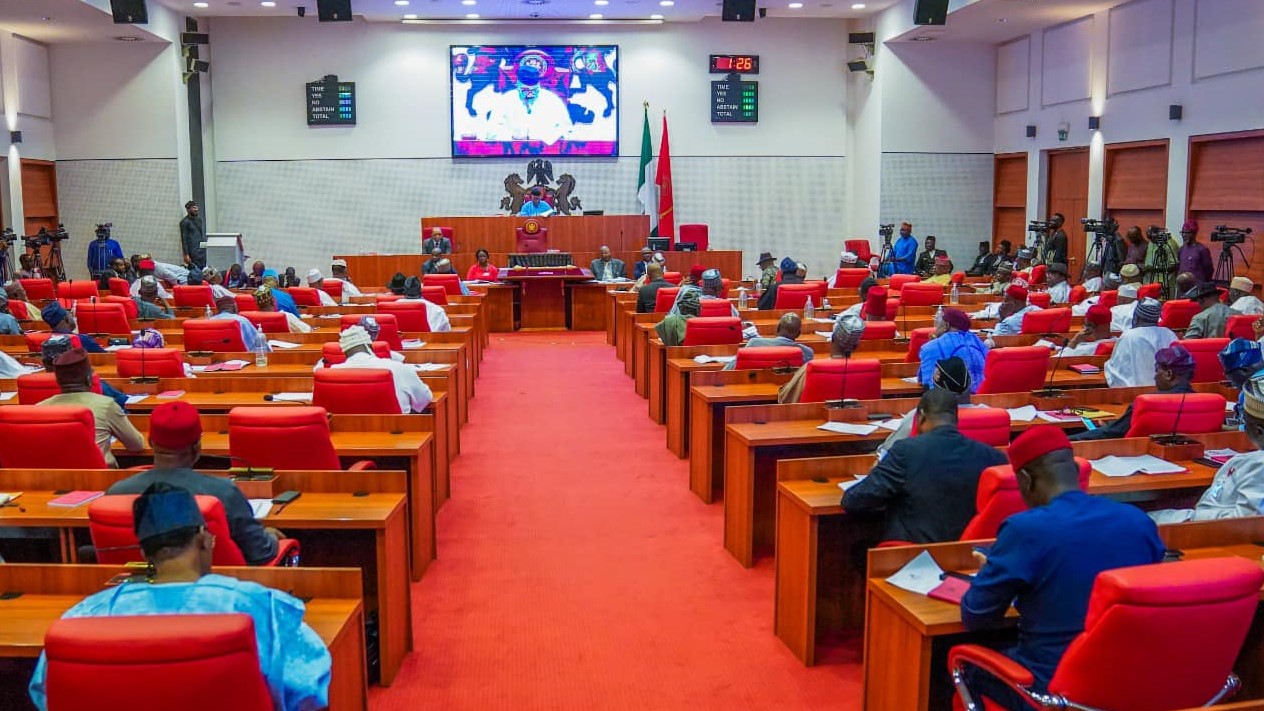
The Nigerian Senate has rescinded its earlier amendments to sections of its 2026 Standing Orders following concerns that the changes could conflict with provisions of the 1999 Constitution, particularly regarding the inauguration of senators-elect and the election of presiding officers.
The motion for rescission and recommittal of the affected provisions was moved during plenary by Senate Leader, Opeyemi Bamidele.
Bamidele stated that the Senate resolved to withdraw its earlier decisions relating to amendments made to Order 2(2) and Order 3(1) of the Senate Standing Orders, 2026, after observing that provisions introduced on May 5 might create constitutional inconsistencies and unintended tensions.
Citing Section 52 of the 1999 Constitution, Bamidele explained that senators-elect are constitutionally permitted to participate in the election of presiding officers before taking their oaths of office.
“In other words, Mr. President and distinguished colleagues, election of the officers will have to take place, as it had always been, before the swearing-in of senators,” he said.
The now-reversed Order 3(1) had stipulated that a senator-elect could not participate in any proceedings of the Senate—including voting for the President and Deputy President of the Senate—until taking the prescribed oath in line with the Seventh Schedule to the Constitution.
However, tradition and constitutional practice require that the election of presiding officers be conducted under the supervision of the Clerk of the National Assembly before the swearing-in ceremony.
Responding to the motion, Senate President Godswill Akpabio described the matter as straightforward.
“This is just for us to go in conformity with the Constitution. We don’t need any debate on this,” Akpabio stated before the motion was adopted.
During deliberations, Senator Adams Oshiomhole cautioned against rushing legislative amendments without wider consultation among lawmakers.
“When we are making a law, we should accommodate diverse views. That way, what one person forgot, the other person will remember,” he said, urging that future amendments be subjected to more extensive debate before passage.
In response, Bamidele criticised the tension and public disagreements that accompanied the earlier amendment process, stressing the need to protect the image of the Senate.
“We cannot allow this kind of drama to go on in the Senate. This is the Senate of the Federal Republic of Nigeria,” he said, advising that objections be channelled through substantive motions rather than public confrontation.
Beyond the swearing-in controversy, the amendment had also altered eligibility criteria for contesting presiding offices. Under the revised Order 3(3), a senator would only be eligible to contest as a presiding officer after serving at least two terms of eight years, with one term immediately preceding the election.
Additional approved changes affected sitting hours, committee representation across geopolitical zones, suspension procedures, and the establishment of new committees on Livestock Development, Reparations and Repatriations, and regional development commissions.
Constitutional lawyer Dr. Amina Salisu said the Senate’s decision to rescind the amendment demonstrates institutional maturity.
“When internal rules appear to contradict constitutional provisions, it is prudent to correct them swiftly. The Constitution remains supreme, and any legislative procedure must align with it,” she said.
A political analyst, Mr. Tunde Balogun, noted that the episode highlights the delicate balance between internal parliamentary reforms and constitutional compliance.
“The Senate has the authority to regulate its procedure, but that authority is not absolute. Once a rule affects constitutional rights or processes—like inauguration and election of principal officers—it must be carefully scrutinised,” he observed.
Balogun added that the controversy underscores the importance of consensus-building within the legislature to avoid institutional friction that could erode public confidence.
With the rescission now adopted, the Senate is expected to revisit the affected provisions to ensure future amendments conform fully to constitutional requirements while maintaining legislative efficiency.


-
 Featured6 days ago
Inside INEC’s race to prepare for Nigeria’s 2027 elections
-
 Latest7 days ago
Global excitement builds as Healing Streams Live Services returns October 23
-
 Featured6 days ago
2027: APC unveils nationwide campaign timetable, Tinubu to rally in 12 states
-
 Business7 days ago
President Tinubu and the Low Transport Fares Fiasco
-

 Business1 week ago
BREAKING: Nigeria’s Inflation Rate Drops to 14.63% in September
-

 Business6 days ago
Court dismisses ₦170m Trade Fair contract claim, says Zenith Bank was not a party
-

 Business3 days ago
Naira faces exchange rate gap as Dollar hits N1,380 on parallel market
-

 Latest6 days ago
Breaking: NNPCL raises petrol price to ₦1,405 per litre amid discount controversy