



Connect with us

News

Health concerns mount as refuse overruns Oyingbo Market 

Published

on

Health concerns mount as refuse overruns Oyingbo Market 

Traders and shoppers at the historic Oyingbo Ultra-Modern Market in Lagos Mainland have raised alarm over growing heaps of uncollected refuse that have taken over sections of the market, sparking fears of a potential public health crisis.

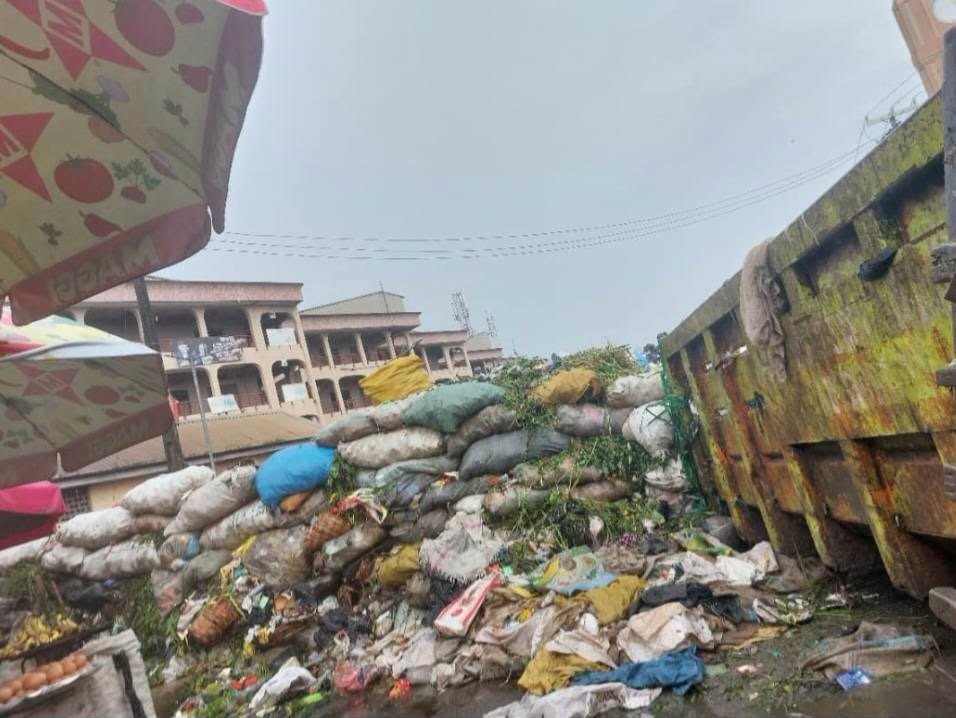
A visit to the bustling commercial hub in Ebute Metta revealed large piles of decomposing waste, including rotting food items, plastic materials, and household garbage, scattered around trading areas and major walkways. In several locations, refuse dumps were situated dangerously close to stalls where fresh vegetables, fish, meat, and other food products are sold.

The worsening sanitation situation has left traders frustrated, with many accusing waste management authorities of failing to evacuate refuse despite regular payments for environmental sanitation services.

According to some vendors, the persistent accumulation of waste has created an unpleasant environment for both traders and customers, while also affecting business activities.

“We come to the market every day and are greeted by the same foul smell. We pay our sanitation fees, yet the refuse keeps piling up around us,” said a foodstuff trader who identified herself as Mrs. Adaeze.

Market users say the situation has become particularly concerning because Oyingbo serves as one of Lagos’ major food distribution centres, attracting thousands of buyers daily. Food products purchased from the market are supplied to homes, restaurants, and businesses across the state, raising fears that contamination could extend beyond the market premises.

The development reflects broader waste management challenges facing Lagos, where authorities have struggled to cope with the huge volume of refuse generated daily across the state.

Environmental experts warn that the proximity of decomposing waste to food items could expose residents to serious health risks. They note that refuse heaps provide breeding grounds for rodents, flies, cockroaches, and other disease-carrying pests capable of contaminating food products.

Health professionals have also expressed concerns about airborne pollutants generated by decaying organic waste, warning that prolonged exposure could trigger respiratory illnesses, allergies, and other health complications among traders and visitors.

In addition, wastewater and particles from decomposing refuse may contaminate exposed food items, increasing the risk of foodborne diseases.

The Lagos State Government has in recent years intensified efforts to enforce environmental sanitation regulations, including the closure of markets found violating waste disposal guidelines.

Health concerns mount as refuse overruns Oyingbo Market 

Governor Babajide Olusola Sanwo-Olu recently directed environmental agencies, including the Lagos Waste Management Authority and the Lagos State Environmental Protection Agency, to strengthen waste evacuation operations across the state following reports of growing refuse backlogs in several communities.

The state government has also deployed additional personnel and equipment to address waste collection challenges and clear accumulated refuse from affected areas.

However, environmental analysts argue that long-term solutions will require stronger waste management infrastructure, improved support for waste collection operators, increased recycling initiatives, and stricter enforcement of sanitation regulations.

For traders at Oyingbo Market, the immediate concern remains the prompt evacuation of the growing refuse heaps before the situation deteriorates further and poses greater risks to public health and economic activities.

Residents and market stakeholders are now urging authorities to act swiftly to restore cleanliness and prevent the market from becoming a hotspot for disease outbreaks.

Continue Reading
Advertisement
Click to comment

Leave a Reply

Your email address will not be published.

Trending