
Latest
Europe awaits first total solar eclipse in two decades as August 12 spectacle draws global attention

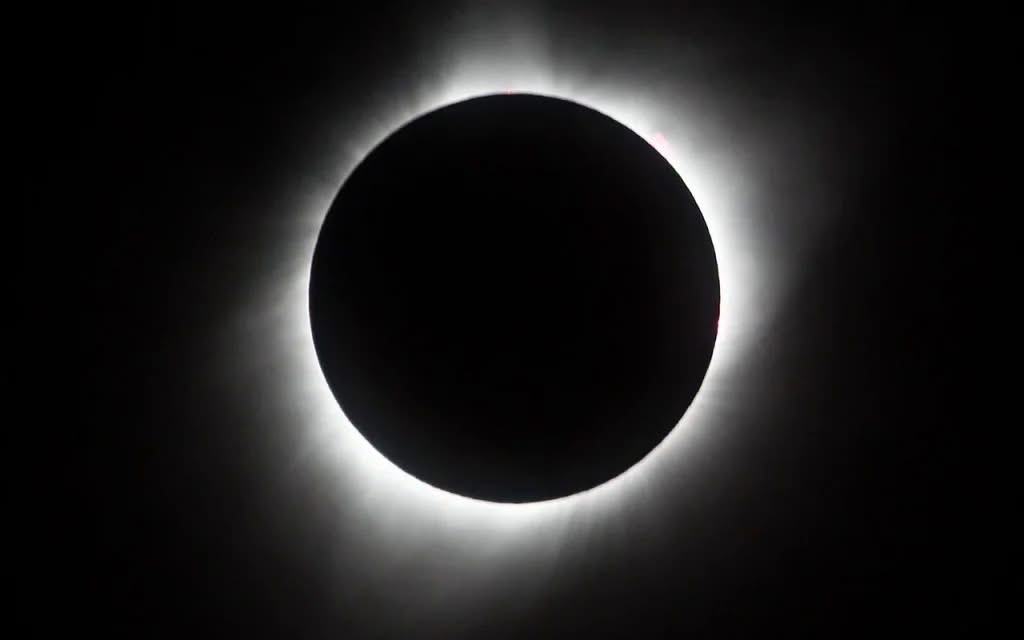
Millions of skywatchers across Europe are preparing for a rare astronomical event as a total solar eclipse is set to sweep across parts of Europe, Greenland and the Arctic on August 12, marking the first total eclipse visible from mainland Europe since 2006.
The celestial event is expected to attract thousands of tourists, astronomers and photography enthusiasts to locations along the eclipse’s path of totality, with travel demand already rising in several of the best viewing destinations.
A total solar eclipse occurs when the Moon passes directly between the Earth and the Sun, completely blocking the Sun’s disk and briefly turning day into twilight.
While a partial eclipse will be visible across much of the Northern Hemisphere—including the United Kingdom, France, Germany and parts of North America—the total eclipse will only be experienced within a narrow corridor known as the path of totality.
According to astronomers, the Moon’s shadow will first reach northern Russia before crossing Greenland and Iceland. The eclipse will then move across northern and eastern Spain, including cities such as Zaragoza and Valencia, as well as the island of Mallorca, before ending over a small section of northeastern Portugal just before sunset.
In locations directly along the centre of the eclipse’s path, observers are expected to experience up to two minutes and 18 seconds of complete darkness.
Scientists say Reykjavík, Iceland’s capital, will witness a total solar eclipse for the first time in nearly six centuries, making it one of the most sought-after viewing destinations for the event.
As anticipation builds, astronomers, ophthalmologists and space agencies have urged the public to observe the eclipse safely, warning that looking directly at the Sun without proper protection can cause permanent eye damage, even if most of the Sun is covered.
Experts advise viewers to wear certified eclipse glasses that meet the international ISO 12312-2 safety standard and to inspect them for scratches or damage before use. They also caution that ordinary sunglasses are not safe for viewing a solar eclipse.
Observers are reminded that it is only safe to remove protective eyewear during the brief period of totality, when the Moon completely covers the Sun. Protective glasses should be put back on immediately once sunlight begins to reappear.
For those without eclipse glasses, astronomers recommend using indirect viewing methods, such as a pinhole projector, to safely observe the phenomenon.
The eclipse is expected to provide an added treat for astronomy enthusiasts, as it coincides with the peak of the annual Perseid meteor shower later that night, offering a rare opportunity to witness two major celestial events within the same day.
Authorities in several regions along the eclipse’s path are preparing for a surge in visitors and have encouraged travellers to make accommodation, transport and safety arrangements well in advance of the historic event.


-

 Latest5 days ago
Tinubu files: US Judge grants four-day extension in FOIA disclosure battle
-

 Latest1 week ago
Osun Decides: INEC declares Adeleke winner
-

 Entertainment4 days ago
Poco Lee faces rape allegation as unverified UK arrest report spreads online
-

 Featured5 days ago
Beyond Osun 2026: What Adeleke’s re-election reveals about Nigeria’s road to 2027
-
 Comments and Issues2 days ago
Can President Tinubu Revive Nigeria’s Moribund Refineries?
-

 Business5 days ago
Standard Bank eyes stake in OPay ahead of planned $4bn US IPO
-

 Business2 days ago
Tinubu knocks Atiku’s subsidy plan, says proposal shows ‘ignorance’ of economy
-

 Business4 days ago
Profit-taking hits NGX again as First HoldC leads market declines