
Football
Egypt coach alleges bias after World Cup exit, claims Argentina received preferential treatment

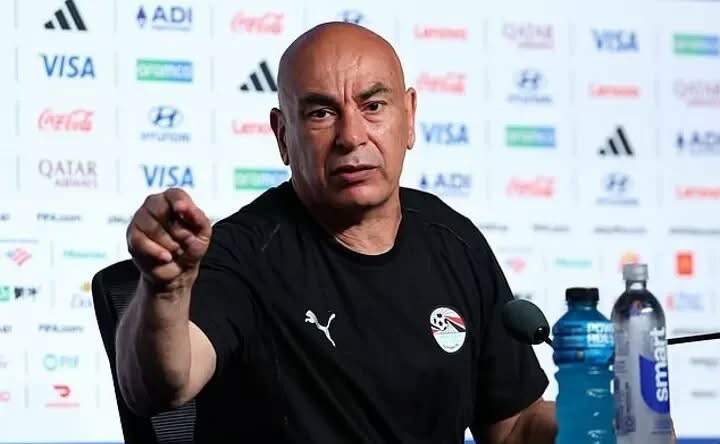
Egypt head coach Hossam Hassan has accused FIFA and match officials of favouring defending champions Argentina following his side’s dramatic 3-2 defeat in the Round of 16 of the 2026 FIFA World Cup.
Speaking after Tuesday’s match in Atlanta, Hassan alleged that officiating decisions influenced the outcome and suggested there was a desire to keep Argentine captain Lionel Messi in the tournament.
Egypt appeared on course for a famous victory after racing into a 2-0 lead, but Argentina mounted a remarkable comeback with late goals to book a place in the quarter-finals. Enzo Fernández scored the decisive goal in stoppage time to complete the turnaround.
Addressing reporters after the match, Hassan insisted his team had outperformed the reigning world champions but claimed external factors affected the final result.
“We were better than the world champions in every aspect of the game, but there were internal and external influences,” he said.
“Perhaps they wanted the world champions to remain in the competition. Perhaps they wanted Messi to stay. Sometimes football goes beyond what happens on the pitch.”
The former Egypt international described the encounter as “unjust” and said he had no intention of watching the remainder of the tournament.
“I am going home and I won’t watch another World Cup match because there is no justice,” he added.
The Egyptian Football Association’s frustration centred on several controversial refereeing decisions during the match.
Egypt had a third goal ruled out following a Video Assistant Referee (VAR) review for a foul earlier in the build-up. Hassan’s side also appealed for a penalty after captain Mohamed Salah went down inside the box, but the referee waved play on and VAR did not intervene.
The Egyptian bench also protested Argentina’s winning goal, alleging defender Hamdy Fathy was pulled back by his shirt during the attacking move. Hassan confronted match officials after the final whistle and was shown a yellow card, while one member of his coaching staff was sent off.
The Egypt coach also criticised FIFA’s scheduling of the fixture, questioning why the knockout match was played at midday only four days after the previous round. He further revealed that Egypt had objected to the appointment of French referee François Letexier, citing France’s recent football rivalry with Argentina.
Despite his allegations, Hassan praised his players for their performance and apologised to Egyptian supporters for the team’s elimination.
“I apologise to the Egyptian people, but I am proud of my players. They represented Egypt, Africa and the Arab world with honour,” he said.
Hassan’s claims have divided opinion within the football community. Former Manchester United captain Roy Keane dismissed suggestions of a conspiracy, saying Egypt’s defeat was the result of a late collapse rather than officiating.
Former Sweden striker Zlatan Ibrahimović also rejected the allegations, saying criticism of referees and FIFA often resurfaces whenever Messi and Argentina record major victories.
FIFA had not issued an official response to Hassan’s comments at the time of filing this report. The governing body could also decide whether disciplinary action is warranted over the Egypt coach’s post-match remarks.


-

 Featured7 days ago
Nigeria’s youth unemployment paradox: Graduates struggle as millions survive in informal jobs
-

 Business1 week ago
Nigerian Banks earn N521.8bn from E-banking, card fees in nine months
-

 Energy7 days ago
Nigeria’s power crisis deepens as ₦639bn unpaid gas debt threatens electricity supply
-
 Featured6 days ago
Tinubu’s Renewed Hope: Reforms, hardship and the unanswered question of a second term
-

 Latest1 week ago
Dalung claims ‘message from Buhari’s grave’ urges Nigerians to vote Atiku in 2027
-

 Featured5 days ago
The cost of Renewed Hope: How Nigeria’s economic reforms are reshaping everyday family life
-

 Latest7 days ago
Ondo shuts ponmo processing centre after discovery of human waste
-
 Education7 days ago
Nigeria’s education crisis deepens as schools battle infrastructure deficits