
Latest
Jigawa LP chairman faults Tinubu’s CNG plan

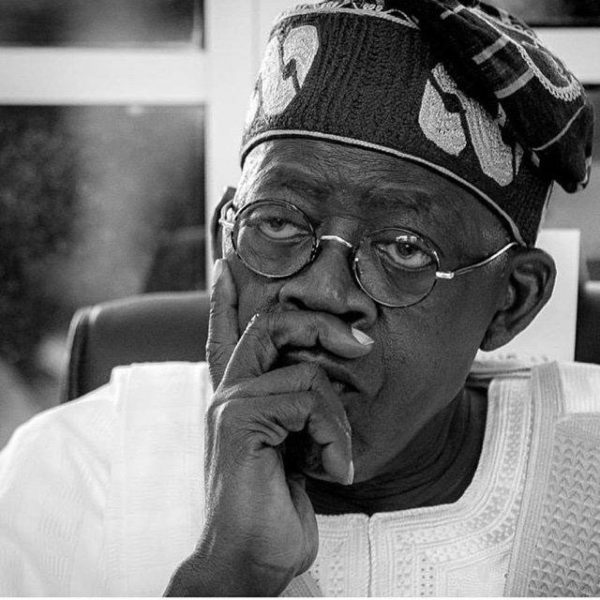
The Chairman of the Labour Party in Jigawa State, Garba Bulangu, has criticised the Federal Government’s Compressed Natural Gas initiative, arguing that the programme has yet to address the immediate hardship faced by Nigerians struggling with high food and transportation costs.
Bulangu said President Bola Tinubu’s recent emphasis on the National Affordable CNG Transit Programme was disconnected from the daily experiences of Nigerians, particularly those in rural communities where access to CNG buses and refuelling infrastructure remains limited.
The Labour Party chieftain made the remarks in an interview with Arewa PUNCH published on Tuesday, October 6, 2026, while reacting to the Federal Government’s efforts to reduce transportation costs through CNG.
President Tinubu had recently directed the 36 state governments to accelerate implementation of the National Affordable CNG Transit Programme, with the administration targeting measurable reductions in transport fares from October 1. The initiative, according to the Presidency, is intended to cushion the impact of higher transportation costs following the removal of petrol subsidy.
However, Bulangu argued that the benefits of the programme were not yet reaching many Nigerians, particularly residents of Jigawa State.
He questioned how residents in places such as Gumel, Hadejia and Dutse could benefit from the initiative when CNG-powered buses and infrastructure remained difficult to access.
According to him, Jigawa currently has only one CNG filling station, located in the state capital, Dutse. He therefore questioned how residents across the state’s other 27 local government areas would benefit from a policy that depends on CNG infrastructure.
Bulangu also challenged the government’s claim of progress in vehicle conversions, arguing that the number of vehicles converted to CNG remained small compared with Nigeria’s overall vehicle population.
President Tinubu said in September that more than 120,000 vehicles had been converted under the government’s CNG programme. The Presidency has described the expansion of CNG infrastructure as part of its broader strategy to reduce transportation costs and increase domestic use of Nigeria’s natural gas resources.
The Jigawa LP chairman maintained that the programme could not by itself resolve the wider cost-of-living crisis.
He argued that removing petrol subsidy without adequate short-term measures to protect households and commercial transport operators had contributed to increased transportation costs, making it more difficult for workers and farmers to move around and transport agricultural produce.
Bulangu also criticised the government’s rejection of calls to restore the former petrol subsidy regime, but clarified that his proposal was not necessarily a return to the previous system.
Instead, he called for a transparent and targeted transport support mechanism that would directly reduce the cost of transportation for commercial operators and commuters.
He further questioned the Federal Government’s October 1 target for reducing transport costs, saying Nigerians were more interested in tangible relief than government deadlines or policy announcements.
The Labour Party official’s comments come amid a renewed political debate over fuel pricing and transportation ahead of the 2027 general elections. Opposition figures, including ADC presidential candidate Atiku Abubakar, have advocated changes to the government’s post-subsidy policy, while the Tinubu administration has maintained that returning to the old subsidy system would be economically damaging.
The Federal Government, meanwhile, continues to expand CNG infrastructure and vehicle conversions as part of its longer-term strategy to provide cheaper transportation and reduce dependence on petrol.
For Bulangu, however, the central issue remains whether those measures are translating into lower transport costs and improved living conditions for ordinary Nigerians.
He urged the government to combine the expansion of CNG infrastructure with immediate measures capable of reducing the burden of food and transportation costs on households.


-

 Latest5 days ago
US Immigration fees rise from October 16 as USCIS announces new charges
-
 Latest9 hours ago
Israel marks 3 years since October 7 Hamas attack amid Gaza strikes, election debate
-

 Business5 days ago
Nigeria’s $55bn reserves raise fresh questions over naira value
-
 Health4 days ago
Florida sues Pfizer over deceptive COVID-19 vaccine marketing
-
![Edo Special Court sentences four kidnappers to death over woman’s abduction [VIDEO]](https://nationaldailyng.com/wp-content/uploads/2026/09/828831764_1099651439663438_3480600082081067427_n-400x240.jpg)
![Edo Special Court sentences four kidnappers to death over woman’s abduction [VIDEO]](https://nationaldailyng.com/wp-content/uploads/2026/09/828831764_1099651439663438_3480600082081067427_n-80x80.jpg) Crime1 week ago
Crime1 week agoEdo Special Court sentences four kidnappers to death over woman’s abduction [VIDEO]
-
 Business6 days ago
Tuoyo Erikowa wins digital marketing personality of the Year at 2026 EDGE awards
-
 Crime4 days ago
From camp to captivity: How kidnappers now target NYSC Corps members on highways
-
 Featured5 days ago
2027: Can Nigeria’s opposition still unite behind a single presidential candidate?