
Energy
Has Iran lost control of the Strait of Hormuz? Oil flows rebound as war disruptions persist

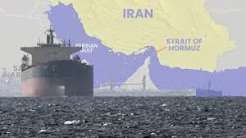
Iran’s ability to use the Strait of Hormuz as a choke point for global energy supplies appears to have weakened, with oil shipments from the Middle East recovering sharply despite continuing attacks and security risks in the strategic waterway.
The development marks a significant change from the early stages of the war, when Iran’s restrictions on shipping through the strait caused a severe disruption to oil and gas exports and sent shockwaves through global energy markets.
But the latest shipping data suggest that the Strait of Hormuz is no longer experiencing the near-total blockage seen earlier in the conflict.
According to data analysed by Reuters, Middle Eastern crude and condensate exports averaged 18.3 million barrels per day in September, with flows exceeding pre-war levels on 14 days. Kpler and Vortexa data also indicated that Gulf exports had regained pre-war momentum.
That does not mean the waterway has returned to normal.
The Strait of Hormuz, a narrow passage between Iran and Oman, is one of the world’s most important energy corridors.
Before the war, roughly 18 to 20 million barrels of oil per day passed through the broader Gulf export system via the strait, representing around one-fifth of global oil consumption. Large volumes of liquefied natural gas, particularly from Qatar, also use the route.
The waterway’s importance means that any sustained disruption can quickly affect crude prices, shipping costs, insurance premiums and fuel prices far beyond the Middle East.
During the early months of the conflict, shipping through the strait was severely restricted. Iran announced restrictions on vessels using the passage, while the wider military confrontation and subsequent US naval operations made commercial shipping extremely risky.
At one point, Iranian crude exports through Hormuz fell to almost nothing. Reuters reported in September that Iran had gone about seven weeks without meaningful crude exports through the strait, with its shipments to China effectively halted.
The answer depends on what is meant by “control.”
Iran still claims that its armed forces control movements through the waterway.
On Monday, Iranian military officials said the country’s armed forces retained full control of the Strait of Hormuz. Parliament Speaker Mohammad Bagher Ghalibaf also said the strait would not be fully reopened until Tehran’s conditions were met.
But controlling a chokepoint is not necessarily the same as being able to completely shut it.
The latest shipping figures demonstrate that tankers are once again moving significant quantities of crude through the strait.
Reuters reported on Monday that Middle Eastern crude exports had recently reached their highest levels since the beginning of the war, while tanker movements through Hormuz continued despite the threat of Iranian attacks.
Kpler data cited by Anadolu showed that non-Iranian crude and condensate exports from the Gulf region averaged at least 16.5 million barrels per day during September 1–28, broadly matching the pre-war average.
That suggests Iran’s ability to completely prevent other Gulf producers from exporting oil has been substantially reduced.
The recovery in exports does not mean that shipping has simply returned to the pre-war system.
Oil producers and shipping companies have adapted.
Saudi Arabia and the United Arab Emirates have increased their use of pipelines and alternative export routes that reduce their dependence on Hormuz.
Ship-to-ship transfers have also become more important, allowing cargoes to be moved between vessels under complicated wartime logistics.
Reuters reported that approximately 40 per cent of Gulf crude was leaving without crossing the Strait of Hormuz, compared with about 17 per cent before the war.
The result is a transformed regional oil-export system.
The Gulf is still sending large quantities of crude to international markets, but it is doing so through a combination of Hormuz crossings, pipelines, alternative routes and ship-to-ship transfers.
The rebound in crude exports has also changed the nature of the global energy crisis.
Instead of an outright shortage of crude, the market is increasingly dealing with a logistics and security problem.
Oil prices remain elevated because transporting crude and refined products has become more expensive and risky.
Tankers face higher insurance costs, longer routes and the possibility of attacks or delays.
Reuters reported that crude prices remained above $100 a barrel, approximately 40 per cent above pre-war levels, despite the recovery in Middle Eastern exports.
That is significant because it shows that restoring physical oil volumes does not automatically restore normal market conditions.
Crude oil is not the only concern.
Refined products, particularly diesel, remain significantly more disrupted than crude shipments.
Kpler data cited by the Guardian indicated that less than 20 per cent of pre-war levels of refined petroleum products were moving through Hormuz at the beginning of October.
This has created additional pressure on transport and businesses that depend heavily on diesel.
For consumers, the effect can appear indirectly through higher transportation costs, logistics expenses and the prices of goods moved by road.
The impact has therefore extended well beyond the oil-producing countries.
Liquefied natural gas shipments are showing signs of recovery as well.
Several Qatari LNG cargoes loaded at the Ras Laffan terminal have recently emerged beyond the Strait of Hormuz after making the journey through the waterway.
Reuters reported that the increase in Qatari LNG traffic represents a notable recovery despite continuing security risks.
Qatar is one of the world’s largest LNG exporters, making the security of its maritime export route particularly important for global gas markets.
The recovery in shipping does not mean that Iran has become irrelevant to the energy crisis.
Iran retains the geographical advantage of sitting alongside one of the world’s most important maritime chokepoints.
It has demonstrated an ability to threaten commercial shipping, impose restrictions and increase the risk and cost of using the waterway.
Reuters reported at least seven attacks on tankers during the first week of October, although no crew deaths had been reported in those incidents.
Even when vessels continue sailing, the threat of attack can increase insurance premiums and discourage some operators from entering the region.
That gives Tehran continuing leverage even if it cannot completely halt Gulf exports.
The consequences of the Hormuz crisis are being felt well beyond the Middle East.
Asian economies are particularly exposed because major importers such as China, India, Japan and South Korea depend heavily on Gulf energy.
Countries such as the Philippines can also feel the effects through higher international crude prices, increased shipping costs and more expensive refined fuels.
The impact is transmitted through the global energy market rather than requiring a tanker to travel directly from the Gulf to a particular country.
When crude becomes more expensive and transportation costs rise, import-dependent economies can face higher fuel, electricity, transportation and food costs.
The latest figures therefore present a more complicated picture than either a complete Iranian closure or a full reopening of Hormuz.
Oil is flowing again at volumes close to, and in some periods above, pre-war levels.
But the route remains militarily contested, commercial shipping remains exposed to attack and refined-fuel shipments are still heavily constrained.
Iran insists that it retains control of the waterway, while the increasing volume of international shipping suggests that its ability to enforce a comprehensive blockade has been weakened.
The distinction is important.
Iran may still possess the ability to disrupt the Strait of Hormuz, but the latest evidence suggests it is finding it much harder to keep the world’s Gulf oil trade from moving.
That makes the next phase of the conflict particularly important for energy markets.
If tanker traffic continues to recover, the global economy may gradually move away from the most severe supply fears of the early war.
If attacks intensify or Iran succeeds in imposing new restrictions, however, the fragile recovery could quickly reverse.
For now, the Strait of Hormuz remains open enough for substantial oil and gas flows — but far from normal.
The battle over the waterway has therefore shifted from whether Gulf energy can move at all to who can determine the cost, conditions and security of moving it.


-

 Latest3 days ago
US Immigration fees rise from October 16 as USCIS announces new charges
-

 Football1 week ago
How David Beckham made $51.1m from 2026 World Cup, surpassing winners’ prize
-

 Comments and Issues1 week ago
Fani-Kayode on Atiku: Separating claims from the record
-

 Health7 days ago
COVID-19 Hospital care under scrutiny as US Senate hears patient, family testimonies
-

 Business6 days ago
OpenAI shelves GPT-6.1 astra release over safety concerns
-

 Business3 days ago
Nigeria’s $55bn reserves raise fresh questions over naira value
-

 Latest7 days ago
ADC’s 2027 Strategy: Who are the key players and what are their roles?
-

 Latest1 week ago
El-Rufai continued detention revives debate over opposition, detention, political power