
Business
Nigeria: Is Interest Rate Cut the Silver Bullet for Economy Decay?

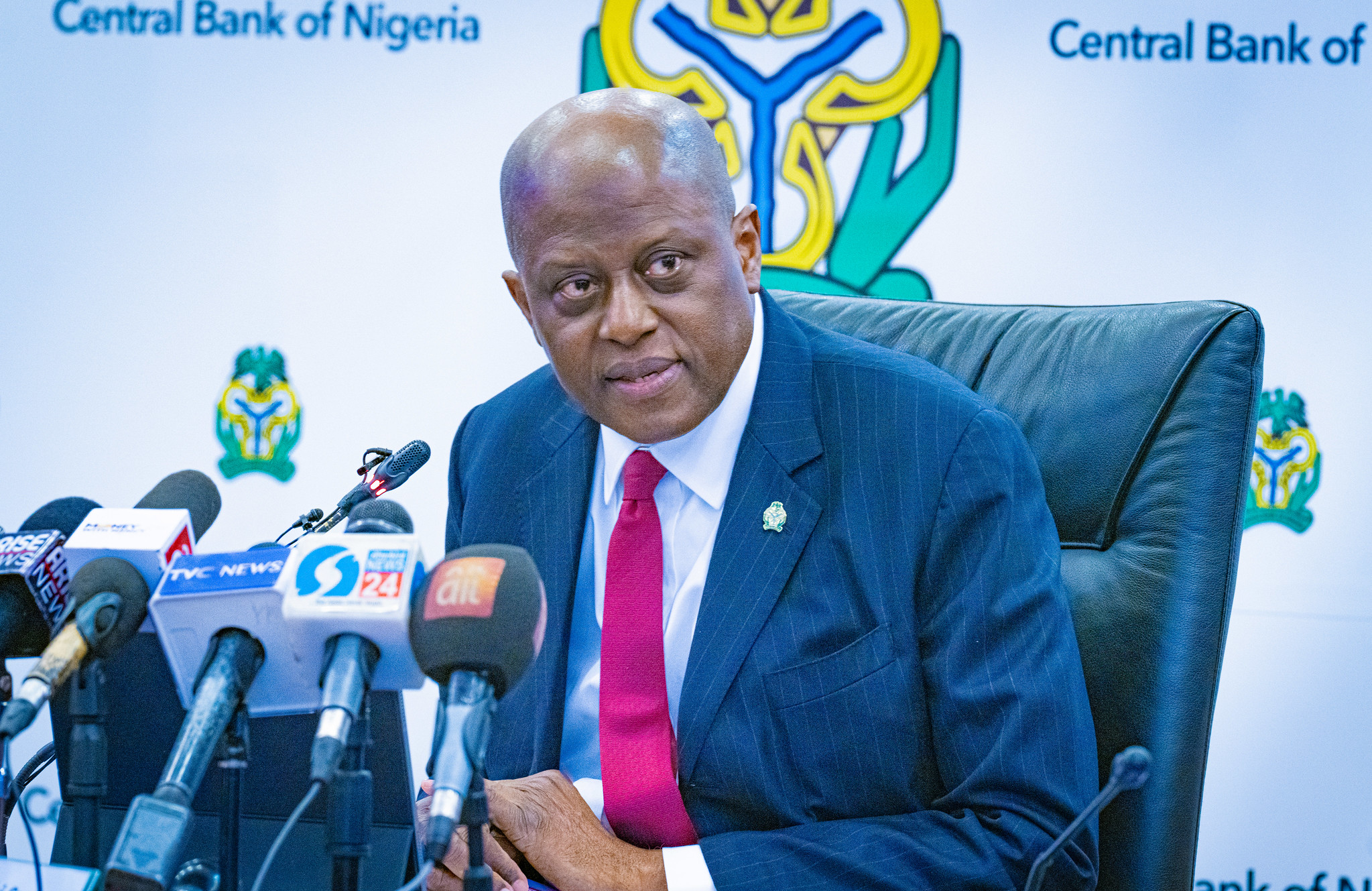
It was, in various respects, a shocker the other day, when the Monetary Policy Committee (MPC) of the Central Bank of Nigeria (CBN) dropped the Monetary Policy Rate (MPR) by a whopping 350 basis points—the first of such quantum cut in the past two decades. The MPC, against all projections, predictions or conjectures, practically did a volte-face, moving from tight monetary stance to monetary easing: bringing down the MPR in one fell swoop from 26.50 per cent to 23 per cent.
Since the inauguration of President Bola Ahmed Tinubu in May 2023, the MPR has maintained an upward trajectory; rising from about 18.05 per cent to 27.50 per cent as of September 2025, when it was reduced marginally by 50 basis points to 27 percent. The rate was again reduced by another 50 basis points on February 24, 2026 during the 307th meeting of the MPC. CBN Governor, Olayemi Cardoso, explained both cuts as being in response to “a sustained slowdown in headline inflation and improving macroeconomic conditions.”
The latest cut, according Cardoso, came sequel to the MPC’s “consideration of trends in the domestic and global economy,” adding that the measure was aimed at strengthening monetary policy transmission and enforcing the primacy of the rate. “Members are of the view that the macroeconomic environment remains supportive of such a recalibration without undermining the disinflation process,” Cardoso said.
These assurances notwithstanding, the Nigerian economy, more than ever before, is yet vulnerable to a multitude of domestic and external headwinds that have continued to stifle its accelerated development. The so-called disinflationary trend, for instance, now appears to be ‘more on paper’ than real; for, had headline inflation truly crashed from 34.83 per cent at end-2024 to mere 15.43 per cent as of end-August 2026, Nigerians’ consumer purchasing power would have substantially strengthened.
A major domestic trigger of high inflationary trend, namely price of petrol, has literally been in a yo-yo movement. Since end-February 2026 when the US-Iran war blew open, and caused a heavy shock to the global oil market, the price of petrol (Premium Motor Spirit, PMS) has almost doubled—from about N700 per liter at the pump to between N1400-N1500 per liter—unleashing and sustaining uncertainty in the polity.
Nigeria’s economic history shows that each time the price of PMS goes up, the prices of virtually all goods and services follow suit. Cost of transportation, prices of all food items, rents, logistics, etc. all shoot up in response to any increase in the price of petrol. This scenario is yet in place, even as the CBN claims disinflation has set in, and was likely to persist.
Contrary to the CBN’s optimism, high inflationary pressure remains potent, and has made nonsense of the salaries and wages of workers at all levels. Thus, days after the apex bank cut the MPR in reaction to what it called “disinflation’, Nigerian public servants under the aegis of the Joint National Public Service Negotiating Council (JNPSNC) have commenced a three-day warning strike (effective 02/10/2026) for the “failure of the federal government to slash the price of petrol to N500 per liter and approve a new wage award for workers.”
Secretary-General of the JNPSNC, Gbenga Olowoyo, says their union had earlier made a number of demands, “including the commencement of negotiations for a wage of no less than N500,000, from 2027, and reduction of fuel price to N500 per liter, among others.” The union scribe lamented in a statement that “the economic and mental hardships are becoming unbearable and frustrating to Nigerian workers.”
On the global scene, the US-Iran war is yet ongoing; and has caused a spike in the prices of both crude oil and refined products (including PMS) to dizzying heights. Unfortunately, Nigeria remains yet an importer of refined products, and continues to be exposed to the vagaries of price shocks in the global market. This transmits imported inflation into the country, since many licensed importers of refined products deploy a lot dollars in importing the commodities.
Besides inflationary pressure, the CBN’s optimism in massively cutting the MPR to leapfrog economic development is yet unfounded, given the plethora of challenges in the land that have stunted the nation’s growth. Nigeria’s generally weak infrastructure provides so much disincentive to businesses—especially the micro, small and medium-scale enterprises (MSMEs). In point of fact, the MPR at 23 per cent remains yet too high for all classes of business.
At its present level, the benchmark interest rate (MPR) still leaves the Federal Government of Nigeria (FGN) as the only dominant player in all financial markets—where it has been crowding out almost all private-sector loan seekers in the past three years. No doubt, the country’s stock of public debt has been rising in leaps and bounds; standing at the humongous sum of N166.80 trillion as of June 2026.
The new debt figure released by Nigeria’s Debt Management Office (DMO) indicated that the country’s public debt rose by 90.9 per cent under President Tinubu’s administration, increasing by N87.4 trillion to N166.79 trillion in June, from N79.39 trillion in May 2023. Even with this debt profile, the FGN is yet on borrowing spree. It is currently in talks with the World Bank for three new loans totaling US$1.5 billion, according to reports.
The World Bank’s documents show that the fresh loans comprise three separate US$500 million facilities for climate resilience, social protection, and early childhood development. Similarly, the FGN is yet borrowing via local and foreign bonds, Treasury Bills, and a plethora of other multilateral financial institutions.
With these, it remains a specious argument to say that the MPR at 23 per cent would enable the deposit money banks (DMBs) to extend more loans to the real sectors of the economy (especially agriculture, manufacturing, etc.). To households and businesses, while cost of funds is an issue, other critical costs like energy, raw materials, food items, logistics are more burdensome and problematic. Besides, the persisting weak consumer purchasing power tells badly on businesses’ turnover—leaving many with huge inventories.
Into all these must be factored the very widespread insecurity in the land that has morphed into an existential threat. Economic agents no longer move freely—persons, goods and services—without (possible) attacks by terrorists, bandits, kidnappers, brigands, etc. The cost of provision of security for persons, households, businesses, and communities has really become prohibitive. To say that most real investors are getting scared amounts to stating the obvious.
In the face of all these, what does the CBN’s huge cut in MPR at this time amount to? Is it the silver bullet that can turn into a magic wand to move Nigeria’s so-called macroeconomic stability to meaningful economic progress?
- The author, Dr. Okeke, a practicing Economist, Business Strategist, Sustainability expert and ex-Chief Economist of Zenith Bank Plc, lives in Lekki, Lagos. He can be reached via: [email protected] (08033075697) SMS only


-

 Latest4 days ago
US Immigration fees rise from October 16 as USCIS announces new charges
-

 Football1 week ago
How David Beckham made $51.1m from 2026 World Cup, surpassing winners’ prize
-
 Health1 week ago
COVID-19 Hospital care under scrutiny as US Senate hears patient, family testimonies
-

 Business1 week ago
OpenAI shelves GPT-6.1 astra release over safety concerns
-

 Business4 days ago
Nigeria’s $55bn reserves raise fresh questions over naira value
-
 Latest1 week ago
ADC’s 2027 Strategy: Who are the key players and what are their roles?
-
 Latest1 week ago
El-Rufai continued detention revives debate over opposition, detention, political power
-
 Latest1 week ago
‘Our Uranium lit Europe, while Niger stayed in darkness’ — PM tells UN