
Features
Spain’s World Cup Triumph Redefines Global Football Landscape

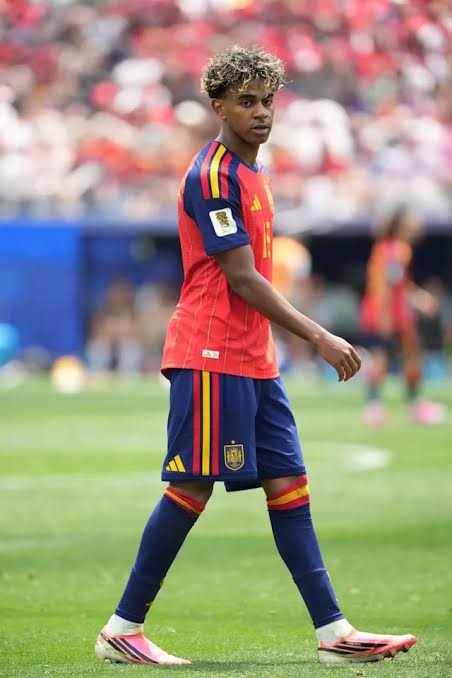
Spain’s 1-0 extra-time victory over Argentina in the 2026 FIFA World Cup final brought the tournament to a fitting conclusion, crowning a side that combined technical excellence, tactical discipline and youthful brilliance throughout the competition.
Ferran Torres scored the decisive goal in the 106th minute after a sustained spell of Spanish dominance, converting Nico Williams’ cross to secure Spain’s second World Cup title, 16 years after their maiden triumph in South Africa.
Beyond the result, Spain’s victory symbolised the emergence of a new generation capable of restoring the country’s place at the summit of world football.
READ ALSO: Spanish nationals in Lagos celebrate Spain’s World Cup triumph
Argentina, meanwhile, fell short in their bid to retain the title won in Qatar in 2022. The defeat also marked what is widely expected to be Lionel Messi’s final World Cup appearance, bringing an end to one of the greatest international careers in football history.
Although the final remained goalless for over 100 minutes, Spain dictated possession, created the clearer chances and restricted Argentina to minimal attacking opportunities. Ferran Torres’ winner ultimately settled a contest that had grown increasingly physical and tense, with Enzo Fernández sent off after receiving a second yellow card.
The 2026 tournament itself marked a historic turning point for international football.
Expanded to 48 teams for the first time, the World Cup featured 104 matches across the United States, Canada and Mexico, making it the biggest edition in the competition’s history.
Despite pre-tournament concerns over logistics, travel, player welfare and soaring ticket prices, the competition delivered memorable football, record-breaking performances and fresh stories from emerging nations.
Spain established themselves as the tournament’s outstanding team through their possession-based style, intelligent midfield control and defensive solidity.
Rodri was rewarded with the Golden Ball as the tournament’s best player after orchestrating Spain’s midfield throughout the campaign.
Goalkeeper Unai Simón claimed the Golden Glove following another outstanding World Cup, while teenage defender Pau Cubarsí won the Young Player Award after a composed series of performances.
France captain Kylian Mbappé finished as the tournament’s leading scorer with 10 goals, securing the Golden Boot for the second successive World Cup and further strengthening his status among football’s elite forwards.
One of the tournament’s biggest success stories came from Africa.
Nine of the continent’s 10 representatives reached the knockout stage — the best collective performance by African teams in World Cup history.
Morocco again impressed by reaching the quarter-finals, while World Cup debutants Cape Verde became one of the competition’s surprise packages after progressing beyond the group stage.
Egypt advanced to the Round of 16, while Algeria, Ghana, Côte d’Ivoire, DR Congo, Senegal and South Africa also reached the knockout rounds, highlighting the growing competitiveness of African football.
Nigeria’s absence from the tournament stood out, particularly as the continent enjoyed its strongest-ever World Cup campaign.
Elsewhere, Norway produced one of the competition’s biggest surprises with an impressive run to the quarter-finals, while Brazil’s early exit underlined the increasing unpredictability of international football.
England secured third place after defeating France in an entertaining playoff, while Spain eliminated France before overcoming Argentina in the final.
Technology, officiating and player welfare remained recurring talking points throughout the tournament.
VAR decisions, hydration breaks and the demands placed on players during the expanded competition generated widespread debate among fans, coaches and analysts.
The North American hosts also delivered an unprecedented entertainment spectacle, blending football with large-scale commercial events, celebrity appearances and the first-ever World Cup final halftime show.
Ultimately, however, the football remained the tournament’s defining feature.
Spain’s triumph rewarded a team built on technical quality, intelligent coaching and collective discipline rather than individual brilliance alone.
The expanded World Cup demonstrated that while traditional football powers continue to dominate the latter stages, emerging nations are steadily closing the gap.
The 2026 edition will be remembered not only for Spain’s return to the summit of world football, but also for redefining the scale, reach and competitive landscape of the FIFA World Cup.


-

 Featured5 days ago
Inside INEC’s race to prepare for Nigeria’s 2027 elections
-

 Latest1 week ago
UCTH faces morgue crisis as 50 unclaimed corpses await mass burial
-
 Featured5 days ago
2027: APC unveils nationwide campaign timetable, Tinubu to rally in 12 states
-

 Business6 days ago
President Tinubu and the Low Transport Fares Fiasco
-

 Business1 week ago
BREAKING: Nigeria’s Inflation Rate Drops to 14.63% in September
-
 Business5 days ago
Court dismisses ₦170m Trade Fair contract claim, says Zenith Bank was not a party
-
 Business2 days ago
Naira faces exchange rate gap as Dollar hits N1,380 on parallel market
-

 Latest5 days ago
Breaking: NNPCL raises petrol price to ₦1,405 per litre amid discount controversy