
Latest
The price of a Degree: Three Nigerians’ stories of sacrifice, survival

By Ihuoma Inyama
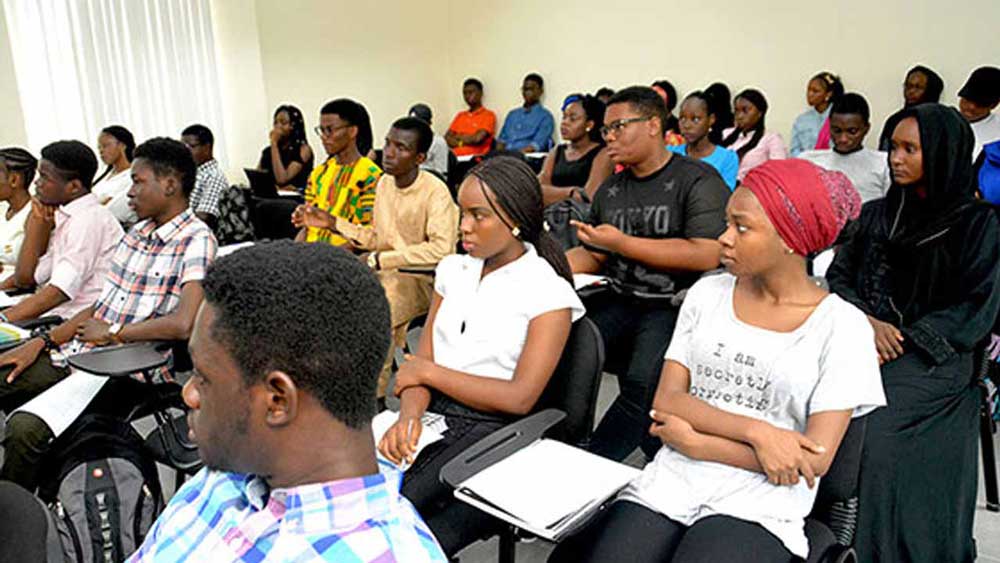
For many Nigerian students, earning a university degree requires more than attending lectures, passing examinations and completing assignments. It also means finding ways to pay school fees, afford transportation and meet daily living expenses while keeping up with academic responsibilities.
For students whose families cannot fully finance their education, survival often depends on their ability to work, run small businesses or combine multiple income sources without abandoning their studies.
The experiences of a civil engineer, a hairdresser and a serial student entrepreneur illustrate how determination, resourcefulness and hard work can help young Nigerians pursue higher education despite financial challenges.
Their stories also highlight the difficult choices students face when the need to earn money competes with the demands of academic life.
For one of them, the journey began at the age of nine, following the death of his father. His mother, a trader, struggled to provide for the family, leaving him to confront financial hardship early in life.
After moving to Lagos while still young, he took up work at construction sites, carrying cement bags, blocks and other building materials to earn money.
Although physically demanding, the job exposed him to the construction industry and sparked an interest in engineering as he watched professionals build houses and manage projects.
He continued doing manual labour and other menial jobs, saving whatever he could until he had enough money to pursue university education.
Admission into university did not end his struggle. He continued working on construction sites while attending lectures and meeting academic requirements.
“There were times when combining work and school was difficult. You would have your academic work to attend to, but you also knew you had to keep working. You couldn’t just abandon one because the other needed your attention,” he recalled.
READ ALSO; ASUU threatens nationwide university strike over unimplemented agreement, withheld salaries
Over time, his experience and growing technical knowledge earned him opportunities to take on more responsibilities at construction sites.
After completing his education and obtaining his professional licence, he became a licensed civil engineer, turning the occupation that helped finance his studies into a professional career.
For his wife, the path to education involved a different set of sacrifices.
After losing her father at a young age, she was left in the care of her grandmother while her mother travelled to Lagos in search of better economic opportunities.
Although her mother provided some financial assistance, she understood that she needed to contribute towards her education and personal expenses.
She initially helped run her mother’s shop and saved money from the business. When schooling made it difficult to continue relying on the shop, she turned to hairdressing as an alternative source of income.
The work provided some financial independence but also created a constant struggle to balance clients’ appointments with academic responsibilities.
She remembers an occasion when a client wanted her to make her hair shortly before an examination.
READ ALSO; Nigeria’s education system must go beyond university admission — Cambridge expert
“I remember having a test the next day, but I also had someone who wanted me to make her hair, and the person was going to pay me well. I kept thinking about whether to do the hair or sit down and study. Somehow, I ended up trying to do both. Even now, I don’t know how I managed it,” she said.
The experience reflected a recurring dilemma: accepting paid work could help cover her expenses, but it could also take valuable time away from studying.
Nevertheless, hairdressing remained an important means of supporting herself while pursuing her educational goals.
Their aunt adopted a more entrepreneurial approach, exploring different businesses to finance her university education.
Although both her parents were alive, their advanced age limited their ability to provide the financial support she needed.
After completing primary and secondary education, she enrolled at university knowing that she would have to find ways to cover many of her expenses.
She started by selling clothes before expanding into shoes, wigs and foodstuffs. She identified products fellow students needed and sought opportunities to sell them within her hostel and immediate environment.
“There was hardly anything I didn’t try selling. I sold clothes, shoes, wigs and foodstuffs. At one point, I was even selling wigs, and honestly, sometimes I wonder where I got the idea or the money to start selling some of those things,” she recalled.
Running the businesses required her to source products, attract customers and manage her earnings while keeping up with lectures and other academic commitments.
“I had to keep looking for something to sell because I needed to survive too. If I noticed people needed something, I would try to get it and sell it. Whatever I made helped me take care of myself and keep going,” she said.
Despite their different circumstances, the three Nigerians shared a common challenge: financing their education without sacrificing their long-term ambitions.
One moved from carrying construction materials to becoming a licensed engineer. Another relied on hairdressing, while the third explored multiple businesses to meet her needs.
Their experiences demonstrate the resourcefulness many students deploy to remain in school. They also underscore the importance of affordable education, student support programmes and opportunities that allow young people to earn money without compromising their studies.
For these three Nigerians, obtaining a degree demanded more than academic ability. It required sacrifice, initiative and the determination to keep going when earning a living and pursuing an education seemed almost impossible to reconcile.


-

 Latest4 days ago
Full List: Meet the 2026 Nobel Prize winners across six categories
-

 Football4 days ago
Premier League Matchweek 7: Five Fixtures That Could Shape the Weekend
-

 Latest3 days ago
Umahi defends Lagos-Calabar highway route changes amid public outcry
-

 Business3 days ago
Dangote Refinery IPO Extension: Was the 70% subscription report overhyped?
-
Business2 days ago
Dangote Refinery IPO: 70% Subscription claim meets fourfold demand assertion as investors seek clarity
-
 Featured3 days ago
El-Rufai, ADC governorship candidate’s court appearance puts Kaduna opposition politics in focus
-
 Latest1 day ago
UCTH faces morgue crisis as 50 unclaimed corpses await mass burial
-
 Latest4 days ago
Makinde’s Chief of Staff, Segun Ogunwuyi, resigns