
Latest
Umahi defends Lagos-Calabar highway route changes amid public outcry

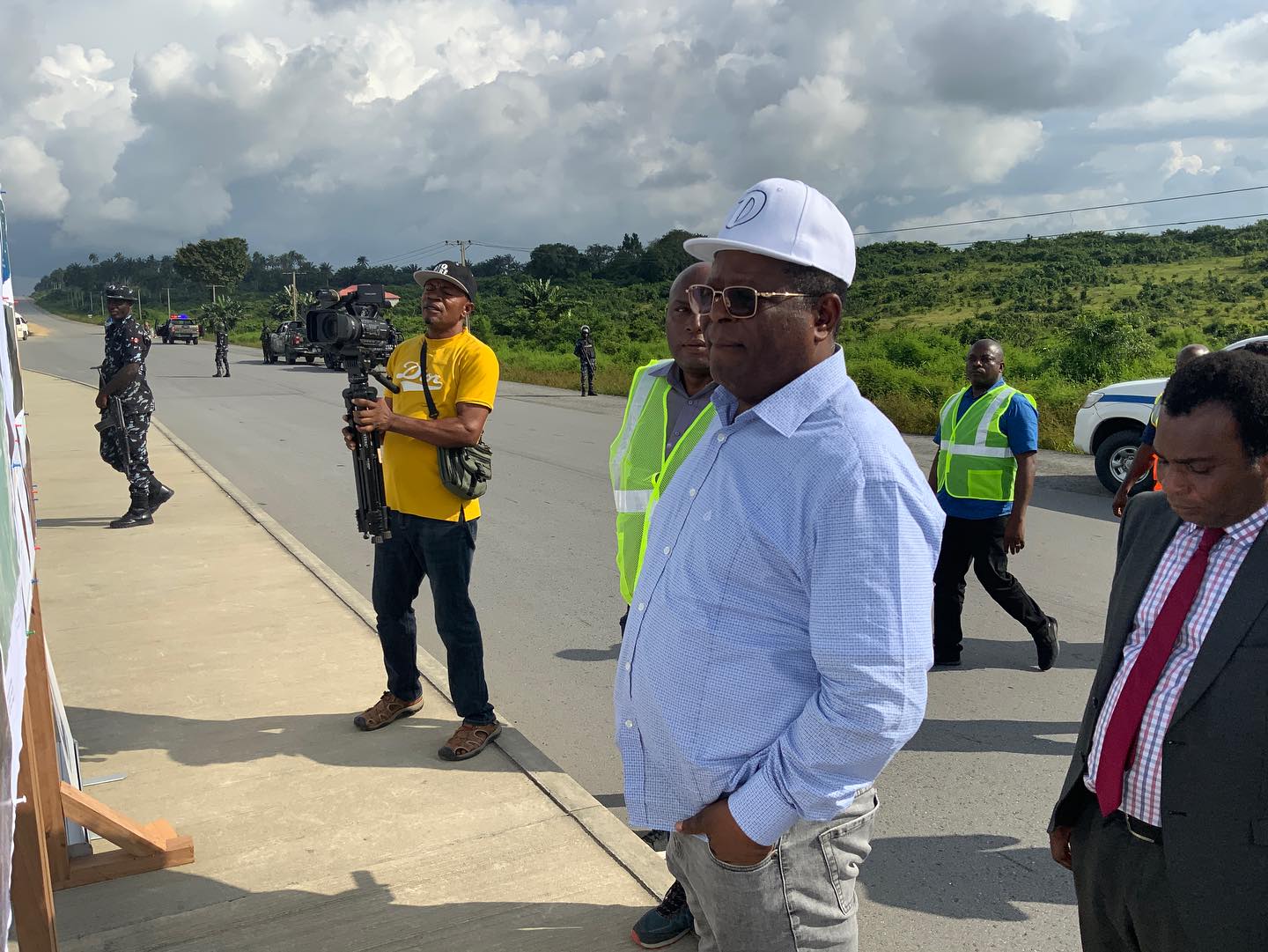
Minister of Works Dave Umahi has defended changes to the alignment of the Lagos-Calabar Coastal Highway amid growing public scrutiny, disclosing that President Bola Tinubu has directed that part of the project should pass through the existing East-West Road from Ondo State into Edo State rather than follow a new route along the corridor.
Umahi said Tinubu instructed the government to avoid constructing a new alignment on the affected stretch, citing the need to use the existing road as part of the coastal highway project.
“Divert, do not do any new alignments. Pass the coastal highway through the existing East-West road,” the minister quoted the President as saying.
The directive introduces another development into the debate surrounding the multibillion-naira coastal highway, a flagship infrastructure project designed to connect Lagos with Calabar through Nigeria’s coastal states.
READ ALSO; Coastal Highway: 147 structures affected in Lagos, five to go — Tinubu
The project has attracted public attention over its cost, route selection, procurement process, compensation arrangements and environmental implications. The latest adjustment has also raised questions about the highway’s final alignment, the cost of the changes and their implications for communities along the original route.
Flooding concerns drive East-West Road adjustment
According to Umahi, the decision to incorporate the existing East-West Road was partly informed by persistent flooding, particularly around Ughelli in Delta State.
The minister explained that parts of the road were constructed before the effects of climate change and changing flood patterns were adequately anticipated, leaving some sections vulnerable to flooding.
He said the Federal Government planned to raise affected sections by approximately two metres above their existing levels and anticipated flood levels.
However, details of the proposed engineering intervention, the precise length of the affected corridor and the cost implications of the adjustment were not provided in the announcement.
The decision has raised questions about whether incorporating the existing road into the coastal highway would adequately address the underlying drainage and flooding challenges.
It also remains unclear whether the government has published independent engineering assessments comparing the proposed route with alternative alignments.
Umahi explains Ondo route diversion
The minister also defended changes to the Ondo State section of the highway, acknowledging that petitions had been submitted against him over the decision to alter the route.
“I am aware of petitions against me saying I diverted the Ondo section. I welcome that,” Umahi said, maintaining that the government had no regrets about the decisions taken.
According to him, the original alignment presented significant engineering challenges, including deep pits and unsuitable terrain that would have substantially increased construction costs.
He said Sections 4A and 4B, covering 67 kilometres across Ogun and Ondo states, had been redesigned to avoid the difficult terrain.
Umahi added that the government was undertaking extensive filling works, exceeding 10 metres in some locations, using sharp sand. He said the work was almost completed.
The minister’s explanation, however, leaves questions about the financial and technical implications of the redesign.
The government has yet to provide a detailed public breakdown of the savings attributed to the revised alignment, the additional expenditure associated with the filling works or the comparative assessments used to approve the changes.
Umahi disclosed that the Ondo-Edo corridor, including the 45-kilometre Benin bypass, measures approximately 104 kilometres.
According to the minister, the first section, measuring 47.47 kilometres from Victoria Island in Lagos, had been completed and was awaiting commissioning
The second section, covering 55 kilometres towards the Lagos-Ogun boundary, was expected to be completed the following month.
READ ALSO; Fresh anxiety for property owners as FG expands Lagos-Calabar Coastal Highway right of way
At the Calabar end, Sections 3A and 3B, spanning 65 kilometres, had achieved more than 30 per cent completion, he said.
Other components of the wider coastal road programme include an 82-kilometre dual carriageway in Akwa Ibom State and an 88-kilometre link between Calabar and Ebidi Beach.
Umahi also announced plans for a 129-kilometre dual carriageway between the Edo-Delta and Delta-Bayelsa boundaries, with construction expected to begin in November.
The figures indicate that construction activities are taking place across several sections of the project. However, the government has yet to present a consolidated account of how the various road components fit into the final coastal highway alignment.
A comprehensive update showing the approved route, total projected cost, funding arrangements and completion timetable would help clarify the relationship between the original project and the additional road interventions.
Route changes raise accountability questions
The Lagos-Calabar Coastal Highway was conceived as a major dual-carriageway project intended to improve connectivity along Nigeria’s Atlantic coastline, facilitate trade and tourism, and support economic activities across several states.
Its implementation has generated debate over the selection of routes, construction costs, procurement arrangements, environmental concerns and the commencement of work in sections.
The latest changes have added to the need for greater transparency about the project’s engineering decisions and implementation.
While the Federal Government may argue that rerouting is necessary to avoid difficult terrain, reduce construction costs or address flooding, those explanations can be assessed more effectively if the supporting technical documents are made available.
The proposed use of the East-West Road, in particular, raises questions about how the government intends to reconcile the coastal highway’s original objectives with the rehabilitation, elevation and flood-control requirements of an existing road.
The government also needs to clarify whether the revised alignment will affect the scope of contracts already awarded, the responsibilities of contractors and the overall delivery schedule.
For communities along the original and revised routes, the implications could extend to access, compensation and the anticipated economic benefits of the highway.
Calls for clearer project details
Umahi’s defence centres on the government’s position that the route adjustments are responses to engineering difficulties and practical construction considerations.
However, the minister’s assurances do not replace the need for publicly accessible evidence supporting the decisions.
Publishing revised route maps, engineering assessments, cost comparisons and relevant approvals would enable stakeholders to understand why the changes were considered necessary and how they affect the project’s overall financial and technical objectives.
A clear explanation of the revised alignment would also help establish whether the changes represent adjustments within the original project scope or require broader modifications to the highway’s design and delivery arrangements.
For now, the Federal Government says the coastal highway will avoid difficult terrain in parts of Ondo State, use the existing East-West Road along another corridor and incorporate substantial elevation works to address flooding.


-
 Latest7 days ago
Israel marks 3 years since October 7 Hamas attack amid Gaza strikes, election debate
-

 Energy6 days ago
Fuel Battle: Dangote, marketers and government clash over petrol imports
-

 Energy1 week ago
Petrol, diesel prices rise 86% in 2026 as costs hit fresh highs
-

 Football1 week ago
Nigeria’s World Cup exit under spotlight as FIFA’s DR Congo files emerge
-

 Latest1 day ago
Full List: Meet the 2026 Nobel Prize winners across six categories
-

 Latest1 week ago
US Court set to rule on release of FBI, DEA records on Tinubu
-

 Business1 week ago
Nigerian investors at a crossroads as fixed-income yields slide
-

 Latest1 week ago
Oyo APC crisis deepens as Oluyole reconciliation meeting ends in brawl