
Business
President Tinubu and the Low Transport Fares Fiasco

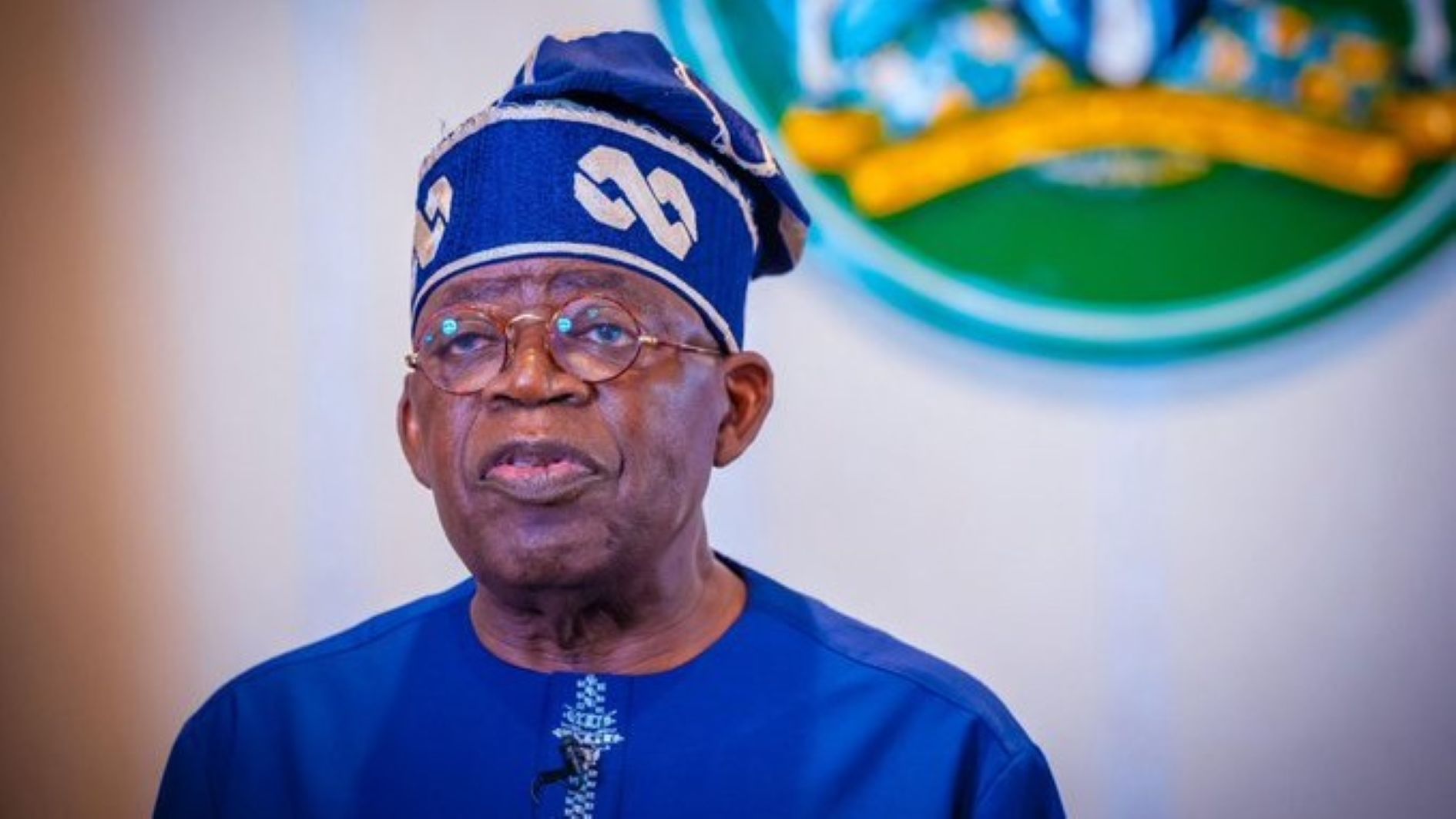
In his usual fire brigade approach, President Bola Ahmed Tinubu, late last August, when campaigns for January 2027 presidential elections had commenced, summoned governors of Nigeria’s 36 states to a meeting, solely to discuss approaches to lowering transport fares across the country. Exorbitantly high transportation costs have been part of the hallmarks of the Tinubu administration since May 29, 2023, when, at his inauguration, he announced, extempore, the full removal of fuel subsidy as an economic policy.
President Tinubu’s pronouncement of fuel subsidy removal caused quantum spike in the prices of all refined products, particularly Premium Motor Spirit (PMS)—whose price rose from below N200 per liter at the pump to around N800 per liter in a matter of days. Since then, the price of PMS has been experiencing episodic increases until February 28, 2026, when the currently-raging US-Iran war blew open—unleashing global energy shock that pushed up prices of both crude oil and refined products to dizzying heights.
The price of PMS (or petrol) has been hovering around N1500 per liter in the past few months; and rising close to N2000 per liter in several locations across the country. Sequel to the deliberations during his meeting with the state governors, under the aegis of Nigeria Governors’ Forum (NGF), President Tinubu had severally told Nigerians about a ‘magical date’—October 1, 2026—when transport fares around the country would crash.
President Tinubu’s optimism and confidence, apparently, was hinged on ‘massive’ deployment of vehicles that run on Compressed Natural Gas (CNG), as opposed to PMS or diesel. Unfortunately, CNG plants are yet few and far between in Nigeria—such that most owners of vehicles itching to convert to CNG got thoroughly disappointed. Those already converted rarely found gas stations around to patronize.
Before this ‘crisis point’, the so-called Presidential Initiative on CNG (in form of a committee) has been lying dormant; hardly heard of, until the take-off of the 2027 presidential campaign trail, when the harrowing plight of Nigerians must be given a modicum of attention. But since neither the CNG infrastructure nor the needed (large) transport vehicles were readily available, the projected or expected crash of transport fares come October 1, remained a mirage.
As the ill-digested CNG-focused ‘palliative’ for exorbitant transport fares was yet dragging on, the Tinubu administration literally searched everywhere—but promptly went back to its ‘vomit’—namely, restoration of a semblance of fuel subsidy. As Nigeria’s 66th Independence anniversary was fast approaching, The Presidency issued a statement, announcing that for 30 days (October 1-30), Nigerians would be enjoying a discount at Nigerian National Petroleum Company Limited (NNPCL) retail stations across the country.
The announcement, however, followed a N66-per-liter discount which the NNPCL Retail introduced on 1 October to mark Nigeria’s 66th Independence anniversary. The state-owned oil company said the “discount” was meant to provide temporary relief to Nigerians amid elevated global crude oil prices linked to the Middle East conflict. The NNPCL said further that “the discount applied only to its retail outlets and did not change the market-based pricing framework for petroleum products.”
However, apart from several glitches that have attended the NNPCL discounted pricing at its retail stations, the entire initiative has remained yet cloudy to most Nigerians. This, and the timing of the effort, have also made it look more like a political stunt than a genuine exercise in alleviating the sufferings of Nigerians. As such, more than the first two weeks of October have been spent by top officials of the Federal Government, especially the Minister of Finance, Mr. Taiwo Oyedele, explaining why the fuel discount initiative is not the return of subsidy.
Yet, the perception in the Nigerian polity is dominantly that the Government was restoring “subsidy in disguise.” Even the International Monetary Fund (IMF) has expressed its worry, warning the Federal Government against “restoring a broad petrol subsidy,” recommending instead, “targeted support for vulnerable households to cushion the impact of rising energy costs.”
IMF’s Director of Fiscal Affairs Department, Rodrigo Valdes, gave the advice during a press briefing at the 2026 Annual Meeting of the IMF and the World Bank in Bangkok. He said blanket petrol subsidies were expensive, often benefitting higher-income consumers disproportionately, and worsen fiscal pressures amid rising borrowing costs. Valdes said government should instead use social safety nets and household data to identify people who need assistance.
Apparently, the nearer the 2027 general elections get, the more desperate the Tinubu administration gets in its manifesto-building gambits to be seen as alleviating the asphyxiating plight of Nigerians. Otherwise, since the commencement of fuel subsidy removal and its kindred policy of floatation of the Naira (in the foreign exchange market), millions of Nigerians have been driven into excruciating pains.
The World Bank, the IMF and other critical stakeholders have warned that the reforms have been impoverishing most Nigerians, daily adding to the huge number of the multidimensionally poor in the country. Now, rather than attenuating the pains of suffering Nigerians, the hurried CNG-based transport initiative, and the capricious “subsidy in disguise” appear a colossal failure—indeed, a fiasco!
In point of fact, right from the second half of 2023, when Nigerians got literally pushed to the wall by the resultant pains of the Tinubu reforms, the administration had experimented with several failed palliatives. All manner of wage awards by the Federal and state governments as well as minimum wage deals were struck—but all kept worsening the economic plight of the citizenry. In not a few states, due to very high and rising cost of transportation, workdays per week were reduced to three or two—with workers asked to “work from home” for the rest of the week.
The aggregate negative implication of all this on national productivity is better imagined. Yet, in this twilight of President Tinubu’s four-year first-term, the Government seems to be at its wits’ end—embarking on a lot of “trial and error” gambits like “transport fares must go down.” These are rather adding to the baggage of failed policies—that have been fueled policy somersaults—a hallmark of the administration. Whither the impact, and sustainability in all of these?
- The author, Dr. Okeke, a practicing Economist, Business Strategist, Sustainability expert and ex-Chief Economist of Zenith Bank Plc, lives in Lekki, Lagos. He can be reached via: [email protected] (08033075697) SMS only


-

 Latest4 days ago
Full List: Meet the 2026 Nobel Prize winners across six categories
-

 Football4 days ago
Premier League Matchweek 7: Five Fixtures That Could Shape the Weekend
-

 Latest3 days ago
Umahi defends Lagos-Calabar highway route changes amid public outcry
-

 Business3 days ago
Dangote Refinery IPO Extension: Was the 70% subscription report overhyped?
-
Business2 days ago
Dangote Refinery IPO: 70% Subscription claim meets fourfold demand assertion as investors seek clarity
-
 Featured3 days ago
El-Rufai, ADC governorship candidate’s court appearance puts Kaduna opposition politics in focus
-

 Latest1 day ago
UCTH faces morgue crisis as 50 unclaimed corpses await mass burial
-
 Latest4 days ago
Makinde’s Chief of Staff, Segun Ogunwuyi, resigns