
Education
Nigeria’s education crisis deepens as schools battle infrastructure deficits

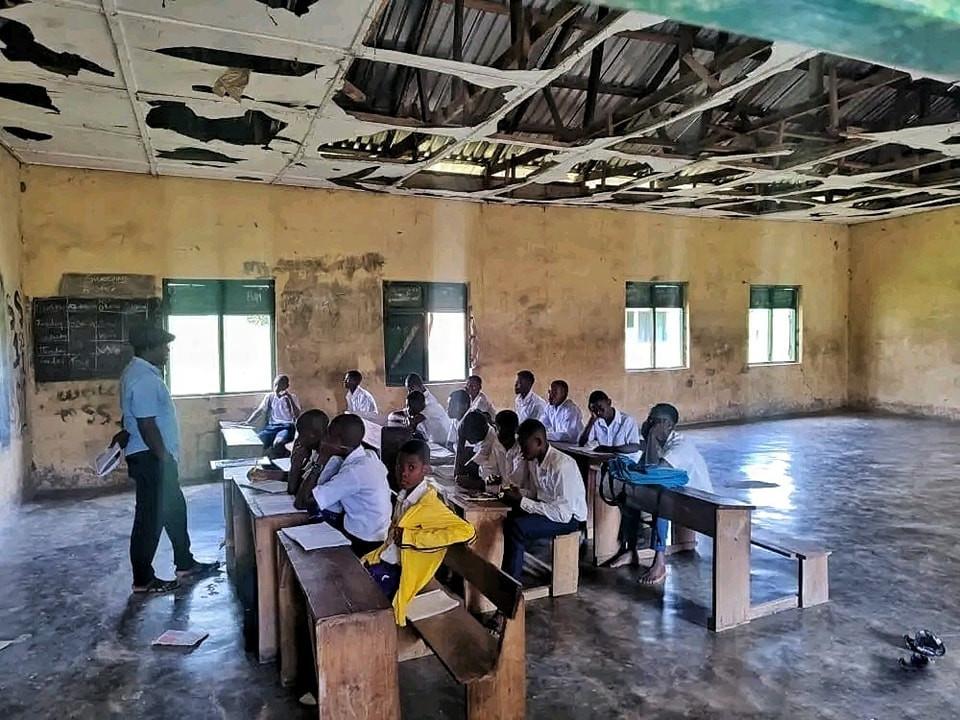
Nigeria’s public education system is facing a deepening infrastructure crisis, with overcrowded classrooms, inadequate toilet facilities, limited access to clean water and deteriorating school buildings exposing millions of children to difficult learning conditions.
Despite government commitments to improve access to quality education, recent education statistics and financial reports reveal a significant gap between public investment, available infrastructure and the actual needs of pupils across the country.
The scale of the challenge is reflected in the Federal Ministry of Education’s 2024/2025 Annual School Census, which recorded approximately 39.8 million learners across Nigeria’s education system.
The data put the national learner-to-classroom ratio at 60.1, considerably higher than the Universal Basic Education (UBE) benchmark of 35 learners per classroom. The learner-to-toilet ratio also stood at 65.9, compared with the recommended 30 learners per toilet.
These figures suggest that many schools are struggling to provide sufficient facilities for their growing populations, putting additional pressure on existing infrastructure and potentially affecting teaching and learning.
However, the statistics should be interpreted with caution: the ministry’s portal recorded information from 124,066 of 230,844 listed schools, representing a reporting rate of 53.7 per cent. The published national indicators therefore do not represent a fully reported census of every school in the country.
Beyond classroom shortages, access to clean water and adequate sanitation remains a major challenge in Nigerian schools.
A 2024 UNICEF situation analysis of children and adolescents in Nigeria found that only 37 per cent of schools had access to basic water supply services, while just 30 per cent had basic sanitation facilities.
The report further indicated that only 17 per cent of schools had both basic water and sanitation services.
Access to hygiene facilities was equally concerning, with handwashing facilities unavailable in approximately half of schools. Only eight per cent had separate toilet compartments for girls with provisions for menstrual hygiene management.
These conditions have implications beyond convenience. Inadequate sanitation and poor hygiene increase children’s exposure to infections and waterborne diseases, while the absence of private and functional toilets can affect girls’ attendance and participation in school activities.
UNICEF also identified insufficient funding, weak maintenance arrangements and limited technical capacity as major factors contributing to the poor state of school water, sanitation and hygiene infrastructure.
While schools continue to struggle with inadequate facilities, concerns have also emerged over the management and utilisation of funds allocated to basic education.
An investigation published by The PUNCH on October 29, 2026, reported that state governments had left ₦264.12 billion in Universal Basic Education Commission (UBEC) matching grants unspent.
The report, citing UBEC’s 2025 annual report, said the funds had been disbursed to State Universal Basic Education Boards but remained unutilised in state government accounts as of July 21, 2025, when the commission conducted financial monitoring visits.
Benue State recorded the highest unspent balance at ₦19.18 billion, followed by Imo with ₦14.12 billion, Osun with ₦14.02 billion, Kwara with ₦13.99 billion and Delta with ₦13.40 billion.
Other states with substantial balances included Borno, Anambra, Kano, Adamawa and Gombe.
Under the UBEC matching grant arrangement, state governments are required to provide counterpart funding to access federal intervention resources for basic education projects.
The grants are intended to support classroom construction and rehabilitation, provision of learning materials, sanitation facilities and other interventions aimed at improving educational standards.
However, the reported unspent balances raise questions about the pace of project implementation and the effectiveness of financial accountability mechanisms.
Importantly, the unspent figures do not establish that the money was stolen or diverted. They indicate that the funds had not been expended at the time of UBEC’s monitoring exercise.
Nigeria’s education financing has also attracted criticism from development organisations.
A UNICEF report published in September 2026, titled Public Finance for Basic Education in Nigeria, identified chronic underfunding as a major factor contributing to poor access and learning outcomes.
According to the report, government expenditure on education as a proportion of total public spending declined from 9.3 per cent in 2015 to 3.6 per cent in 2023.
This is significantly below the internationally recommended benchmark of 15 to 20 per cent of government expenditure.
The report also highlighted poor learning outcomes, revealing that 49 per cent of Primary Three pupils, 67 per cent of Primary Five pupils and 86 per cent of Junior Secondary School Two learners failed to achieve minimum proficiency in mathematics in 2022.
The findings demonstrate that Nigeria’s education challenge extends beyond getting children into classrooms to ensuring that they receive quality instruction and acquire essential skills.
UNICEF noted that although the government has committed to increasing education investment, sustainable funding and more effective utilisation of available resources remain essential to improving basic education.
The infrastructure crisis is unfolding alongside persistent difficulties in getting millions of Nigerian children into formal education.
UNICEF estimates that approximately 18.3 million children of primary and junior secondary school age were out of school in Nigeria, comprising 10.2 million children of primary school age and 8.1 million of junior secondary school age.
Insecurity, poverty, displacement and other socioeconomic challenges have continued to undermine access to education, particularly in vulnerable communities.
The situation is further complicated by attacks on schools. UNICEF reported in September 2024 that 113 schools in Borno, Adamawa and Yobe states had been closed following insecurity-related incidents documented in 2022 and 2023.
The organisation also reported that only 14 per cent of schools assessed in its 2023 Minimum Standards for Safe Schools implementation assessment met basic infrastructure safety requirements, including perimeter fencing and lockable gates.
These challenges demonstrate how inadequate infrastructure, insecurity and limited resources combine to restrict children’s access to safe and effective learning environments.
The challenges facing Nigeria’s public schools raise questions about the effectiveness of government spending, project monitoring and institutional accountability.
Building new classrooms alone may not resolve the crisis if existing facilities are not maintained, toilets remain unusable, water systems break down and schools lack adequate resources for daily operations.
A World Bank assessment of Nigeria’s basic education financing system identified the absence of direct and predictable funding for individual schools as a significant challenge.
The assessment found that schools often depended on occasional government interventions, community contributions and support from alumni associations to carry out repairs and meet operational needs.
It also reported that more than half of classrooms surveyed were in need of repairs or renovation, while the national average stood at approximately 57 pupils per classroom in the assessment’s 2022 data.
The report highlighted how delays in addressing minor maintenance problems can eventually result in more expensive rehabilitation needs.
Addressing the situation will require more than increased budgetary allocations. Federal and state governments must demonstrate that appropriated and released funds translate into completed projects and functional facilities.
UBEC and state education boards also need stronger monitoring mechanisms to ensure that intervention funds are utilised transparently and that contractors deliver projects according to approved specifications.
Ultimately, the condition of Nigeria’s public schools is an important measure of the country’s commitment to human capital development.
For millions of children who depend on government-owned schools, access to education should mean more than a place to sit and receive lessons. It should include safe classrooms, qualified teachers, clean drinking water, functional toilets and an environment that supports learning.
Until government commitments are matched by effective implementation, adequate funding and sustained accountability, the gap between education policies and the daily realities of Nigerian pupils is likely to persist.


-

 Features1 week ago
How ADC leadership crisis put Atiku’s 2027 ambition at risk
-
 Energy1 week ago
NNPC plans 5–10% stock market listing, targets 2027 for IPO preparations
-

 Business1 week ago
LoveWorld Expo 2026 to showcase global innovations, emerging technologies in Lagos
-
 Business4 days ago
DisCos urge Minister to end blame game, apologise to Nigerians over blackouts
-
 Latest1 week ago
2027: No Court rulings can keep me off the ballot, Atiku insists
-

 Latest1 week ago
2027: Wike declares Obi’s political wave dead, dismisses chances of presidential victory
-

 Health5 days ago
Study links Pfizer COVID-19 vaccine to higher death rates than Moderna shot
-

 Latest1 week ago
How internal party disputes could shape the 2027 elections