
Latest
APC crisis: Lawyer raises fresh questions over Court recognition of Okorocha [VIDEO]


A constitutional lawyer and public affairs analyst, Justice Osai Ahiakwo, has questioned the legal foundation of a Federal High Court judgment recognising former Imo State Governor, Rochas Okorocha, as the All Progressives Congress (APC) candidate for Imo West Senatorial District in the 2027 general elections.
Ahiakwo argued that the ruling raises fundamental constitutional questions, particularly over whether Okorocha instituted his pre-election suit within the 14-day period prescribed by the 1999 Constitution.
The judgment, delivered by Justice Obiora Egwuatu, directed Governor Hope Uzodimma to stop presenting himself as the APC senatorial candidate for Imo West and ordered the party to recognise Okorocha.
However, in a legal analysis of the decision, Ahiakwo maintained that the central issue was not merely who secured the majority of votes at the party’s primary, but whether the court had the requisite jurisdiction to entertain the case in the first place.
He cited Section 285(9) of the 1999 Constitution, as amended, which stipulates that pre-election matters must be instituted within 14 days of the occurrence of the event, decision or action being challenged.
According to him, the APC reportedly conducted its Imo West senatorial primary on May 18, 2026, while Okorocha filed his suit on August 13, 2026, a development he said raises questions about compliance with the constitutional timeline.
Ahiakwo, however, cautioned that determining whether the suit was statute-barred would require a careful examination of the specific decision or action challenged by Okorocha.
READ ALSO; How court ruling reshapes APC’s Imo West Senatorial contest
He explained that there could be a distinction between a dispute arising directly from the conduct of the party primary and one challenging a separate administrative decision subsequently taken by the party concerning the recognition of its candidate.
The lawyer warned that such a subsequent administrative decision could not automatically reopen a cause of action that had already become statute-barred.
He stressed that where a pre-election suit is instituted outside the constitutionally prescribed period, the court lacks jurisdiction to determine its substantive merits, regardless of the strength of the claimant’s arguments.
According to him, even a favourable judgment on the substance of a dispute cannot cure a fundamental jurisdictional defect.
Questions over primary election result
Beyond the constitutional timeline, Ahiakwo also examined the reported finding that Okorocha secured the majority of votes during the APC senatorial primary.
He acknowledged that courts could intervene in disputes involving the outcome of party primaries where credible evidence establishes that the declared result does not reflect the lawful outcome.
However, he maintained that such intervention must be exercised within the limits of the court’s jurisdiction and the remedies permitted under the law.
The analyst’s position places the spotlight on two separate but interconnected issues: whether Okorocha was the lawful winner of the APC primary and whether his legal challenge was initiated within the time allowed by the Constitution.
Uzodimma’s eligibility also examined
Ahiakwo also dismissed suggestions that Section 183 of the 1999 Constitution automatically disqualifies Uzodimma from seeking nomination for a senatorial seat while serving as governor of Imo State.
He explained that the constitutional provision primarily restricts a sitting governor from holding another executive office or engaging in paid employment while remaining in office.
Consequently, he cautioned against interpreting the provision as an automatic constitutional barrier to a governor’s nomination for a legislative position.
The clarification introduces another legal dimension to the dispute, which has generated attention within the APC and raised questions about the party’s choice of candidate for the 2027 senatorial election.
Certified judgment needed for definitive assessment
Despite his reservations about the ruling, Ahiakwo warned against drawing conclusive legal interpretations without examining the certified true copy of the judgment and the relevant court processes.
He said the actual reliefs sought, the issues submitted for determination, the evidence presented and the court’s reasoning would be essential in establishing whether the constitutional limitation period was properly considered.
Ultimately, he maintained that the validity of the judgment must be assessed against the constitutional provisions governing pre-election disputes rather than political considerations.
“The Constitution, not political influence, must determine who is lawfully entitled to a party’s nomination,” he said.
The controversy underscores the legal complexities surrounding political party primaries and candidate selection ahead of the 2027 general elections, particularly the strict constitutional timelines governing the resolution of pre-election disputes.


-
 Featured6 days ago
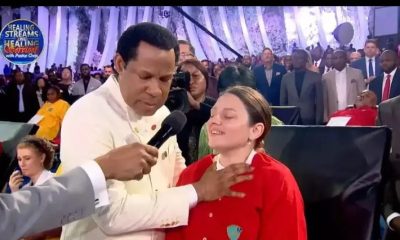
BREAKING NEWS: Shouts of joy rock the world as Pastor Chris opens final Healing Streams edition for 2026
-

 Football7 days ago
Man United shortlist Emery, Nagelsmann as potential replacements for Carrick
-

 Business7 days ago
Hoodlums raid JED Benue office, abduct 10 staff over power dispute
-

 Football7 days ago
Aston Villa ready to freeze out Garnacho to avoid £43m Chelsea transfer
-

 Business7 days ago
EV adoption: Roxettes seeks cheaper financing, local manufacturing incentives
-

 Latest7 days ago
Akpabio tasks Tompolo-backed movement with spreading Tinubu’s renewed hope message
-

 Business6 days ago
How Ethiopian Airlines is challenging Africa’s aviation narrative through self-reliance
-

 Latest7 days ago
2027: Adeyanju predicts Tinubu will defeat Atiku, win 25% votes in every state