Connect with us

Featured

Conakry Landfill Disaster: Is Lagos’ Olusosun dumpsite a warning waiting to happen?

Published

on

Deadly Conakry landfill collapse raises fresh waste management concerns across West Africa

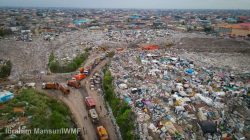
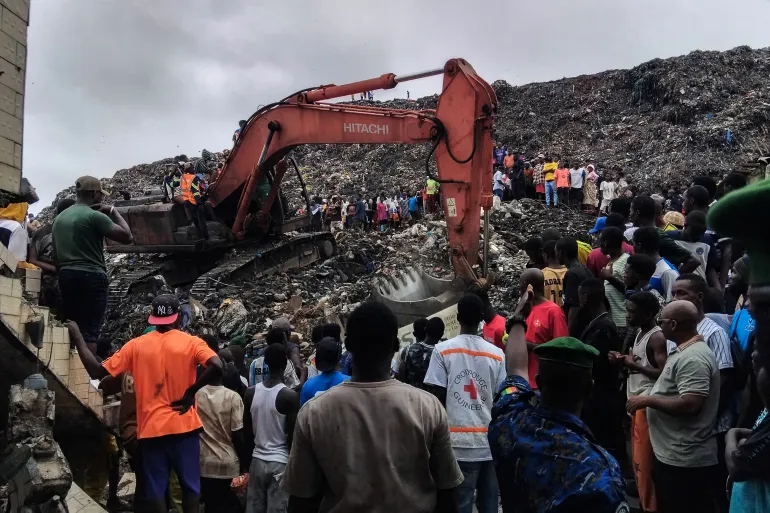
The deadly collapse of a landfill in Guinea that killed at least 30 people has renewed concerns about the safety of communities living around ageing waste disposal facilities across West Africa, including Lagos’ sprawling Olusosun dumpsite in Ojota.

The tragedy in Conakry occurred after heavy rainfall triggered the collapse of a section of the Dar-es-Salam landfill, burying homes and informal settlements around the facility.

While there is no indication that a similar collapse has occurred at Olusosun, the incident has highlighted the risks associated with ageing, heavily loaded waste facilities located close to densely populated communities.

The concern is particularly relevant to Lagos because the state government had previously announced plans to decommission the Olusosun landfill as part of a broader shift away from the traditional “pick-and-dump” waste management system.

In December 2025, Lagos authorities said Olusosun and the Solous 3 landfill would be decommissioned within 18 months, with alternative facilities being developed in places including Badagry, Ikorodu and Epe.

The planned transition subsequently contributed to serious waste-evacuation problems, with refuse accumulating on streets and other public spaces across Lagos.

However, the situation changed as the state struggled to cope with the volume of waste being generated.

In July 2026, LAWMA Managing Director Muyiwa Gbadegesin clarified that Olusosun had not been completely shut down.

According to him, the state was gradually winding down operations while reclaiming portions of the facility to create additional space for waste disposal.

He said the move was necessary to prevent further waste accumulation on Lagos roads while alternative infrastructure was being developed.

The clarification means that while Lagos remains committed to eventually phasing out Olusosun, the facility continues to play a major role in the city’s waste-disposal system.

Recent reports indicate that the site handles approximately 10,000 tonnes of municipal waste every day.

The continued dependence on Olusosun comes amid reports of deteriorating infrastructure at the facility.

A June 2026 investigation found long queues of waste trucks, damaged internal roads, faulty equipment and growing waste accumulation at the site. The report also raised concerns about the impact of the conditions on surrounding communities.

Conakry Landfill Disaster: Is Lagos’ Olusosun dumpsite a warning waiting to happen?
Following the reports, LAWMA rehabilitated Road E and opened additional disposal platforms at the facility in July to improve access and reduce congestion.

The agency said the rehabilitation was necessary partly because heavy rainfall had damaged sections of the access road and slowed the movement of waste trucks.

The Conakry disaster raises a broader question for Lagos: how safe are heavily loaded waste facilities when extreme rainfall, ageing infrastructure and residential development converge?

Environmental experts have repeatedly identified poorly engineered waste dumps, inadequate drainage, unstable slopes and uncontrolled urban development as factors that can increase the risks associated with landfill sites.

The issue is particularly significant in Lagos, where rapid urbanisation has brought residential and commercial activity much closer to facilities that were originally located away from densely populated areas.

Lagos Commissioner for Environment and Water Resources Tokunbo Wahab previously acknowledged the challenge, saying the state could no longer sustain the traditional linear system of collecting and dumping waste.

The state is now developing alternative infrastructure, including Transfer Loading Stations at Olusosun and Solous III, each expected to handle about 2,500 tonnes of waste daily.

The government’s stated objective is eventually to reduce dependence on large open disposal facilities and move towards waste recovery, recycling and waste-to-energy initiatives.

But the Conakry disaster demonstrates why the transition needs to be carefully managed.

For Lagos residents living around Olusosun, the key question is no longer simply when the dumpsite will close, but whether the facility can be operated safely while the city develops alternatives capable of handling thousands of tonnes of waste every day.

The tragedy in Guinea offers Lagos a warning: landfill management is not merely a sanitation issue — it is also a matter of urban planning, environmental protection and public safety.

Continue Reading
Advertisement
Click to comment

Leave a Reply

Your email address will not be published.

Trending