
Latest
Food Security at Risk as Insecurity Disrupts Farming Activities in Nigeria

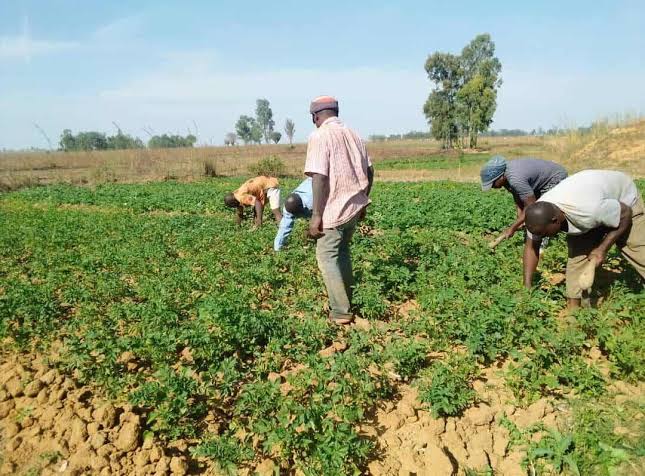
Nigeria’s efforts to achieve food security are facing another major obstacle as insecurity continues to disrupt farming activities in several parts of the country, restricting farmers’ access to their fields and threatening agricultural production.
Recent assessments by the Food and Agriculture Organization of the United Nations show that conflict is severely disrupting agricultural activities in Benue, Borno, Kaduna, Katsina, Niger, Plateau, Sokoto and Zamfara states. Attacks by armed groups, cultivation restrictions and levies imposed on farmers have forced some households to reduce the area they cultivate or suspend farming altogether.
The development is particularly worrying because these states include important agricultural areas that contribute to Nigeria’s food supply. When farmers are prevented from cultivating their land or harvesting their crops, the consequences can extend beyond individual communities to food markets across the country.
The FAO also warned that Nigeria’s 2026 cereal production prospects remain uncertain in some areas. In addition to insecurity, high prices of agricultural inputs are putting pressure on farmers, with fertilizer costs rising significantly during the year. The agency reported that food inflation reached 20.3 per cent in July 2026, underlining the continued pressure on household food budgets.
For farmers living in conflict-affected communities, however, the problem goes beyond rising production costs. Access to farmland itself has become a security concern.
FEWS NET reported that armed groups have continued attacks on farming communities in parts of Benue, Borno, Kaduna, Katsina, Niger, Plateau, Sokoto and Zamfara states. The attacks have included abductions, destruction of farmland, imposed levies and cultivation bans, with the potential to reduce household income and national food availability.
In the Northeast, the situation remains particularly severe. The FAO reported in July that an estimated 6.4 million people in Borno, Adamawa and Yobe states were facing acute food insecurity, including more than 1.1 million people in Emergency conditions and about 10,300 people facing catastrophic levels of food insecurity.
The crisis also affects people who depend on agriculture for more than food. Farmers who lose access to their fields can lose their main source of income, while traders and transporters may also suffer when insecurity prevents agricultural products from reaching markets.
The World Food Programme estimates that nearly 35 million Nigerians are projected to face severe food insecurity during the 2026 lean season. It also reports that about 2.3 million people have been displaced by violence and insecurity in the Northeast, further weakening livelihoods and local food systems.
For many rural families, displacement means abandoning farms, livestock and other productive assets. Even when families remain in their communities, fear of attacks can discourage them from travelling to distant farmland, resulting in smaller cultivated areas and lower harvests.
The problem therefore creates a cycle that is difficult to break. Insecurity prevents farmers from producing enough food; reduced production can contribute to higher prices; higher prices weaken household purchasing power; and declining incomes can make vulnerable families even more dependent on assistance.
The Federal Government has taken steps to improve security around farming communities. In 2024, the Federal Ministry of Agriculture and Food Security announced the deployment of more than 10,000 Agro-Rangers across 19 states and the Federal Capital Territory to help protect farmers and farmlands from insecurity and farmer-herder conflicts.
However, continued attacks in farming areas show that protecting agricultural communities remains an ongoing challenge. Security measures must therefore be complemented by better rural roads, storage facilities, access to agricultural finance, affordable inputs and functioning markets.
There is also a need for stronger cooperation among security agencies, state and local governments, traditional institutions and farming communities. Local intelligence can help security personnel understand emerging threats and respond more quickly to attacks on vulnerable communities.
Food security should not be viewed solely as an agricultural issue. It is closely connected to national security, employment, poverty reduction and economic stability. A farmer who cannot safely reach his or her farm cannot contribute fully to the food supply, regardless of the availability of seeds, fertiliser or government incentives.
As Nigeria continues its efforts to increase domestic food production, securing the nation’s farming communities must remain a priority. Protecting farmers means protecting the food supply, rural livelihoods and the wider economy.
Without sustained action to make farming communities safer, insecurity could continue to undermine efforts to increase agricultural production and make affordable food available to millions of Nigerians.


-

 Latest7 days ago
US Immigration fees rise from October 16 as USCIS announces new charges
-
 Latest2 days ago
Israel marks 3 years since October 7 Hamas attack amid Gaza strikes, election debate
-

 Business6 days ago
Nigeria’s $55bn reserves raise fresh questions over naira value
-

 Health6 days ago
Florida sues Pfizer over deceptive COVID-19 vaccine marketing
-

 Business1 week ago
Tuoyo Erikowa wins digital marketing personality of the Year at 2026 EDGE awards
-

 Crime6 days ago
From camp to captivity: How kidnappers now target NYSC Corps members on highways
-

 Featured6 days ago
2027: Can Nigeria’s opposition still unite behind a single presidential candidate?
-

 Crime6 days ago
Fulani Militia leader linked to Christian killings arrested in Plateau