
Business
FX Crisis: FG may impose excise tax on parallel market transactions

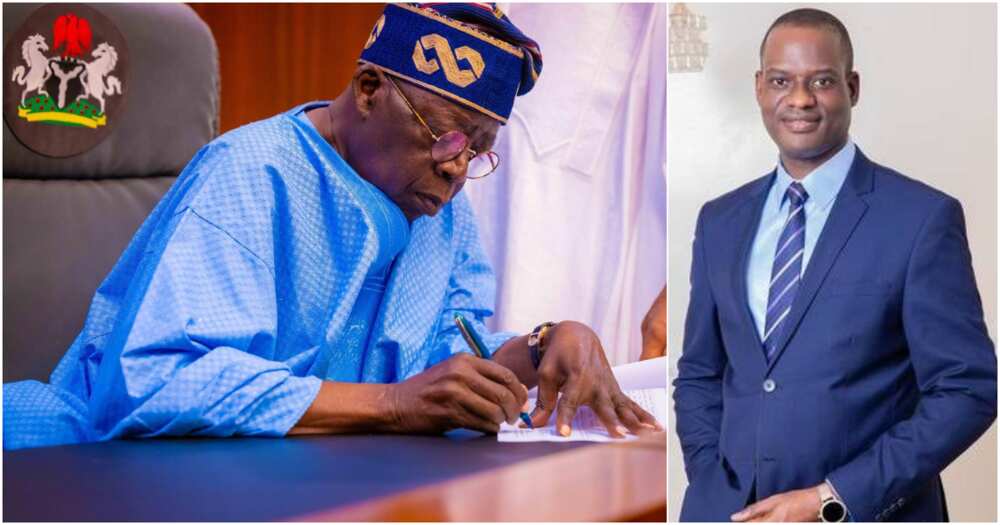
The federal government may soon begin the imposition of excise tax penalties on foreign exchange transactions done outside the official market window as part of the moves to discourage multiple exchange rates in the country.
This is one of the twenty recommendations put forward by the Presidential Fiscal Policy and Tax Reform Committee, established by President Bola Tinubu in July to evaluate and provide guidance on reforms aimed at shaping Nigeria’s fiscal policy and tax system.
The Tax Committee, led by Taiwo Oyedele, proposed a set of “quick win” recommendations.
These recommendations aim to tackle urgent economic concerns, such as exchange rate management, the consequences of removing fuel subsidies, controlling inflation, and promoting economic growth.
One of these suggestions is the introduction of an excise tax on foreign exchange transactions that occur outside the official market.
Taking to his X (Twitter) account, Oyedele highlighted the key developments from their findings presented to the President.
READ ALSO: Naira devaluation dampening foreign stock trading appetite, says analysts
“Imposition of excise tax on foreign exchange transactions outside the official market” is part of what was proposed to the federal government.”
Highlighting some other developments that may be implemented in the foreign exchange market, Oyedele stated the recommendations are meant to promote transparency, encourage ease in business transactions as well enforce the single exchange rate system in the sector. The recommendations include,
“Permit the payment of taxes on foreign currency-denominated transactions in Naira for Nigerian businesses. Discontinue the fx verification portal and requirement for Certificate of Capital Importation and export proceeds restriction.”
As part of the recommendation from the “Quick Win” document, the federal government is also aiming to reduce the number of taxes collected at the federal, state, and local levels of government.
According to Oyedele, this move is said to ensure the removal of impediments from small and middle-scale businesses as well as bolster economic growth and development in the country.
It is important to note that there are over 60 multiple tax systems currently in operation across different tiers of government, most of which are targeted at the informal sector resulting in a constraint in the growth of SMEs.
President Tinubu has directed the implementation of all recommendations by the Presidential Fiscal Policy and Tax Reform Committee across Ministries, Departments, and Agencies (MDAs) of the federal government.
This directive followed the submission of the committee’s report on the ‘quick win’ document by its chairman, Taiwo Oyedele, at the State House in Abuja.
The committee’s work is divided into three phases, with the subsequent two phases, the critical reforms and implementation stages, to be executed within six months and a year, respectively.












-

 Latest5 days ago
Full List: Meet the 2026 Nobel Prize winners across six categories
-

 Football5 days ago
Premier League Matchweek 7: Five Fixtures That Could Shape the Weekend
-

 Latest4 days ago
Umahi defends Lagos-Calabar highway route changes amid public outcry
-

 Business3 days ago
Dangote Refinery IPO: 70% Subscription claim meets fourfold demand assertion as investors seek clarity
-
Business4 days ago
Dangote Refinery IPO Extension: Was the 70% subscription report overhyped?
-

 Latest2 days ago
UCTH faces morgue crisis as 50 unclaimed corpses await mass burial
-

 Featured4 days ago
El-Rufai, ADC governorship candidate’s court appearance puts Kaduna opposition politics in focus
-

 Latest5 days ago
Makinde’s Chief of Staff, Segun Ogunwuyi, resigns