
Aviation
How 2 planes collided while in the air into each other killing 351 people

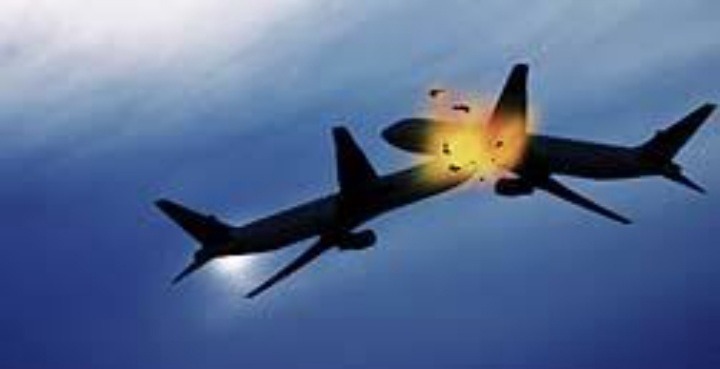
Unlike car crashes and accidents plane crashes rarely occur and when they do occur it’s usually a single plane losing control and crashing to the ground. It’s almost next to impossible for two aircrafts to collide into each, however it still happened.
One of the worst aircraft disasters that killed 351 people happened after two planes collided into each other. This accident occurred due to language barriers and outdated radar equipment.
So what exactly happened on that fateful day. The planes in question were a Kazakh plane and Saudi Arabian Airlines Flight 763. The pilot of the Kazakh plane was about to land the plane at India Gandhi International Airport. He informed air traffic control that he was descending from 23,000 feet to 18,000 feet and he was given permission to descend to 15000 feet.
On the other hand the Saudi Arabian plane was about to leave the airport. The pilot informed air control that he was at 10000 feet and he was given permission to ascend to 14000 feet.
So the Kazakh plane was landing into the airport while the Saudi Arabian plane was departing the airport. All this while the air traffic controlers assumed that both planes would cross each other’s path separated by 1000 feet since the Kazakh plane was at 15000 feet while the Saudi plane was at 14000 feet. Unfortunately they were wrong.
The two planes crashed into each other while travelling at speeds of more than 300 mph. The collision happened at a force 700 times stronger than that of a car crash.
The crash was so intense that people from the surrounding villages saw huge debris of airplanes landing in their fields. These debris landed down over an area six miles wide.
Soon after the crash had happened emergency crews arrived at the scene. It was complete chaos as there was debris and dead bodies everywhere. In total the Saudi plane had 312 passengers while the Kazakh plane had 39 passengers. Not a single passenger survived.
So what caused the deadly crash. According to investigators the pilots of the Kazakh plane used the metric system of counting yet the air control in New Delhi gave instructions in English units. Instead of saying meters above the ground, air traffic told both planes to ascend or descend to a certain level in feet, this may have caused some confusion. The Kazakh crew also didn’t understand English very well so there was breakdown in communication.
Controllers on the ground had warned both pilots that there was another plane in the area therefore both pilots knew there was an incoming plane approaching. The accident was eventually blamed on pilot error.
Fortunately for us due to modern technology, better radar systems, and advanced computer software such types of collisions are almost impossible even if the sky is much more crowded today than it was back then.


-
 Latest6 days ago
Israel marks 3 years since October 7 Hamas attack amid Gaza strikes, election debate
-

 Energy6 days ago
Fuel Battle: Dangote, marketers and government clash over petrol imports
-

 Energy1 week ago
Petrol, diesel prices rise 86% in 2026 as costs hit fresh highs
-

 Football7 days ago
Nigeria’s World Cup exit under spotlight as FIFA’s DR Congo files emerge
-
 Energy1 week ago
Has Iran lost control of the Strait of Hormuz? Oil flows rebound as war disruptions persist
-

 Latest7 days ago
US Court set to rule on release of FBI, DEA records on Tinubu
-

 Latest19 hours ago
Full List: Meet the 2026 Nobel Prize winners across six categories
-

 Business7 days ago
Nigerian investors at a crossroads as fixed-income yields slide