
Business
IMF growth projection sparks debate as Nigeria’s economic reality contradicts “Renewed Hope” narrative

Published
1 hour agoon
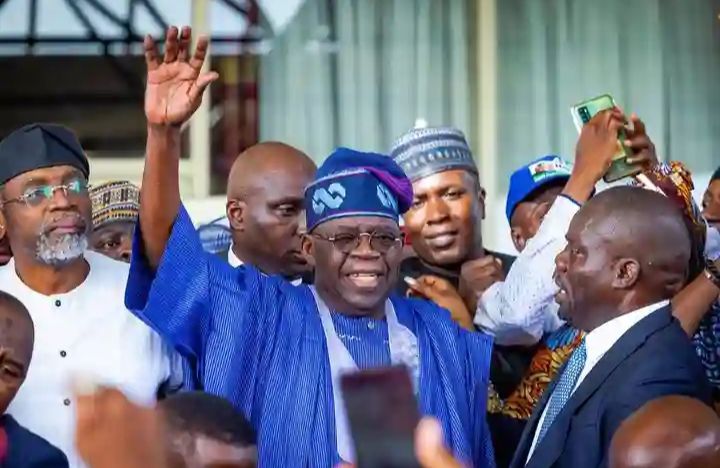
Nigeria’s recent economic projection by the International Monetary Fund (IMF), which forecasts a 4.1 percent GDP growth in 2026, has reignited debate over the true state of the country’s economy under President Bola Tinubu and his “Renewed Hope” economic agenda.
The projection, contained in the IMF’s latest World Economic Outlook, places Nigeria ahead of several advanced economies, including the United States and the United Kingdom in growth rate terms.
Government supporters, including presidential aides such as Daniel Bwala, have pointed to the figures as evidence that ongoing reforms are beginning to stabilise the economy and restore investor confidence.
However, economists and policy analysts warn that the headline growth figures mask deeper structural weaknesses, arguing that Nigeria’s macroeconomic expansion is increasingly disconnected from the lived realities of its over 200 million citizens.
“Growth on Paper, Pain on the Ground”
While the IMF projection suggests progress, critics say the underlying fundamentals tell a different story—one marked by rising poverty, persistent inflation, and declining purchasing power.
According to the World Bank’s Nigeria Development Update, poverty in Nigeria has climbed to about 63 percent, representing roughly 140 million people living below the poverty line.
The report indicates a steady deterioration from 56 percent in 2023 to 61 percent in 2024 and 63 percent in 2025, with projections suggesting the figure could rise further to 141 million by 2026.
Development economist Dr. Chika Nwosu described the trend as “a textbook case of growth without inclusion.”
“When you have rising GDP alongside rising poverty, it means growth is not reaching the productive base of society. It is concentrated, uneven, and structurally weak,” she said.
Similarly, Lagos-based economist, Prof. Ayo Adegboye, noted that “no economy can credibly claim success when the majority of its population is sliding deeper into poverty despite positive growth figures.”
Inflation Pressures and Household Strain
Fresh data from the National Bureau of Statistics shows that inflationary pressures remain entrenched, with headline inflation rising to 15.38 percent in March 2026. Month-on-month inflation increased by 4.18 percent, while the Consumer Price Index climbed to 135.4.
Food inflation, which has the most immediate impact on households, rose to 14.31 percent, further squeezing household budgets.
Economist and policy analyst, Dr. Fatima Bello, said the inflation trend reflects “structural weaknesses rather than temporary shocks.”
READ ALSO: IMF urges Nigeria to focus on debt sustainability, not borrowing mix
“When food inflation remains elevated, it means supply-side constraints, insecurity, and cost-of-living pressures are deeply embedded in the economy,” she explained.
The World Bank has also warned that wage growth has not kept pace with inflation, eroding real incomes even where nominal earnings have increased.
Policy Reforms Under Scrutiny
Key reforms introduced by the Tinubu administration, particularly the removal of fuel subsidies and liberalisation of the foreign exchange market, have been defended by government officials as necessary steps to restore long-term fiscal stability.
However, these policies have significantly increased transportation, energy, and import costs, triggering what analysts describe as a “cost-of-living shock.”
Energy analyst, Dr. Kelvin Adebayo, said the reforms, while economically orthodox, have been socially disruptive.
“Subsidy removal and FX liberalisation are structurally sound reforms, but the timing and cushioning mechanisms determine their human impact. In Nigeria’s case, the adjustment burden has fallen disproportionately on low-income households,” he said.
Rising Debt and Fiscal Concerns
Nigeria’s public debt has reportedly surged beyond N159 trillion, raising concerns about long-term sustainability. While the government maintains that the debt-to-GDP ratio remains within manageable levels, analysts argue that the country’s narrow revenue base makes the situation more precarious than headline ratios suggest.
Professor Ibrahim Musa, a public finance expert, warned that debt servicing is now crowding out critical capital expenditure.
READ ALSO: Tinubu reshuffles cabinet, replaces Edun with Taiwo Oyedele as Finance Minister
“When a large share of government revenue goes into debt repayment, you reduce the fiscal space for infrastructure, education, and healthcare. That is a structural risk,” he said.
Transparency and Governance Questions
Concerns over fiscal transparency have also resurfaced, with opposition figures including former presidential candidate Peter Obi alleging that significant public revenues remain unaccounted for.
Although such claims remain contested, governance experts say they reflect broader public distrust in fiscal management.
Public policy analyst, Barr. Tunde Ajayi, noted: “Whether or not every allegation is proven, the perception of opacity alone is damaging. Economic policy requires trust, and trust is currently weak.”
Oil Windfall and Missed Opportunities
Despite relatively high global crude oil prices hovering between $85 and $90 per barrel, analysts say Nigeria has struggled to translate oil revenue gains into broad-based development.
Energy economist, Dr. Ngozi Okafor, argued that Nigeria’s historical challenge remains fiscal discipline.
“We often experience revenue booms without structural transformation. The problem is not resources; it is how they are managed and invested,” she said.
The Reality Behind the Numbers
On the ground, Nigerians continue to face rising food prices, transport costs, and declining purchasing power. Insecurity in farming communities has further disrupted agricultural output, worsening food inflation.
Urban households are increasingly reporting financial distress, with many adjusting consumption patterns to cope with higher living costs.
Sociologist Dr. Emmanuel Ojo warned that the economic strain is beginning to carry social consequences.
“Economic hardship is no longer just financial. It is becoming psychological and social, eroding trust in institutions and increasing frustration levels,” he said.

You may like
Trending

 Maritime1 week ago
Nigeria sits at the center of West Africa’s stolen vehicle trade

 Football1 week ago
The “Old Guard” of Europe: Exploring the 10 longest-serving managers in the top five leagues
 Latest1 week ago
2027 will be my final presidential bid, says Atiku
 Latest1 week ago
ADC convention: Aregbesola accuses INEC of dereliction of duty, insists party met all Legal requirements

 Health1 week ago
GMO foods linked to increased risk of health problems in children

 Energy7 days ago
Nigerians express frustration as electricity crisis deepens across the country
 Energy6 days ago
Fuel price surge deepens economic pressure across Nigeria

 Comments and Issues7 days ago
UK’s Coventry University: The Panacea to Nigeria’s Crashing Higher Education?