
Business
IMF sees Nigeria, others losing revenue to clean energy

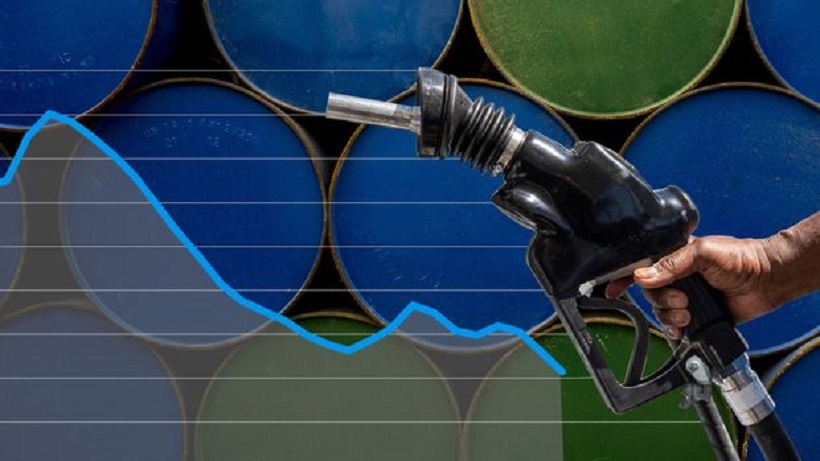
The International Monetary Fund (IMF) has warned oil exporting countries in Africa to save earnings from the boom in crude oil price, as transition to low-carbon energy sources could drag turnover down.
In multiple media reports, the IMF said African oil exporters should create a buffer to manage large swings in oil prices.
Recall that Brent crude oil price had surged nearly to $140 a barrel in March, handing several oil producing countries a whopping sum – but it is $83.42 per barrel as of the time of filing this report.
Saudi Arabia’s Aramco had benefited from the boom in oil price, recording an historic gain of $48.4 billion in the second quarter of 2022 and $87.9 billion in the first half of 2022, compared to $25.5 billion and $47.2 billion recorded respectively for the same periods in 2021.
However, on the part of Nigeria, the country’s oil firm, Nigerian National Petroleum Company (NNPC) Limited, has failed to remit any amount to the federation account.
READ ALSO: Blame NNPC for persistent fuel scarcity, says oil marketers
With NNPC failing to remit into the federation account despite the oil boom, the government will have more to worry about if western countries hasten their transition to clean energy.
“By 2030, oil revenues in the region could fall by as much as a quarter and by 2050, by half. Building buffers now would help the region’s oil exporters navigate the transition toward clean energy while managing oil price fluctuations.”
It was gathered that African oil exporters haven’t accumulated enough savings to protect their economy against unpredictable oil price changes.
Explaining the situation and financial risk countries in the region are likely to face, IMF said, “Oil exporters in sub-Saharan Africa should target buffers of around 5 to 10 percent of gross domestic product to manage large swings in oil prices.
“For many countries, this means they will need to maintain annual fiscal surpluses up to 1 percent per annum over a 10-year period.
“As noted in our latest Regional Economic Outlook, oil prices have fluctuated from lows of $23 per barrel to a peak of $120 over the last two years, resulting in highly uncertain revenues in oil-dependent economies.
“However, most oil exporters in the region haven’t accumulated enough savings to insure against unpredictable oil price changes.
“In fact, sovereign wealth funds in sub-Saharan Africa hold assets of just 1.8 percent of gross domestic product—compared to 72 percent in the Middle East and North Africa—forcing countries to borrow or draw down financial assets when oil prices fall.
“As a result, in the decade through 2020, the region’s oil producers have grown over 2 percentage points slower per year than non-resource intensive countries. Debt service costs have also been almost twice as high as in other sub-Saharan African countries.”


-
 Latest6 days ago
Israel marks 3 years since October 7 Hamas attack amid Gaza strikes, election debate
-

 Energy6 days ago
Fuel Battle: Dangote, marketers and government clash over petrol imports
-
 Energy1 week ago
Petrol, diesel prices rise 86% in 2026 as costs hit fresh highs
-

 Football7 days ago
Nigeria’s World Cup exit under spotlight as FIFA’s DR Congo files emerge
-
 Energy1 week ago
Has Iran lost control of the Strait of Hormuz? Oil flows rebound as war disruptions persist
-

 Latest23 hours ago
Full List: Meet the 2026 Nobel Prize winners across six categories
-

 Latest7 days ago
US Court set to rule on release of FBI, DEA records on Tinubu
-

 Business7 days ago
Nigerian investors at a crossroads as fixed-income yields slide