
Business
Nigeria may struggle to attract foreign capital in 2023 –KPMG

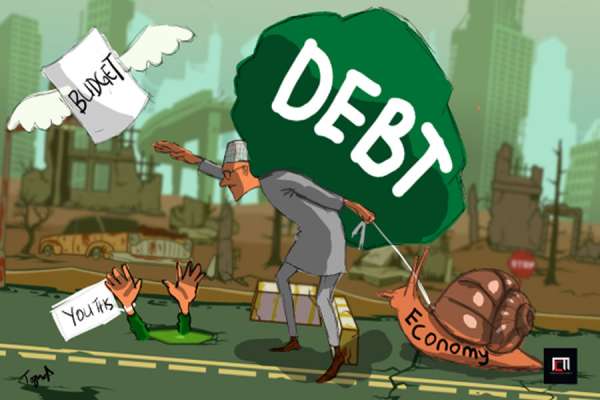
KPMG Nigeria says Nigeria may continue to struggle to attract capital during the year unless the country’s crude oil and non-oil exports are increased.
In an article titled ‘Precipitous Decline in Foreign Capital in a Transition Period’, the professional services firm attributed the decline in capital importation to the rounds of global economies’ monetary tightening as well as low investor confidence due to the ambiguous foreign exchange regime.
The National Bureau of Statistics, in its latest report, said that capital importation into Nigeria declined by 8.53 percent in the fourth quarter (Q4) of 2022.
According to the statistics office, the total capital imported into the country in the period under review was valued at $1.06 billion — down from $1.16 billion in the third quarter of 2022.
According to the firm, factors such as challenges in accessing foreign exchange, high foreign exchange volatility, unflattering ratings by Moody’s and Standards and Poors’, continuous security challenges, high cost of doing business, weak growth and high inflation and interest rates, fiscal and monetary constraints, also contributed to the decline.
READ ALSO: Nigeria’s public debt hits N46.25trn
“Capital importation figures have now shown a persistent decline from $23.9 billion in 2019, $9.65 billion in 2020, $6.70 billion in 2021, and $5.32 billion in 2022,” KPMG said.
“The importance of capital inflows in a country where foreign exchange is in high demand to stimulate economic activity is very clear.
“Accordingly, the continuous decline in foreign capital inflows in the presence of dwindling crude oil sales and generally poor and unstable export earnings has slowed down foreign reserves accretion and widened the foreign exchange supply gap thereby putting pressure on the exchange rate which has depreciated for the most part since 2022.
“Additionally, inadequate access to foreign exchange has constrained inputs for production leading to higher production costs, lower revenues and slower economic growth.”
The firm said that the country is currently experiencing an economic slowdown which suggested weakened consumer demand, hyperinflation, high interest rates and more volatile fiscal and monetary conditions.
“While substantial reforms may yet be done to reverse the trend of declining foreign capital in the long term, we believe that in the meantime, the country will struggle to attract increasing foreign capital for most of 2023 and struggle to keep the exchange rate from depreciating further, unless it is able to boost its crude oil and non-oil exports, especially now that oil prices are once again rising,” KPMG said.


-

 Latest5 days ago
Full List: Meet the 2026 Nobel Prize winners across six categories
-

 Football5 days ago
Premier League Matchweek 7: Five Fixtures That Could Shape the Weekend
-

 Latest4 days ago
Umahi defends Lagos-Calabar highway route changes amid public outcry
-
 Business3 days ago
Dangote Refinery IPO: 70% Subscription claim meets fourfold demand assertion as investors seek clarity
-
Business4 days ago
Dangote Refinery IPO Extension: Was the 70% subscription report overhyped?
-

 Latest2 days ago
UCTH faces morgue crisis as 50 unclaimed corpses await mass burial
-

 Featured4 days ago
El-Rufai, ADC governorship candidate’s court appearance puts Kaduna opposition politics in focus
-

 Business2 days ago
BREAKING: Nigeria’s Inflation Rate Drops to 14.63% in September