
Business
Nigeria’s rising debt servicing cost unsettles investors, expert laments

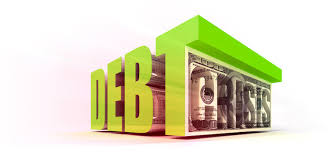
The cost of servicing government debt in Nigeria is dampening foreign investors’ appetite to inject capital into the country.
Apparently, many investors are still willing to lend to the country despite the signs that their money might not be put into productive use.
Although there has been a worrying question among analyst over the proceeds of bond sales in Nigeria. This has led to questions over the sustainability of the country’s public finance sector.
According to Andrew Roche, Managing Partner at Paris-based financial consulting firm Finexem, Nigeria has borrowed quite a lot, with very little evidence as to where the money was spent.
He also expressed his worry over the Government using borrowed funds to patch up holes in budgets rather than investing in infrastructure or industry, as part of efforts to diversify the economy from a heavy dependence on oil.
ALSO READ: Local Council Autonomy and Insecurity
He continued that Nigeria has been among the big beneficiaries of a global hunt for yield. The country sold its sixth Eurobond last November, raising $2.9bn in maturities of 7, 12, and 30 years in an issue that was more than three times oversubscribed.
On April 25, the Government raised N100 billion ($326m at the official rate) in an auction that included a debut 30-year local currency bond that was four times oversubscribed.
Roche said some investors might have overlooked some worrying metrics.
The minister of Finance, Zainab Ahmed during a presentation to investors in Washington last month said that even though Nigeria’s debt has risen in recent years, it still equalled to just 19 percent of gross domestic product in 2018.
According to her, it is well below the average for emerging markets of just under 50 percent of GDP, according to the Institute of International Finance.
But the same presentation showed that even though the amount spent on servicing Government debt had fallen, share of the Government’s gross revenue collection had risen to an alarming two-thirds of revenues retained by the Federal Government after it distributed funds to the states, as mandated by Nigeria’s federal system.
IMF data showed that Nigeria’s general government revenues were equal to just 5.7 percent of GDP last year, far below the average of 22 percent of GDP for the other 44 sub-Saharan countries for which the IMF collects data.
In its latest report on Nigeria published last month, the IMF also emphasised the need for “revenue-based consolidation” to lower the ratio of interest payments to revenue. The report went further to recommend that “non-oil revenue mobilisation” should be the top priority in “an urgent reform package.”


-
 Latest1 week ago
Israel marks 3 years since October 7 Hamas attack amid Gaza strikes, election debate
-

 Energy7 days ago
Fuel Battle: Dangote, marketers and government clash over petrol imports
-

 Latest2 days ago
Full List: Meet the 2026 Nobel Prize winners across six categories
-

 Football1 week ago
Nigeria’s World Cup exit under spotlight as FIFA’s DR Congo files emerge
-

 Latest1 week ago
US Court set to rule on release of FBI, DEA records on Tinubu
-
 Business1 week ago
Nigerian investors at a crossroads as fixed-income yields slide
-
 Featured6 days ago
103 Million Voters: What does INEC’s new register say about Nigeria’s population?
-

 Latest1 week ago
Oyo APC crisis deepens as Oluyole reconciliation meeting ends in brawl