
Latest
PVC Collection Begins October 9: What Nigerian voters need to know before 2027

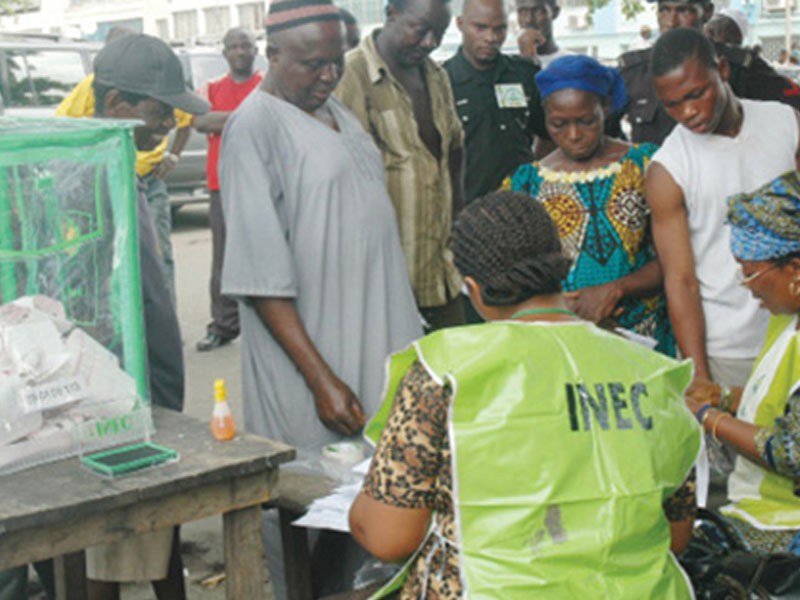
The Independent National Electoral Commission (INEC) will begin nationwide collection of newly issued Permanent Voter Cards (PVCs) on Friday, October 9, 2026, as preparations intensify for Nigeria’s 2027 general elections.
The exercise follows the completion of the latest Continuous Voter Registration (CVR), which recorded more than 10.7 million new registrations across three phases between August 2025 and July 2026.
INEC Chairman, Professor Joash Amupitan, announced the October 9 collection date during the commission’s engagements with stakeholders and readiness assessments ahead of the elections. The commission said its final biometric clean-up of the register had also been completed.
The National Register of Voters now contains more than 103 million voters, according to INEC.
With the first phase of the 2027 elections scheduled for January 16, 2027, voters who participated in the latest registration exercise, requested transfers or made corrections to their voter information need to pay attention to the collection process.
Who Should Collect a PVC?
The October 9 exercise is primarily for Nigerians whose voter records resulted in newly issued PVCs following the recent CVR exercise and related updates.
Those who registered for the first time, transferred their registration to another location or applied for corrections to their voter information should confirm their status and collection details before going to collect a card.
INEC has also urged eligible citizens to ensure that they collect their cards and verify that the information on them is accurate.
The commission has been conducting biometric verification and clean-up of the voter database to identify and remove duplicate or problematic records before the 2027 elections.
Check Your Details Before Election Day
Voters should not wait until election day to discover that their information is incorrect or that they are not properly assigned to a polling unit.
INEC’s voter services allow citizens to check their registration status and polling-unit information. The commission’s official website also provides access to voter services and a polling-unit locator.
Voters should carefully check details such as their name, date of birth and other relevant information when collecting their cards.
Where there is an error or a problem with a voter record, the affected person should contact INEC through its established channels rather than attempting to resolve the issue at the last minute.
The Preliminary Register Also Matters
PVC collection is taking place alongside another important stage in the electoral process — the public scrutiny of the preliminary register of voters.
The exercise gives citizens and other stakeholders an opportunity to identify claims, objections, omissions or other irregularities in the register.
In Ekiti State, for example, INEC announced that the display of the preliminary register and PVC collection would run from October 9 to October 15.
This process is significant because the credibility of an election begins with an accurate register. Citizens should therefore use the opportunity to confirm that their information is correctly captured and raise legitimate objections where necessary.
PVC Remains Necessary for Accreditation
Under INEC’s current election procedures, voters are required to present their PVC for verification through the Bimodal Voter Accreditation System (BVAS) at the polling unit.
INEC’s official election calendar states that accreditation and voting are scheduled to take place simultaneously from 8:30 a.m. to 2:30 p.m. on election days, with voters required to present their PVC for BVAS verification.
The presidential and National Assembly elections are scheduled for January 16, 2027, while governorship and State House of Assembly elections are scheduled for February 6, 2027.
Don’t Wait Until 2027
The commission’s decision to begin PVC collection several months before the elections is intended to give voters sufficient time to collect their cards and resolve problems before polling day.
INEC has also been working to strengthen its election technology ahead of 2027. The commission says it has acquired 57,000 additional BVAS devices and is preparing for further testing of its electoral technology.
For voters, however, the message is straightforward: registration alone does not complete the process.
Those who are eligible to vote should confirm their registration details, collect their PVC when instructed to do so and verify their polling-unit information well before election day.
A Test of Voter Participation
The October 9 PVC collection exercise comes as INEC moves from voter registration towards the broader logistical and operational phase of the 2027 elections.
The commission faces the challenge of managing a voter population of more than 103 million across thousands of polling units, while ensuring that election officials, voting materials and technology are deployed effectively.
INEC Chairman Amupitan has also identified public trust as a crucial component of electoral credibility, warning that administrative failures, technical problems and perceived partisanship could undermine confidence in the process.
For Nigerian voters, therefore, the October 9 PVC collection is more than an administrative exercise. It is an important step in preparing to participate in the 2027 elections.
With the first ballot less than four months away, voters who have completed registration should not assume that their work is finished. Checking their records, collecting their PVCs and resolving any outstanding issues early could prevent avoidable problems when the country goes to the polls.


-

 Latest6 days ago
US Immigration fees rise from October 16 as USCIS announces new charges
-
 Latest1 day ago
Israel marks 3 years since October 7 Hamas attack amid Gaza strikes, election debate
-

 Business6 days ago
Nigeria’s $55bn reserves raise fresh questions over naira value
-

 Health5 days ago
Florida sues Pfizer over deceptive COVID-19 vaccine marketing
-

 Business1 week ago
Tuoyo Erikowa wins digital marketing personality of the Year at 2026 EDGE awards
-

 Crime5 days ago
From camp to captivity: How kidnappers now target NYSC Corps members on highways
-

 Featured6 days ago
2027: Can Nigeria’s opposition still unite behind a single presidential candidate?
-

 Crime5 days ago
Fulani Militia leader linked to Christian killings arrested in Plateau