
News
Watch Prince Charles speak pidgin after eating a proper Nigerian Jollof Rice

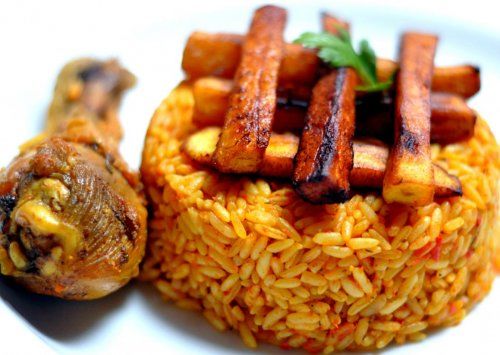
In joining the list of diplomats and tourists who have been fascinated by the Jollof Rice Cuisine Nigeria and other African Nations have to offer. Prince Charles also gave his voice to the ongoing dispute over whose Jollof rice is best.
He however took a side step on revealing his own preference.
Speaking in Nigeria at the end of his West Africa tour, he said: “Having also visited The Gambia and Ghana over the past week, our visit to Nigeria may perhaps provide an invaluable opportunity to compare – if one ever dares do such a thing! – the relative merits of each country’s Jollof rice… however, for fear of sparking a diplomatic incident, I suspect I shall have to let you draw your own conclusions about which country’s Jollof we found to be the most delicious!”
The last high-profile British person to dare to talk about Jollof rice was the chef, Jamie Oliver, who at least seemed to unite West Africans in condemnation of his own recipe.
We suspect that Prince Charles was briefed about the ongoing rivalry over the traditional dish made with rice, tomatoes and spices because he was so careful not to reveal his favourite.
The high point of Prince charles speech was when he spoke the pidgin English, ‘Naija No Dey Carry Last’. And that cracked the ribs of his audience.
Watch the Video Below:
https://youtu.be/aKlJz9LiL-s







-
 Latest5 days ago
Israel marks 3 years since October 7 Hamas attack amid Gaza strikes, election debate
-

 Energy5 days ago
Fuel Battle: Dangote, marketers and government clash over petrol imports
-

 Energy6 days ago
Petrol, diesel prices rise 86% in 2026 as costs hit fresh highs
-

 Energy7 days ago
Has Iran lost control of the Strait of Hormuz? Oil flows rebound as war disruptions persist
-

 Football6 days ago
Nigeria’s World Cup exit under spotlight as FIFA’s DR Congo files emerge
-

 Latest6 days ago
US Court set to rule on release of FBI, DEA records on Tinubu
-

 Business6 days ago
Nigerian investors at a crossroads as fixed-income yields slide
-

 Business7 days ago
LoveWorld Trade and Investment Forum to Convene Business Leaders in Accra