
Uncategorized
Study finds connection between graying hair and viral infection

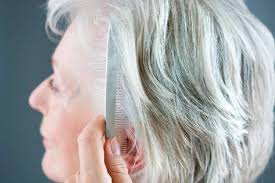
Researchers at the National Institutes of Health and the University of Alabama, Birmingham, offered insights into why some people’s hair may turn gray in response to a serious illness or chronic stress.
A new study on mice, published in the open access journal, PLOS Biology, discovered a connection between the genes that contribute to hair color and the genes that notify our bodies of a pathogenic infection.
According to the researchers, when a body is under attack from a virus or bacteria, the innate immune system detects them and responds by producing signaling molecules called interferons.
Interferons signal to other cells to take action by turning on the expression of genes that inhibit viral replication, activate immune effector cells, and increase host defences.
Melissa Harris, the lead author and assistant professor within the Department of Biology at UAB found a connection between hair pigmentation and innate immune regulation.
In this study, an unexpected link was found between gray hair, the transcription factor MITF or Melanogenesis Associated Transcription Factor, and innate immunity.
MITF is best known for its role in regulating the many functions within melanocytes.
The researchers found that MITF also serves to keep the melanocytes’ interferon response in check.
Harris said, melanocyte stem cells were essential to hair color as they produced the melanocytes that were responsible for making and depositing pigment into the hair shaft.
They found that if MITF’s control of the interferon response was lost in melanocyte stem cells, hair-graying resulted.
Furthermore, if innate immune signaling is artificially activated in mice that are predisposed for getting gray hair, increased numbers of gray hairs are also produced.
“This new discovery suggests that genes that control pigment in hair and skin also work to control the innate immune system,” said William Pavan, study co-author and chief of the Genetic Disease Research Branch at National Human Genome Research Institute under National Institute of Health.
“These results may enhance our understanding of hair graying. More importantly, discovering this connection will help us understand pigmentation diseases with innate immune system involvement like vitiligo,” said Paven.
Continue Reading


-

 Business1 week ago
Dangote Refinery IPO: 70% Subscription claim meets fourfold demand assertion as investors seek clarity
-

 Featured4 days ago
Inside INEC’s race to prepare for Nigeria’s 2027 elections
-

 Latest6 days ago
UCTH faces morgue crisis as 50 unclaimed corpses await mass burial
-

 Featured4 days ago
2027: APC unveils nationwide campaign timetable, Tinubu to rally in 12 states
-

 Business6 days ago
BREAKING: Nigeria’s Inflation Rate Drops to 14.63% in September
-

 Aviation1 week ago
Germany opens online application route for student, EU Blue Card and other long-stay visas
-

 Business4 days ago
Court dismisses ₦170m Trade Fair contract claim, says Zenith Bank was not a party
-

 Business5 days ago
President Tinubu and the Low Transport Fares Fiasco