
Business
U.S. tech giants urge Biden to rethink sweeping AI chip export restrictions

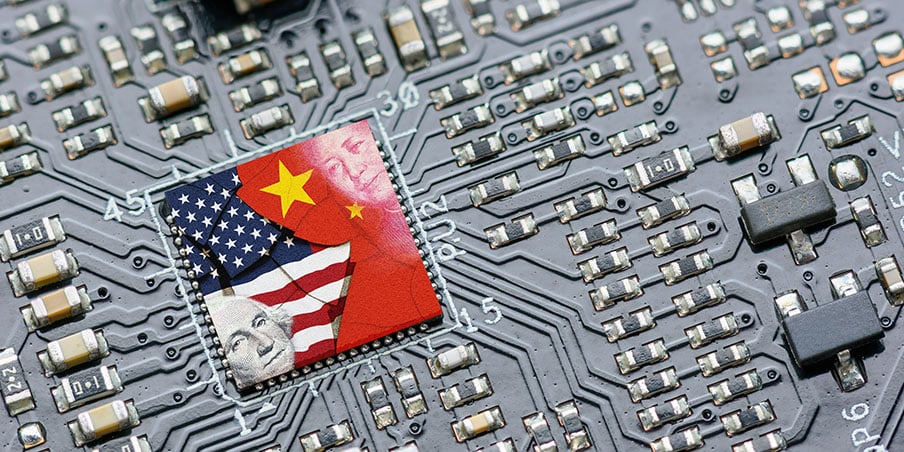
Leading American tech companies, including Amazon, Microsoft, and Meta, have joined forces to urge President Joe Biden to reconsider proposed regulations on global AI chip exports.
The companies, represented by the Information Technology Industry Council (ITI), warned that the policy could harm U.S. leadership in artificial intelligence (AI) and have unintended global ramifications.
The regulation, expected to be finalized by the U.S. Commerce Department as early as Friday, aims to restrict advanced AI chip exports to prevent adversaries, particularly China, from leveraging these technologies for military advancements.
However, the rule would also impact access to U.S.-made AI chips in other countries, including Nigeria, which is actively developing its AI ecosystem.
The ITI has expressed concerns over the rule’s potential to stifle U.S. innovation while benefiting international competitors.
In a January 7 letter to U.S. Commerce Secretary Gina Raimondo, ITI CEO Jason Oxman criticized the hurried rollout of such a significant regulation in the final weeks of President Biden’s administration.
“Rushing a consequential and complex rule to completion could have significant adverse consequences,” Oxman wrote, urging the administration to delay the decision and engage in broader consultations. While acknowledging the importance of safeguarding national security, he emphasized the need for a more balanced approach.
READ ALSO: Biden orders U.S. forces to aid Israel’s defence against Iran
The Semiconductor Industry Association (SIA) echoed these sentiments, warning that stringent export controls could erode the U.S.’s competitive edge in the global AI market. Oracle Executive Vice President Ken Glueck also weighed in, labeling the proposed restrictions as “the Mother of All Regulations on the commercial cloud industry” in a blog post.
Microsoft’s Vice Chairman and President, Brad Smith, highlighted the broader geopolitical stakes in a January 3 blog post.
He compared the intensifying AI race between the U.S. and China to the evolution of the telecommunications industry, where Chinese companies, heavily subsidized by their government, overtook Western firms. This dominance led to dependencies that posed challenges to U.S. national security.
Smith warned that China is now applying a similar strategy in AI by subsidizing access to critical technologies, such as chips, and building AI infrastructure in developing nations. “Generative AI has intensified the competition, with Chinese companies leveraging state support to establish long-term dependencies,” he said.
While the primary target of the rule is China, its ripple effects would be felt globally.
Developing nations like Nigeria, which are investing heavily in AI-driven technologies, could face significant setbacks due to limited access to cutting-edge U.S. chips. This could further widen the AI technology gap between developed and developing countries.
Dr. Aminu Bello, a Nigerian AI researcher, noted, “The restrictions could slow down AI adoption in emerging economies like Nigeria, making us overly reliant on less advanced technologies. This not only hampers innovation but also reinforces global inequalities in tech development.”
Stakeholders across the tech and semiconductor industries have urged the administration to shift to a proposed rulemaking process, which would allow for public comment and in-depth deliberation.
Critics argue that the current timeline does not provide sufficient room for evaluating the economic and geopolitical consequences of the restrictions.
As of Tuesday, the U.S. Commerce Department and the White House had not responded to requests for comment, leaving the tech industry and international stakeholders anxious about the rule’s potential outcomes. The final decision could significantly reshape the global AI landscape, influencing not only U.S.-China relations but also the technological trajectories of nations worldwide.


-

 Business3 days ago
OPay explains how Nigerians can access FG’s N50,000 monthly cash relief
-

 Sports7 days ago
Senegal opens Dakar 2026 Youth Olympic Games, Africa’s first Olympic event
-

 Latest7 days ago
FG Announces N50,000 cash support for vulnerable Nigerians under new relief programme
-

 Business7 days ago
NNPC’s N66-per-litre petrol discount set to end October 31
-

 Latest7 days ago
INEC recognises Pantami for Gombe, keeps Kano NDC candidate off final list
-

 Latest1 week ago
Netanyahu, Eisenkot face coalition deadlock as Israel struggles to form new government
-

 Latest7 days ago
NDC Chieftain tells Atiku to drop presidential ambition over son’s support for Tinubu
-

 Crime7 days ago
Doris Ogala remanded as Court adjourns bail hearing to November 6