
Featured
Update: Court erred in declaring Uzodinma winner of Imo Gov election – Supreme Court Judge

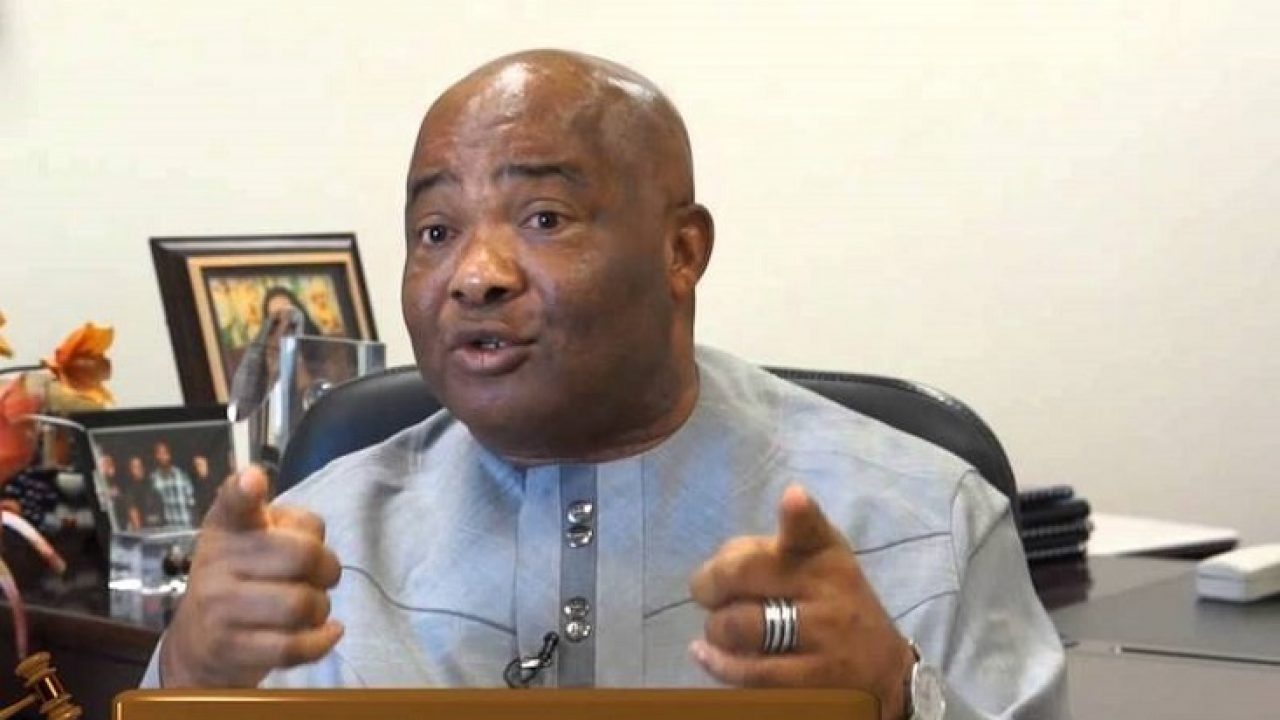
One of the judges that constitute the seven-man panel of judges of the Supreme Court headed by the Chief Justice of Nigeria, Justice Tanko Muhammad, has faulted the majority judgement of the court which on Tuesday dismissed the suit brought by Emeka Ihedioha of the Peoples Democratic Party (PDP), seeking review of the declaration of Hope Uzodinma of the All Progressives Congress (APC) winner of Imo State governorship election. The judge in a minority judgement maintained that it was wrong for the Supreme Court to declare Uzodinma winner of Imo election, adding that the minority judgment of an Appeal Court judge was also in the wrong direction.
In a dissenting judgment on Tuesday, Justice Centus Nweze held that the Supreme Court can change its mind in any decision, having done so in the past.
Justice Nweze stated that the Supreme Court wrongly declared Hope Uzodinma as duly elected and that Justice Stephen Ada of the Court of Appeal was without jurisdiction to have given its judgment it gave to Hope Uzodinma.
Justice Nweze declared: “The appellant misled this court in accepting the scores he had claimed was his.” He lamented: “The said judgment of this court will sooner or later hunt our electoral Jurisprudence.”
The Supreme Court Tuesday afternoon struck out the application filed by Ihedioha of the PDP, seeking the apex court to reverse that nullified his governorship electoral victory in Imo State.
A seven-man panel of judges led by the Chief Justice of Nigeria, Justice Tanko Muhammad, dismissed the suit, except one judge, who delivered a dissenting judgment in favour of Ihedioha.
The Supreme Court in its judgement held that the application lacked in merit, noting that by the provisions of the rules of the court, it shall not review any judgment delivered by it save for any accidental slip or clerical errors.
The judges maintained that the general law is that the court has no power to alter or vary any Judgment, expect to correct error, or an order which is a nullity, or judgment or order made against a party of default.
“It is settled law that the court has no power on appeal on its Judgment,” the judges insisted.
The judges also held that the court had no inherent power to exercise its power over matter which its lacks jurisdiction.
“There is no constitutional provision for the review of the Supreme Court judgment by itself.
“Once the court delivers its judgment, it becomes funtus officio.
“Inherent power of the court can only be invoked if there is a missing link in the judgment,” the judges declared.












-
 Latest6 days ago
Israel marks 3 years since October 7 Hamas attack amid Gaza strikes, election debate
-

 Energy5 days ago
Fuel Battle: Dangote, marketers and government clash over petrol imports
-

 Energy7 days ago
Petrol, diesel prices rise 86% in 2026 as costs hit fresh highs
-

 Energy1 week ago
Has Iran lost control of the Strait of Hormuz? Oil flows rebound as war disruptions persist
-

 Football6 days ago
Nigeria’s World Cup exit under spotlight as FIFA’s DR Congo files emerge
-

 Latest6 days ago
US Court set to rule on release of FBI, DEA records on Tinubu
-

 Business6 days ago
Nigerian investors at a crossroads as fixed-income yields slide
-

 Business7 days ago
LoveWorld Trade and Investment Forum to Convene Business Leaders in Accra