
Latest
Peter Obi moves closer to securing NDC presidential ticket for 2027

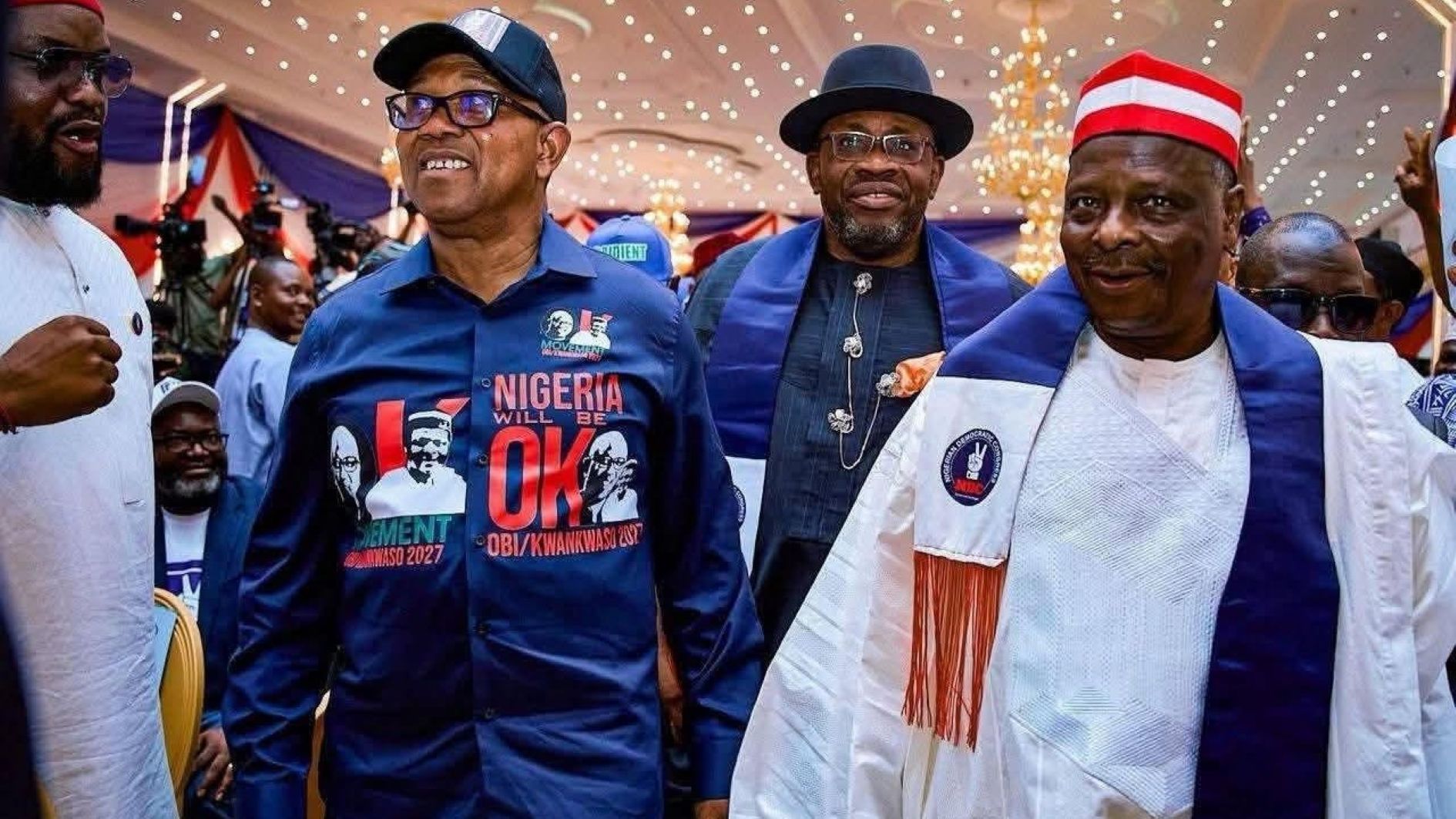
Former Labour Party presidential candidate, Peter Obi, is on course to emerge as the presidential candidate of the Nigeria Democratic Congress (NDC) for the 2027 general election after emerging as the only aspirant to obtain the party’s Expression of Interest and Nomination forms ahead of the race.
The development marks a significant turning point in Nigeria’s opposition politics, coming on the heels of the collapse of the African Democratic Congress (ADC)-led coalition that had initially brought together Obi, former Vice President Atiku Abubakar and former Kano State governor, Rabiu Musa Kwankwaso.
The NDC officially ended the sale of presidential nomination forms on Sunday, confirming that Obi was the only aspirant to complete the process before the deadline.
In a statement signed by the party’s National Secretary, Mr. Ikenna Morgan Enekweizu, the party announced that while the presidential form sales had closed, the deadline for governorship, Senate, House of Representatives and State Assembly aspirants had been extended by one week—from May 17 to May 24, 2026.
The party disclosed that screening of aspirants would begin on May 19 and conclude on May 26, with cleared candidates expected to collect and submit their nomination forms between May 20 and May 26.
According to the NDC, aspirants are required to present academic certificates, voter cards, birth certificates or declarations of age, passport photographs, curriculum vitae and party membership cards before screening panels.
READ ALSO: Peter Obi calls for urgent healthcare reforms
The party added that its vetting process would emphasise competence, integrity, public acceptability and local political dynamics, while reflecting its affirmative action commitments for women, youths and persons living with disabilities.
Obi’s emergence as the lone presidential aspirant under the NDC follows months of internal disagreements that weakened the ADC-led coalition, which had been formed to mount a united opposition challenge against President Bola Ahmed Tinubu and the ruling All Progressives Congress (APC) in 2027.
The coalition initially generated momentum nationwide as opposition figures sought to avoid the fragmented vote pattern that characterised the 2023 presidential election. However, disputes over leadership structure, zoning arrangements, power-sharing formulas and the selection of a consensus candidate reportedly deepened mistrust among stakeholders.
Political insiders say repeated attempts to harmonise interests within the coalition stalled, triggering defections and internal realignments.
Obi formally exited the ADC earlier this month, citing unresolved internal crises and lack of cohesion within the coalition framework. Sources close to the former Anambra governor indicated that he grew increasingly concerned about the coalition’s inability to resolve structural disputes.
Shortly afterward, Kwankwaso also aligned with the NDC movement, further weakening the ADC platform and fuelling speculation of a renewed political partnership between both leaders.
Their departure has been widely interpreted as a major setback for opposition efforts to present a single formidable challenger to the APC in 2027.
Political analyst Dr. Kabiru Adamu said Obi’s likely emergence as NDC candidate could provide clarity within the opposition space but warned that unity remains crucial.
“Becoming the sole aspirant gives Obi strategic control of the party structure early,” he said. “However, the bigger challenge is building a nationwide coalition strong enough to counter the APC’s entrenched political machinery.”
Another political scientist, Prof. Chioma Eze, noted that the Obi-Kwankwaso alignment could reshape electoral calculations.
“Obi retains strong youth and urban appeal, while Kwankwaso commands grassroots loyalty in Kano and parts of the North through the Kwankwasiyya network. If effectively harmonised, this partnership could create a competitive regional balance,” she explained.
However, she cautioned that translating social media popularity and regional influence into a cohesive national campaign would require disciplined party organisation and resource mobilisation.


-

 Latest5 days ago
Full List: Meet the 2026 Nobel Prize winners across six categories
-

 Football5 days ago
Premier League Matchweek 7: Five Fixtures That Could Shape the Weekend
-

 Latest4 days ago
Umahi defends Lagos-Calabar highway route changes amid public outcry
-

 Business4 days ago
Dangote Refinery IPO: 70% Subscription claim meets fourfold demand assertion as investors seek clarity
-
Business4 days ago
Dangote Refinery IPO Extension: Was the 70% subscription report overhyped?
-

 Latest2 days ago
UCTH faces morgue crisis as 50 unclaimed corpses await mass burial
-
 Featured4 days ago
El-Rufai, ADC governorship candidate’s court appearance puts Kaduna opposition politics in focus
-
 Business2 days ago
BREAKING: Nigeria’s Inflation Rate Drops to 14.63% in September