
News
Gupta brothers abscond S. Africa

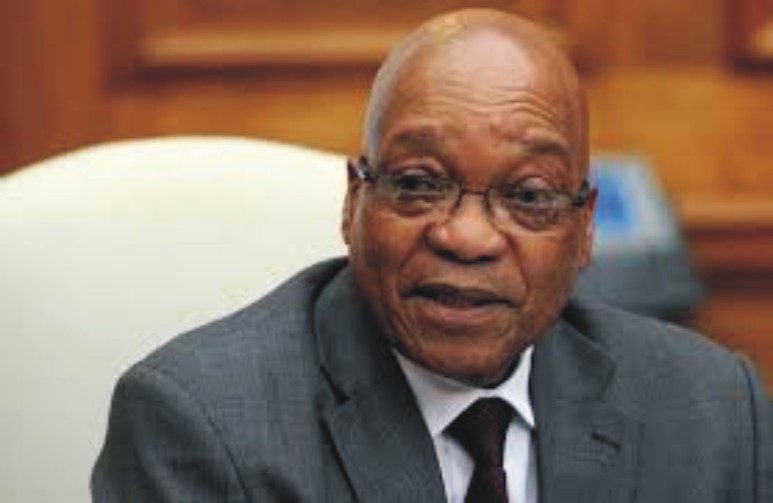
- Linked to Zuma’s scandal
The corruption controversy hanging on the neck of President Jacob Zuma of South Africa is already taking its toll on business interests behind the economic rape of South Africa.
A fresh report on Sunday revealed that the wealthy Gupta family accused of exerting undue influence over President Jacob Zuma, have absconded South Africa, relocating to Dubai, the United Arab Emirate (UAE).
The Gupta brothers have long been accused of wielding undue influence over South African President Jacob Zuma, whose son, Duduzane, is a partner in some of their businesses. The businesses of these Indians have been receiving immense advantages and patronage from the South African government and getting greater share of the economy.
“The whole family is in the process of leaving,” family spokesman, Nazeem Howa, was reported to have revealed.
It was revealed that Ajay and Atul Gupta, two brothers from the family of wealthy Indian immigrants who own a vast business empire with interests in mining, media, technology and engineering, were seen last Thursday evening at a Johannesburg airport boarding their private jet for Dubai.
One of their wives was with them as well as five assistants, with the party boarding the plane “with enough luggage for 20 people,” an observer disclosed.
On Friday, the family had released a statement saying they were stepping down from the leadership of Oakbay Investments, a holding company with interests ranging from mining to media, in a move linked to the closure of the firm’s accounts by two major banks.
“It is with deep regret that, following a period of sustained political attack on the Gupta family and our businesses… we have come to the conclusion that it is time for the Gupta family to step down from all executive and non-executive positions,” the letter said.
ALSO SEE: President Zuma signs 30 bilateral trade deals with Nigeria
“This follows the unexplained decisions by several of our banking partners and our auditors to cease working with us, and the continued press coverage of false allegations,” they added.
The closure of the bank accounts had made it “virtually impossible to continue to do business in South Africa,” said the letter, which was signed by Howa, Oakbay’s chief executive.
In recent weeks, this family, who moved to South Africa in the 1990s, has come under fire for wielding immense power behind the scenes over Zuma and ministers in his government.
Persistent rumours of the family’s excessive influence over the president took concrete form in March when evidence emerged that they allegedly offered key government jobs to those who might help their business interests.
Zuma, whose second presidential term ends in 2019, has also faced scathing criticism over his friendship with the Gupta family, with their relationship providing ammunition for the government’s fiercest critics.
The Guptas arrived in South Africa in 1993 as white-minority apartheid rule crumbled and a year before Nelson Mandela won the country’s first democratic elections.
As the country opened up to foreign investment, the Guptas — previously small-scale businessmen in India — began to build their sprawling empire.
They also developed close links with the ruling African National Congress (ANC) party, particularly, with Zuma, well before he became president in 2009.












-

 Football4 days ago
Banda, Chawinga make 2026 Women’s Ballon d’Or top 30 shortlist
-

 Latest1 week ago
Cole-Alegbe unveils memoir, urges leaders to harness technology for lasting impact
-
 Business5 days ago
Nigeria records N12.59trn trade surplus in Q2 2026 — NBS
-

 Featured4 days ago
Peter Obi, Makinde and the 2027 elections: Can unity really challenge APC?
-

 Business5 days ago
Nigerian Breweries’ H1 profitability strengthens as revenue hits N804bn
-

 Business1 week ago
Jetour G700 PHEV Storms Abuja as Jetour Nigeria Takes Luxury Mobility Showcase to FCT
-

 Latest5 days ago
Tinubu’s US legal battle: Group questions silence of elder statesmen
-

 Energy3 days ago
Brent crude tops $100: What higher oil prices mean for Nigeria