
Business
Analysts raise concerns as Nigeria’s unemployment rate rises to 5.3%

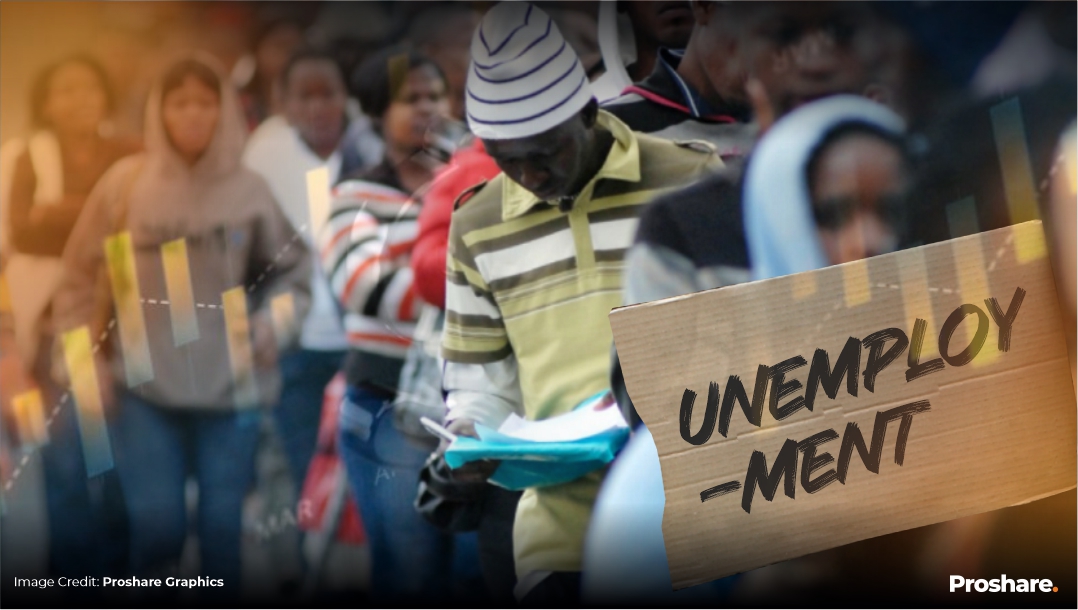
The National Bureau of Statistics (NBS) has reported that Nigeria’s unemployment rate increased to 5.3% in the first quarter (Q1) of 2024, a 0.3% rise from the 5% recorded in the previous quarter, Q3 2023.
This increase raises alarms about the ongoing challenges in the Nigerian labor market as the country continues to grapple with economic recovery.
In its latest “Nigeria Labour Force Survey” released on Tuesday, the NBS indicated a decline in the labor force participation rate among the working-age population, which fell to 77.3% in Q1 2024 from 79.5% in Q3 2023.
The employment-to-population ratio also decreased to 73.2% from 75.6% in the same comparative period.
Despite the overall rise in unemployment, the combined unemployment and time-related underemployment rate (LU2) improved, decreasing to 15.3% in Q1 2024 from 17.3% in Q3 2023.
READ ALSO: Rising unemployment, inflation, others characterises Tinubu’s one year anniversary
Additionally, the proportion of workers in wage employment rose to 16.0%, a significant increase from 12.7% in Q3 2023.
The report highlighted trends among specific demographics. The unemployment rate for individuals with post-secondary education reached 9.0%, while youth unemployment (ages 15-24) slightly decreased to 8.4% in Q1 2024, down from 8.6% in Q3 2023.
However, experts caution that these figures still reflect significant challenges for young people entering the job market.
Dr. Chijioke Okafor, an economist at the University of Lagos, noted, “While it’s encouraging to see a slight decline in youth unemployment, the overall rise in the unemployment rate suggests that many educated young Nigerians are still struggling to find jobs. This trend could have long-term implications for economic growth and social stability.”
In urban areas, the unemployment rate remained unchanged at 6.0% from Q3 2023, indicating a stagnation in job creation in these regions. Conversely, time-related underemployment fell to 10.6%, down from 12.3%, suggesting some improvement in job quality for those employed part-time.
The NBS also reported that 14.4% of Nigerian youth were classified as Not in Education, Employment, or Training (NEET), reflecting a 0.7 percentage point increase from the previous quarter.
READ ALSO: NBS report shows food prices stay high despite government measures
This metric has raised red flags among analysts who argue that a growing NEET population could have dire consequences for Nigeria’s future workforce.
Olusegun Adebayo, a labor market analyst, commented, “The increasing NEET rate is particularly concerning, as it indicates a significant portion of the youth population is disconnected from both the educational system and the job market. Addressing this issue must be a priority for policymakers to ensure economic sustainability.”
As Nigeria navigates economic recovery, the latest employment data underscores the need for targeted interventions to address rising unemployment rates and support the integration of youth into the labor market.
Experts urge the government to implement policies that promote job creation, especially in sectors that can absorb the growing workforce, to mitigate the long-term effects of unemployment on the economy.

-

 News2 days ago
Widow of late investigative broadcaster Kola Olawuyi dies
-

 Crime2 days ago
Outrage as NYSC doctor allegedly dies after delay in approving sick leave
-

 Business7 days ago
Pressure mounts on marketers as Nigerians demand lower fuel prices amid falling global oil costs
-

 Agribusiness7 days ago
Rising insecurity threatens Nigeria’s food supply as farming communities abandon farmlands
-

 Energy7 days ago
Nigerians turn to solar as rising diesel costs, unstable grid drive energy shift
-

 Business6 days ago
The State House Statement: An Unquantifiable Reputational Damage to the Nigerian Financial Sector
-

 Education6 days ago
JSS3 Student stuns educators with University-level maths, secures global STEM Olympiad spot
-

 Business6 days ago
Projected drop in oil prices threatens Nigeria’s 2026 budget plans