
Crime
UNODC warns of global surge in Asian-led cybercrime syndicates in Africa, South Africa

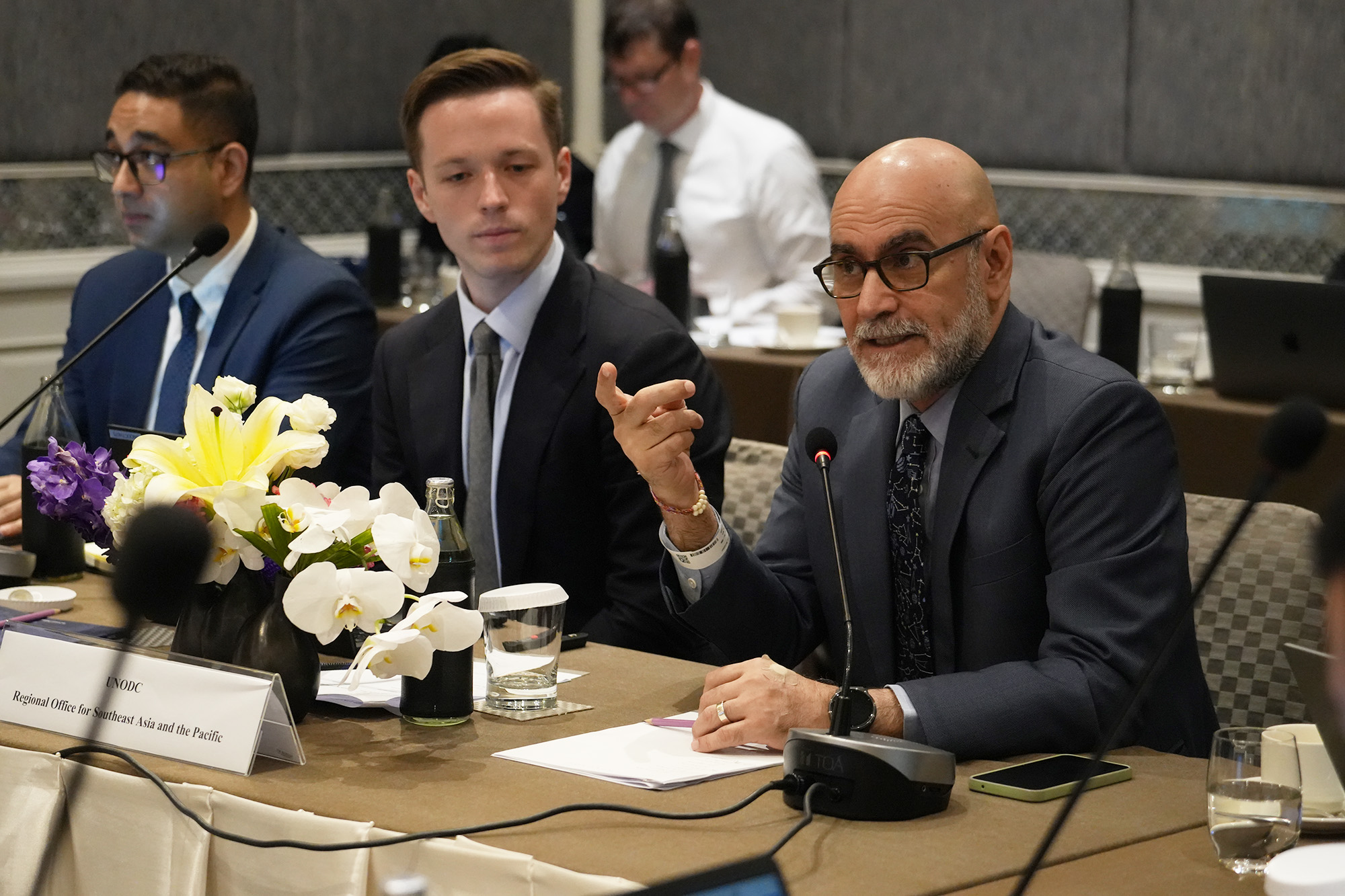
The United Nations Office on Drugs and Crime (UNODC) has raised fresh alarms over the global expansion of Asian cybercrime syndicates, warning that the multibillion-dollar cyber scam industry is now taking root in South America and Africa.
In a new report released on Monday, the UN agency stated that despite intensified regional crackdowns, the operations of these crime networks have become more sophisticated, more expansive, and increasingly difficult to contain.
The report details how transnational criminal organizations originally operating in Cambodia, Laos, and Myanmar have evolved into large-scale, high-tech scams, running massive compounds housing tens of thousands of workers.
Alarmingly, many of these workers are victims of human trafficking, forced into online fraud schemes that target individuals around the world.
According to the UNODC, one of the key tactics aiding the syndicates’ rapid growth is the diversification of their workforce.
Criminal organizations now recruit operatives from over 50 countries, including Nigeria, Brazil, Sri Lanka, and Uzbekistan, reflecting the global reach of their illicit operations.
“These operations have become a sophisticated global industry. It spreads like cancer. Authorities treat it in one area, but the roots never disappear—they simply migrate,” said John Wojcik, a regional analyst for the UNODC.
The report estimates that hundreds of scam farms are now operating worldwide, generating tens of billions of dollars in annual profits.
Cyber Fraud, according to the agency, has outpaced other forms of transnational crime due to its scalability and ability to target millions online without moving physical goods across borders.
READ ALSO: Police-NCCC shut down criminal cyber crime training, operational centre, arrest 6 in Abuja
Highlighting the financial toll, the UNODC noted that the United States alone reported over $5.6 billion in losses from cryptocurrency scams in 2023, with over $4 million linked to “pig-butchering” scams—an increasingly prevalent form of romance-based financial fraud targeting vulnerable and elderly victims.
While recent crackdowns in Southeast Asia—particularly by authorities in China, Thailand, and Myanmar—have led to the dismantling of some scam operations, the syndicates have proven remarkably resilient. Operations have shifted to the most remote and poorly governed areas of Laos, Myanmar, and Cambodia, exploiting jurisdictions with weak enforcement and high corruption levels.
Raids in Cambodia’s most visible scam hubs have pushed syndicates further into remote regions, such as Koh Kong province and border areas adjacent to Thailand and Vietnam, the UNODC reported.
New operational sites are also being established in Myanmar, which has been plagued by escalating conflict following the military coup four years ago.
Expanding their criminal infrastructure, these cyber fraud syndicates have also moved into South America, where they are forging money laundering and underground banking partnerships with powerful drug cartels.
Meanwhile, their presence is growing steadily in Africa, with countries like Zambia, Angola, and Namibia identified as new hotspots for scam operations. Eastern Europe, including Georgia, is also experiencing an uptick in activity.
The growing globalization of the scam industry has been mirrored by its increasingly diverse workforce. Gangs are recruiting from dozens of nationalities to both scam international victims and evade anti-trafficking and law enforcement efforts.
In a related development, Nigeria’s Economic and Financial Crimes Commission (EFCC) recently carried out a major sting operation, arresting 792 suspects for their involvement in cryptocurrency investment fraud and romance scams.
Among those apprehended were 148 Chinese nationals, identified as key recruiters, along with 40 Filipinos, two Kazakhstanis, one Pakistani, and one Indonesian.
According to the EFCC, the foreign nationals operated from a Lagos facility designed to look like a legitimate financial institution. There, they trained their Nigerian accomplices in the art of online scams and used their identities to carry out fraudulent activities globally.
The UNODC has urged governments worldwide to collaborate more closely and step up efforts to dismantle the financing networks that sustain these criminal enterprises.


-

 Featured4 days ago
BREAKING NEWS: Shouts of joy rock the world as Pastor Chris opens final Healing Streams edition for 2026
-

 Football5 days ago
Man United shortlist Emery, Nagelsmann as potential replacements for Carrick
-

 Business5 days ago
Hoodlums raid JED Benue office, abduct 10 staff over power dispute
-

 Football5 days ago
Aston Villa ready to freeze out Garnacho to avoid £43m Chelsea transfer
-

 Business1 week ago
Naira faces exchange rate gap as Dollar hits N1,380 on parallel market
-

 Latest4 days ago
Akpabio tasks Tompolo-backed movement with spreading Tinubu’s renewed hope message
-

 Business5 days ago
EV adoption: Roxettes seeks cheaper financing, local manufacturing incentives
-

 Business4 days ago
How Ethiopian Airlines is challenging Africa’s aviation narrative through self-reliance