
Featured
From kitchen to Supreme Court: Nigerian’s fight over alleged support for terrorists

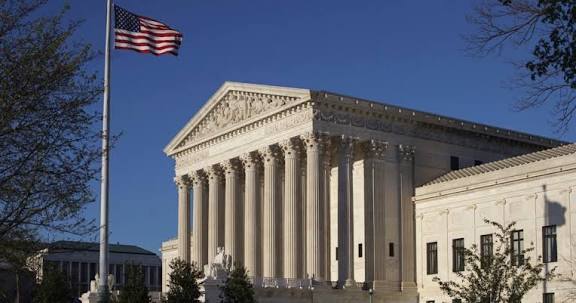
The case of Nigerian asylum seeker Izuchukwu Ozurumba centres on whether preparing meals for a group classified by US authorities as a terrorist organisation amounts to prohibited material support, even when the person claims to have acted under coercion.
The United States Supreme Court has agreed to consider whether a Nigerian man who says he was forced to cook for members of the Unknown Gunmen should be barred from asylum under immigration laws prohibiting material support for terrorism.
The case, involving Izuchukwu Ozurumba, will require the court to examine the scope of the material-support provision in US immigration law and whether a person’s alleged involuntary actions can qualify as support for a terrorist organisation.
The court accepted the Trump administration’s appeal on October 13, 2026, challenging a 2025 ruling by the US Court of Appeals for the Fourth Circuit that found Ozurumba’s cooking did not constitute material support under the circumstances described in his case.
According to court records and reports by Reuters and the Associated Press, Ozurumba travelled to a camp outside Lagos in 2022 after learning of a job opportunity. He said he later discovered that the camp was operated by the Unknown Gunmen, a group regarded by US authorities as a terrorist organisation.
His lawyers said he was prevented from leaving and forced to prepare meals for the group’s leaders without pay. They also said he faced threats and attacks after escaping, prompting him to leave Nigeria.
Ozurumba subsequently travelled to Venezuela before entering the United States in July 2023, where he sought asylum and other protection against deportation.
An immigration judge denied Ozurumba’s application, concluding that cooking meals for the group’s leaders amounted to material support because it met their basic needs and helped sustain the organisation.
The judge also determined that the alleged coercion did not exempt him from the legal restriction. The Board of Immigration Appeals upheld the decision.
The dispute reflects a central question in the case: whether assistance can be considered material support because of its practical benefit to an organisation, even when the person providing it says they had no meaningful choice.
The US government argues that providing food to members of a terrorist organisation can help them continue their activities by freeing them from having to obtain or prepare meals themselves.
In its appeal, the Justice Department argued that providing meals was no less a material form of support than supplying fuel for an organisation’s vehicles.
In September 2025, a divided panel of the Fourth Circuit Court of Appeals ruled in Ozurumba’s favour, finding that his work did not meet the legal threshold for material support in the circumstances of his case.
The majority described him as appearing to be a captive labourer and concluded that his cooking did not provide resources the organisation could use or readily divert to plan or carry out terrorist activities.
The appeals court therefore rejected the application of the material-support bar to his case. However, it did not order US authorities to return him to the country while the legal proceedings continued.
Ozurumba had already been deported to Nigeria in 2025 while his appeal was pending.
The Trump administration subsequently asked the Supreme Court to review the decision, arguing that the appeals court’s interpretation could make it harder for the government to exclude or remove non-citizens with links to terrorist organisations.
The case raises wider questions about how immigration authorities should assess people who say they were coerced into working for organisations designated as terrorist groups.
A broad interpretation of material support could allow ordinary services, including preparing food, to count against an asylum applicant if they benefit such an organisation. The government argues that the practical assistance matters, even when it is not directly connected to a specific act of violence.
Ozurumba’s lawyers, however, argue that the law should not be interpreted so broadly that people who provide no meaningful assistance—or who act under coercion—are automatically disqualified from protection.
The legal issue before the Supreme Court is whether material support must advance an organisation’s actual commission of terrorism to trigger the relevant immigration restriction. The justices’ decision could clarify the boundary between providing services that sustain an organisation and providing support that qualifies under the statute.
The outcome may have consequences beyond Ozurumba’s case, particularly for asylum seekers whose work or assistance was allegedly performed under threat, confinement or other forms of duress.
The Supreme Court is expected to hear the case and issue a ruling during its current term, with a decision anticipated by the end of June 2027.
Sources: Reuters; Associated Press; US Court of Appeals for the Fourth Circuit, Ozurumba v. Bondi (September 2, 2025); US Supreme Court docket, Blanche v. Ozurumba.


-

 Latest5 days ago
Full List: Meet the 2026 Nobel Prize winners across six categories
-

 Football5 days ago
Premier League Matchweek 7: Five Fixtures That Could Shape the Weekend
-

 Latest4 days ago
Umahi defends Lagos-Calabar highway route changes amid public outcry
-

 Business3 days ago
Dangote Refinery IPO: 70% Subscription claim meets fourfold demand assertion as investors seek clarity
-
Business4 days ago
Dangote Refinery IPO Extension: Was the 70% subscription report overhyped?
-

 Latest2 days ago
UCTH faces morgue crisis as 50 unclaimed corpses await mass burial
-

 Featured4 days ago
El-Rufai, ADC governorship candidate’s court appearance puts Kaduna opposition politics in focus
-

 Latest5 days ago
Makinde’s Chief of Staff, Segun Ogunwuyi, resigns