
Featured
Nigeria’s 2027 election race heats up as new alliances reshape political landscape

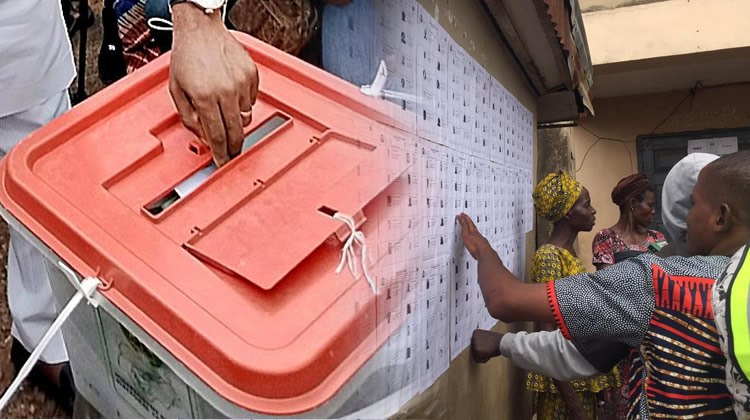
Nigeria’s political arena has effectively entered campaign mode nearly a year ahead of schedule, as new alliances, accelerated electoral timelines, and emerging party realignments reshape the race toward the 2027 general elections.
The Independent National Electoral Commission (INEC) has released a revised timetable moving the presidential and National Assembly elections to January 16, 2027, a shift introduced under the Electoral Act 2026. The adjustment has compressed party preparations and forced political actors into early negotiations, screening processes, and coalition-building activities that traditionally peak much closer to election year.
The most consequential development so far is the formal emergence of the Nigeria Democratic Congress (NDC), a new opposition platform that has rapidly become a convergence point for fragmented political blocs, including elements of the Labour Party (LP) and the New Nigeria Peoples Party (NNPP).
At its national convention held on May 11, 2026, the NDC announced a zoning arrangement that places its 2027 presidential ticket in Southern Nigeria. The decision has triggered intense political recalibration, particularly after reports that former Kano State Governor Rabiu Kwankwaso has aligned with the movement backing former presidential candidate Peter Obi.
The emerging arrangement already being described by party insiders as the “OK alignment”, is seen as an attempt to merge Obi’s strong urban youth support base in the South with Kwankwaso’s entrenched grassroots structure in the North-West.
“Nigeria’s unity is more important than personal ambition,” said NDC chieftain Ladipo Johnson. “There is growing consensus that a broad-based alliance around Peter Obi offers the most viable path forward.”
While neither Obi nor Kwankwaso has formally declared a joint ticket, party officials say consultations are ongoing on how leadership roles would be shared if the coalition solidifies into a single presidential platform.
On the other side of the political divide, the All Progressives Congress (APC) has stepped up its internal machinery, screening aspirants ahead of primaries scheduled between May 15 and May 23, 2026.
President Bola Tinubu, who has already received multiple endorsements for a second term bid from various political and socio-economic groups, is widely expected to dominate the ruling party’s nomination process. Analysts say the early primaries are part of a broader strategy to stabilize the party and prevent opposition momentum from consolidating.
Political observers attribute the unusually early election buildup to three major shifts in Nigeria’s electoral environment:
The first is the implementation of strict legislative timelines under the Electoral Act 2026, which requires all party primaries and dispute resolution processes to conclude by May 30, 2026.
Second is the growing push toward large opposition mergers, which is gradually reducing the likelihood of a fragmented multi-party contest and setting the stage for a tighter two-bloc race between the APC and the emerging NDC-led coalition.
Third is the recalibration of zoning politics, as the NDC’s informal agreement to rotate power after a single Southern term has altered longstanding regional calculations within and across party lines.
Beyond the two dominant blocs, smaller parties are also positioning themselves for relevance. The Social Democratic Party (SDP) has formally backed Adewole Adebayo as its presidential candidate, while speculation continues around potential entries by figures such as Rotimi Amaechi and Nasir El-Rufai, who are yet to formally declare their positions.
As legal challenges to the revised timetable continue, including criticism from some political stakeholders over its feasibility and timing, Nigeria’s political class appears to have already accepted a new reality: the race for 2027 is no longer approaching—it has already begun.
For many analysts, the key question is no longer when the contest starts, but whether the emerging alliances—especially within the opposition’s NDC framework—can hold long enough to challenge the ruling party at the ballot


-

 Football7 days ago
Banda, Chawinga make 2026 Women’s Ballon d’Or top 30 shortlist
-
 Featured7 days ago
Peter Obi, Makinde and the 2027 elections: Can unity really challenge APC?
-

 Trending Stories5 days ago
Davido, Wizkid, Burna Boy or Asake: Who is having the biggest 2026 so far?
-

 Business1 week ago
Nigeria records N12.59trn trade surplus in Q2 2026 — NBS
-
 Football5 days ago
Premier League releases 2026/27 festive fixtures, 7 matches set for Boxing Day
-

 Business3 days ago
Jetour Nigeria, dealers take dashing, other models to Abuja Experience
-

 Business4 days ago
Dangote Refinery IPO shifts spotlight to corporate governance, investor protection
-

 Crime4 days ago
Anambra Police arrest mother over alleged child sexual exploitation