
News
Tinubu calls for overhaul of global lending system at Nairobi summit

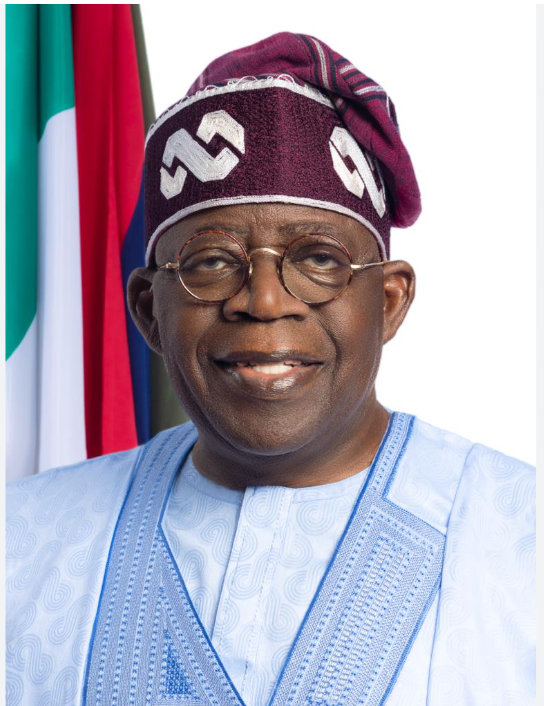
President Bola Ahmed Tinubu has called for a sweeping reform of the global financial system, warning that Africa is being constrained by what he described as “punitive lending structures” that undermine industrial growth and economic sovereignty.
Speaking on Tuesday, May 12, 2026, at the Africa Forward Summit held at the Kenyatta International Convention Centre, a high-level gathering co-hosted by Kenyan President William Ruto and French President Emmanuel Macron, Tinubu said the current global credit architecture functions as an “instrument of industrial disarmament” for developing economies.
He argued that excessively high borrowing costs and risk classifications imposed on African states are slowing down industrialisation and deepening dependency on imported goods.
Tinubu drew attention to Nigeria’s fiscal commitments, disclosing that the country is projected to spend about $11.6 billion on debt servicing in 2026, nearly half of expected national revenue.
“Every dollar used to service debt is a dollar not invested in manufacturing, infrastructure, or innovation,” the President said. “African economies cannot compete globally when borrowing costs are several times higher than those of advanced economies.”
He added that similar debt burdens are affecting several African countries, limiting their ability to invest in productive sectors.
Positioning Nigeria as a case study in ongoing economic restructuring, Tinubu said his administration had implemented difficult but necessary reforms aimed at stabilising the economy and restoring investor confidence.
He highlighted several macroeconomic indicators, including a projected decline in the debt-to-GDP ratio to 32.3%, external reserves rising to $45.5 billion, a $3.4 billion banking sector recapitalisation effort, and Nigeria’s exit from the Financial Action Task Force (FATF) grey list.
Despite these improvements, he said global credit rating systems still unfairly categorise African economies as persistently high-risk.
Beyond financial reform, Tinubu endorsed the proposed Nairobi Declaration, a regional initiative focused on strengthening maritime security and unlocking Africa’s blue economy potential.
He proposed expanding Nigeria’s Deep Blue maritime security project into a shared intelligence platform for Gulf of Guinea states to combat piracy and improve maritime trade safety.
Tinubu used his address to outline priority areas for continental cooperation, including calls for development financing that supports industrialisation, reforms in global migration funding to prioritise local job creation, and enhanced investment in ocean-based economic opportunities.
The summit brought together leaders from more than 30 countries alongside international figures, including United Nations Secretary-General António Guterres, and is being viewed as part of a broader effort to reset Africa’s economic relationship with global partners.
French President Emmanuel Macron also called for more balanced global partnerships, urging a shift away from traditional bloc-driven economic thinking.
For Tinubu, however, the message was clear: Africa must move beyond raw material dependence and secure a financial system that enables industrial production at scale.
“Nigeria is not asking for charity,” he said in closing. “We are demanding a system that allows Africa to refine its resources, manufacture its goods, and compete fairly in the global economy.”


-
 Latest7 days ago
Israel marks 3 years since October 7 Hamas attack amid Gaza strikes, election debate
-

 Energy6 days ago
Fuel Battle: Dangote, marketers and government clash over petrol imports
-

 Energy1 week ago
Petrol, diesel prices rise 86% in 2026 as costs hit fresh highs
-

 Football1 week ago
Nigeria’s World Cup exit under spotlight as FIFA’s DR Congo files emerge
-
 Latest1 day ago
Full List: Meet the 2026 Nobel Prize winners across six categories
-
 Latest1 week ago
US Court set to rule on release of FBI, DEA records on Tinubu
-
 Business1 week ago
Nigerian investors at a crossroads as fixed-income yields slide
-

 Latest1 week ago
Oyo APC crisis deepens as Oluyole reconciliation meeting ends in brawl