
Latest
Ukrainian drone strikes disrupt Black Sea fuel network, triggering fuel restrictions in Crimea

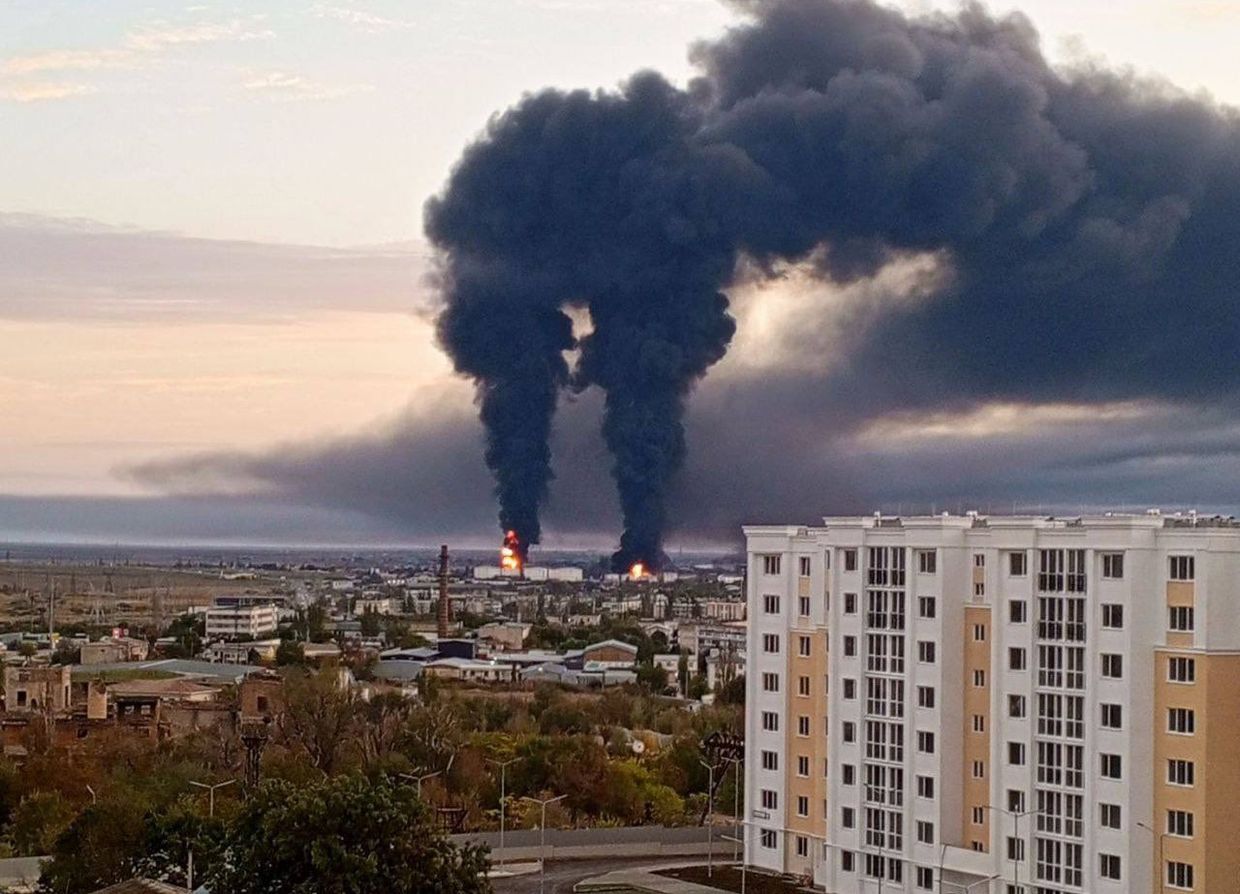
Ukraine says it has carried out a coordinated series of long-range drone strikes targeting Russian energy and logistics infrastructure across the Black Sea region, in an operation that has disrupted fuel supply chains and prompted restrictions on civilian fuel sales in occupied Crimea.
According to Ukrainian security and military sources, the overnight strikes were conducted jointly by the country’s Unmanned Systems Forces (USF), the Security Service of Ukraine (SBU), and military intelligence (GUR). The campaign reportedly focused on fuel storage and transshipment facilities used to support Russian military logistics in southern Ukraine.
Ukrainian officials and regional reports say the strikes hit multiple strategic energy sites, including facilities in Russia’s Krasnodar region and occupied Crimea.
Among the reported targets were the Port Kavkaz transshipment area in Krasnodar and an oil storage site in Kerch, near the Kerch Strait. Both locations are considered critical to fuel movement between mainland Russia and occupied territories.
The attacks reportedly caused large fires at storage facilities, though independent verification of the full extent of the damage has not yet been confirmed.
Following the reported disruptions, Russian-installed authorities in Crimea announced restrictions on civilian fuel distribution, citing supply interruptions.
Sergey Aksyonov, the Kremlin-appointed head of the peninsula, said fuel would be prioritized for essential services, with availability at retail stations significantly reduced.
The move has led to long queues at filling stations in several cities, as residents attempt to secure limited supplies amid growing uncertainty over logistics.
Kyiv has increasingly targeted Russian energy and logistics assets in recent months, arguing that such strikes are aimed at weakening military supply chains supporting the war effort.
Ukrainian President Volodymyr Zelenskyy has previously described long-range drone operations against energy facilities and military infrastructure as a form of “long-range sanctions,” intended to raise the economic and operational cost of the conflict for Moscow.
Military analysts say Ukraine’s drone strategy relies on relatively low-cost systems to strike high-value infrastructure, including refineries, storage depots, and transport hubs—assets that are costly and time-consuming to repair, particularly under existing sanctions constraints.
The Black Sea corridor remains a critical logistical artery for Russian forces in southern Ukraine, linking fuel depots, transport hubs, and military supply routes. Disruptions in this network can have immediate downstream effects on both military operations and civilian fuel availability in occupied territories.
While Russia has not released a comprehensive damage assessment, the reported strikes underscore the continued vulnerability of energy infrastructure in the region as the war increasingly shifts toward long-range, infrastructure-focused warfare.
Independent verification of battlefield claims from both sides remains limited due to ongoing hostilities and restricted access to affected areas.


-

 Featured2 days ago
BREAKING NEWS: Shouts of joy rock the world as Pastor Chris opens final Healing Streams edition for 2026
-

 Football3 days ago
Man United shortlist Emery, Nagelsmann as potential replacements for Carrick
-

 Business6 days ago
Naira faces exchange rate gap as Dollar hits N1,380 on parallel market
-

 Business3 days ago
Hoodlums raid JED Benue office, abduct 10 staff over power dispute
-

 Business3 days ago
EV adoption: Roxettes seeks cheaper financing, local manufacturing incentives
-

 Football3 days ago
Aston Villa ready to freeze out Garnacho to avoid £43m Chelsea transfer
-

 Latest2 days ago
Akpabio tasks Tompolo-backed movement with spreading Tinubu’s renewed hope message
-

 Business1 week ago
NCC launches Internet Governance Working Group to tackle AI risks, boost online safety