The Ogun State Waste Management Authority (OGWAMA) has sealed a strategic partnership with the Nigeria Police Force, Ogun State Police Command, to reinforce enforcement of environmental and waste management laws across the Gateway State.
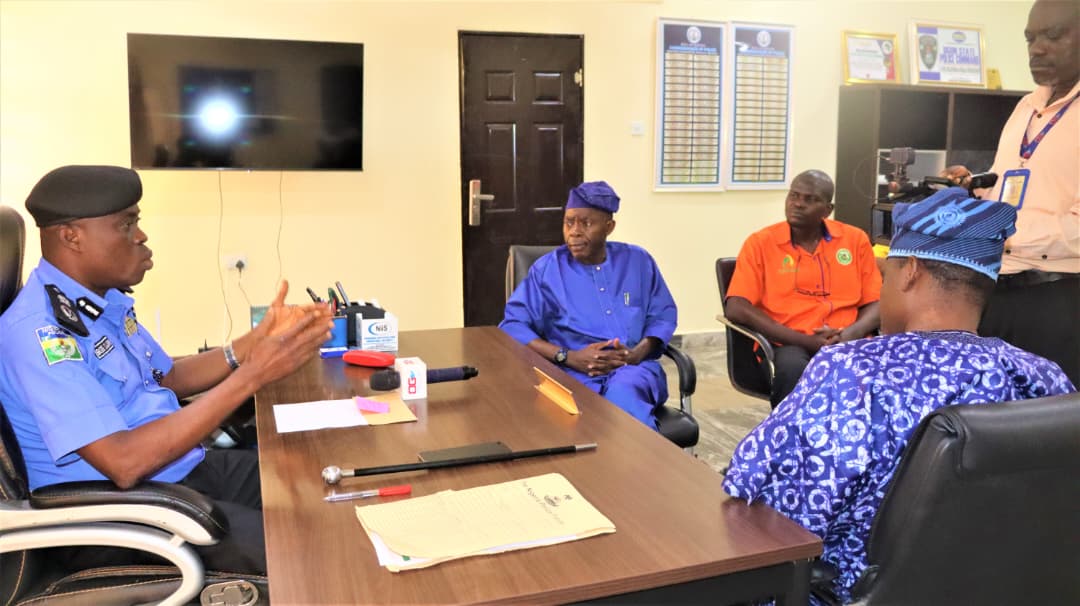
The announcement was made by the Special Adviser to the Governor and Managing Director of OGWAMA, Hon. Farok Adeniyi Akintunde, following a high-level meeting with the Commissioner of Police, CP Bode Ojajuni, at the Command Headquarters in Eleweran, Abeokuta.
Akintunde explained that the renewed collaboration would focus on strict enforcement of environmental sanitation regulations that prohibit indiscriminate dumping of refuse on roadsides, medians, and other public spaces.
He noted that the move is aimed at addressing persistent environmental challenges and improving public hygiene standards across communities in the state.
READ ALSO: Ogun woman remanded over alleged burning of 13-year-old niece with hot water
According to him, the partnership builds on the existing cordial relationship between OGWAMA and the police, while opening a new chapter of cooperation that will strengthen compliance with the state’s waste management laws.
“This collaboration will significantly enhance our enforcement capacity and ensure that residents adhere to proper waste disposal practices. Our ultimate goal is to achieve a cleaner, safer, and healthier Ogun State,” Akintunde said, while commending the Commissioner of Police and his team for their consistent support.
In his response, CP Bode Ojajuni reaffirmed the Command’s commitment to supporting OGWAMA’s enforcement drive throughout the state. He stated that officers under his command would fully enforce the Ogun State Environmental and Waste Management Laws to ensure strict compliance.
The Police Commissioner also issued a warning to individuals who obstruct OGWAMA officials in the discharge of their lawful duties, stressing that such actions would not be tolerated. He urged residents to cooperate with environmental officials and embrace responsible waste disposal habits.
However, Ojajuni advised the waste management authority to complement enforcement efforts with intensive public advocacy and sensitisation campaigns. He recommended partnerships with non-governmental organisations, schools, community clubs, and the establishment of Special Waste Marshals to educate residents on the importance of maintaining clean surroundings.
He further encouraged citizens to make use of the Private Sector Participation (PSP) operators assigned to their communities for proper waste disposal, emphasising that collective responsibility is key to sustaining environmental cleanliness in the state.
The partnership signals a renewed push by the state government to tackle indiscriminate dumping and promote environmental sustainability through coordinated enforcement and public engagement.



 Health7 days ago
 Energy7 days ago
 Latest5 days ago
 Crime1 week ago
 Football5 days ago
 Crime6 days ago
 Maritime4 days ago
 Latest5 days ago