
Featured
2027 Elections: Why fuel prices could become a major campaign issue

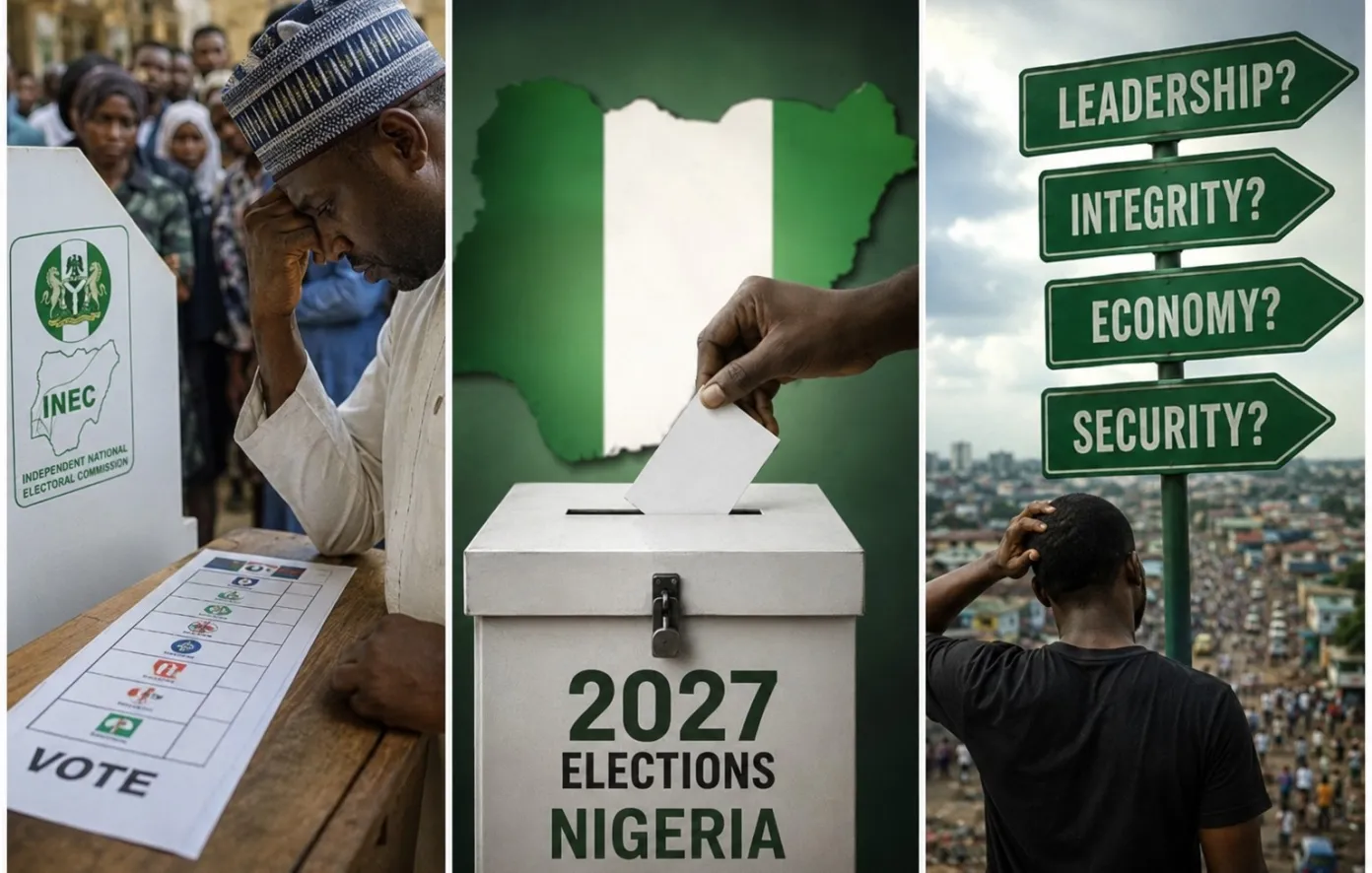
As Nigeria moves towards the 2027 general elections, the rising cost of petrol is emerging as an increasingly important economic and political issue, with its effects extending beyond motorists to transport fares, food prices, household expenses and business operating costs.
The presidential and National Assembly elections are scheduled for January 16, 2027, according to the Independent National Electoral Commission (INEC), leaving political parties and candidates with months to convince voters that their economic policies can improve living conditions.
Recent increases at the pump have brought fuel prices back into public debate. Reuters reported that petrol was selling at about ₦1,400 per litre in Lagos and Abuja in September, with prices reaching as much as ₦1,500 in parts of northern Nigeria. Diesel prices have also risen above ₦2,000 per litre.
The latest increase has been linked partly to higher international crude oil prices. Dangote Petroleum Refinery recently raised its petrol loading-bay price to ₦1,350 per litre, reflecting higher crude costs. Major marketers subsequently adjusted their pump prices. Vanguard similarly reported that MRS raised its petrol price to ₦1,400 per litre in Lagos and surrounding areas, while some NNPC stations moved to ₦1,375.
The development is significant because fuel prices affect much more than the cost of filling a vehicle.
For commercial transport operators, higher petrol prices can translate into increased fares. Businesses that depend on vehicles for distribution and logistics also face higher operating costs, while farmers and traders can incur additional expenses moving goods between production areas and markets.
Those additional costs can eventually feed into the prices consumers pay for food and other basic commodities.
Nigeria’s inflation rate stood at 15.39 per cent, while food inflation was 19.57 per cent in the latest figures displayed by the National Bureau of Statistics.
That means the fuel-price debate is likely to be closely connected to the broader question of purchasing power. For households already facing pressure from food, transportation, housing and other expenses, changes in petrol prices can become a highly visible measure of economic conditions.
At the centre of the political argument is the decision by President Bola Tinubu’s administration to remove the petrol subsidy in May 2023.
The government has maintained that the reform was necessary to reduce the financial burden of subsidising petrol and redirect resources towards other areas of the economy. President Tinubu recently ruled out returning to the previous subsidy system, arguing that Nigeria should instead accelerate the use of cheaper energy alternatives, particularly compressed natural gas (CNG), to reduce exposure to international fuel-price shocks.
Opponents of the policy, however, have continued to argue that the removal of the subsidy contributed significantly to the deterioration in household purchasing power.
The issue has now moved into the 2027 political contest. The Guardian reported earlier this month that presidential candidates and political figures have been putting forward different proposals for reducing petrol prices, including approaches involving domestic crude supply, targeted subsidies and other forms of intervention.
Former Vice President and African Democratic Congress presidential candidate Atiku Abubakar has also proposed restoring a targeted petrol subsidy if elected. He recently cited an SBM Intelligence survey which, according to his campaign, found that 67.4 per cent of respondents supported restoring the subsidy. The figure and the campaign’s interpretation are part of the ongoing political debate over fuel policy.
The Centre for the Promotion of Private Enterprise, however, has warned against a return to a universal petrol subsidy, arguing that such a policy could recreate the fiscal and foreign-exchange pressures that contributed to the earlier reform. The organisation has instead advocated targeted relief measures.
Another important question for the 2027 debate is why petrol prices remain vulnerable to international oil-market movements despite the operation of the Dangote refinery.
Reuters reported that the refinery has been operating at full capacity, yet petrol prices have continued to rise as international crude prices increased. The development highlights the limits of domestic refining in completely insulating Nigerian consumers from global energy-market movements.
The Dangote refinery has nevertheless changed Nigeria’s fuel market by increasing domestic refining capacity and reducing reliance on imported refined petroleum products.
The refinery is also seeking to expand its capacity significantly. Reuters reported that its recently approved initial public offering is intended partly to finance an expansion that could take capacity towards 1.4 million barrels per day.
For political parties, the challenge will therefore extend beyond promising cheaper petrol. Voters may also want to know how proposed reductions would be financed, whether they would involve subsidies, domestic crude pricing, tax measures or other interventions, and whether such policies would be sustainable.
Fuel prices could consequently become a way for voters to assess the broader economic reforms introduced since 2023.
Tinubu’s administration has defended the removal of the subsidy and other reforms as necessary measures to stabilise the economy and improve government finances. Critics, meanwhile, have focused on the immediate effect of the reforms on living standards.
Reuters reported in August that economic hardship and insecurity were among the issues generating public concern as the 2027 election season began, while the administration has argued that its reforms are producing greater economic stability and investor confidence.
The latest fuel-price increases add another dimension to that debate.
If petrol prices remain elevated as campaigning intensifies, candidates may face increasing pressure to explain how they intend to make transportation and production costs more affordable without creating new fiscal problems.
For the opposition, fuel prices provide an opportunity to challenge the government’s economic record. For the governing party, the issue presents a need to demonstrate how reforms can translate into tangible benefits for households and businesses.
Ultimately, the 2027 fuel-price debate may not be limited to the price displayed at filling stations. It is likely to encompass the larger questions of subsidy policy, domestic refining, crude-oil pricing, alternative energy, government revenue and the purchasing power of Nigerians.
With the election approaching, how political parties answer those questions—and how credible their proposed solutions appear to voters—could make fuel policy an important part of the wider economic debate.


-

 News1 week ago
UK, Canada pledge closer cooperation on trade, defence and AI
-

 Football6 days ago
FULL LIST: Eight stadiums to host 2027 Women’s World Cup in Brazil
-
 Comments and Issues7 days ago
Wavy fuel prices and deepening cost-of-living crises in Nigeria
-
 Business6 days ago
Dangote Refinery IPO: Can small investors really make money from the shares?
-

 Business4 days ago
Jetour takes T1 adventure SUV experience to Abuja, targets growing Nigerian market
-
 Latest1 week ago
Court sets 7-day window for Atiku to serve Tinubu in 2027 suit
-

 Business2 days ago
CBN reduces MPR by 350bps to 23% in major monetary policy shift
-

 Football4 days ago
Nigeria vs Colombia: Falconets battle for U-20 World Cup semi-final ticket