
Featured
Obi-Kwankwaso Campaign: Inside the power struggle between NDC and OK movement

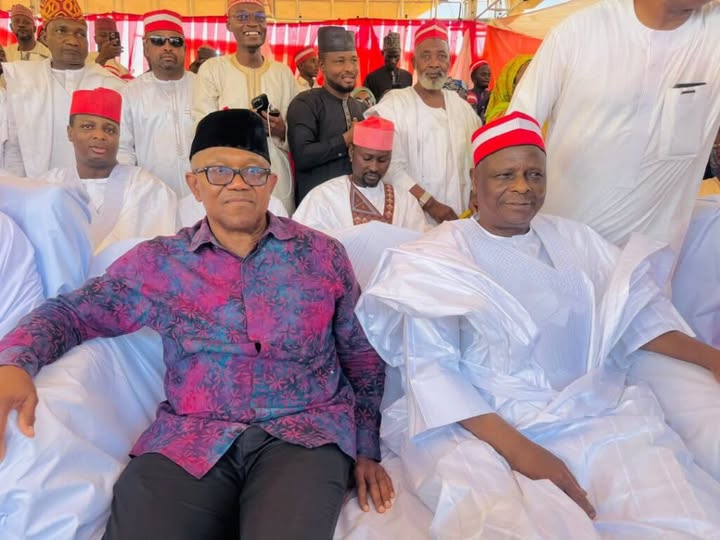
The struggle over who controls the campaign machinery supporting Peter Obi and Rabiu Kwankwaso ahead of Nigeria’s 2027 general elections has exposed tensions between the Nigeria Democratic Congress (NDC) and the Obi-Kwankwaso Movement, popularly known as the OK Movement.
At the heart of the disagreement is a question of political authority: whether the movement can maintain and deploy its own organisational structures while campaigning for candidates running on the NDC platform, or whether campaign structures associated with the party’s candidates must operate under the party leadership.
The disagreement became public in September after the OK Movement announced a 59-member presidential campaign council to mobilise support for Obi and Kwankwaso. The NDC subsequently disowned the council, saying it had not been authorised by the party.
NDC National Chairman Moses Cleopas said only the party leadership could constitute and announce an official presidential campaign council. He warned that support groups must not create parallel structures that could undermine the party’s authority.
The party also referred John Ughulu, the movement’s director-general, to its disciplinary organ over what it described as repeated disregard for party authority.
The OK Movement rejected the NDC’s position at the time, arguing that it was an independently organised political organisation with its own leadership and internal processes. Its national secretary, Saadatu Sani, said the movement did not require the personal approval of an individual within the party to carry out its organisational functions.
The NDC’s position reflects its insistence that candidates elected under its platform remain subject to the party’s constitution, leadership and discipline. Its leaders have argued that support groups should help mobilise voters and complement the party rather than establish structures that appear to compete with it.
NDC National Leader Seriake Dickson also criticised the movement’s decision to establish a separate presidential campaign council, arguing that support groups should not assume the role of the political party sponsoring the candidates.
Obi subsequently distanced himself from the council announced by the movement. In an interview with Arise Television reported by TheCable on September 25, he said he had not approved its formation and maintained that support groups should support the NDC rather than take on the responsibilities of the party.
The comments complicated the movement’s claim to be acting independently in support of the presidential ticket. Although the movement maintained that its organisational identity was separate from the NDC, the party’s presidential candidate made clear that the council had not been established with his approval.
A further development followed in October. On October 8, OK Movement spokesperson Emmanuel Idakwo told Channels Television that the campaign council had not been officially constituted by the movement’s leadership and that Obi had not known about it. He suggested that individuals had acted without following due process.
That account introduced a distinction between the movement’s claim to organisational independence and whether the particular council announced in September had been properly authorised within the movement itself.
The dispute resurfaced on October 26, when Ughulu criticised the NDC’s newly announced National Campaign Council, questioning the party’s preparedness for the 2027 elections and arguing that prominent appointments would not substitute for effective grassroots mobilisation.
He claimed that the OK Movement had invested in its organisational network well ahead of the election campaign and suggested that some members of the NDC council might eventually need the movement’s mobilisation structure.
The NDC’s council names Dickson as chairman and Obi as co-chairman, with party chairman Cleopas Moses serving as vice-chairman and Kwankwaso as co-vice-chairman. Other appointments include former Secretary to the Government of the Federation Babachir Lawal, former Deputy Senate President Ovie Omo-Agege and former presidential candidate Pat Utomi.
The latest criticism indicates that questions about the movement’s role and its relationship with the party have not disappeared, even as the NDC proceeds with its own campaign arrangements.
However, the earlier statements about the September council mean that the movement’s position should not be reduced to a simple claim that it has officially established a rival campaign structure. Its spokesperson subsequently said that the council was not an official action of the movement’s leadership.
The disagreement raises two related but distinct issues: the right of an independent political movement to manage its own members and structures, and the authority of a political party to determine how its candidates and official campaign machinery operate.
The OK Movement says its independence does not mean it is seeking supremacy over the NDC. It has argued that cooperation with the party does not require it to surrender its own internal administration or grassroots network.
The NDC, meanwhile, has maintained that support groups cannot announce campaign organs in the party’s name without approval from its National Working Committee. Obi’s own comments have reinforced the distinction between supporting a candidate and assuming responsibilities associated with the party’s official campaign.
The disagreement also presents a practical challenge for the opposition: how to coordinate party officials, established political networks and independent support groups behind the same presidential ticket without allowing disputes over control to overshadow mobilisation.
Neither side’s public statements alone settle every question about the legal or constitutional status of the movement’s structures. That would require examining the relevant party rules, the movement’s own governing arrangements and any formal agreements between them.
For now, the NDC is proceeding with its official campaign council, while the OK Movement continues to assert its independent identity and the importance of its grassroots network. Whether the two organisations can agree on clear boundaries—and coordinate their efforts effectively—may prove important to their preparations for the 2027 elections.


-
 Featured2 days ago
BREAKING NEWS: Shouts of joy rock the world as Pastor Chris opens final Healing Streams edition for 2026
-
 Football3 days ago
Man United shortlist Emery, Nagelsmann as potential replacements for Carrick
-

 Business6 days ago
Naira faces exchange rate gap as Dollar hits N1,380 on parallel market
-

 Business3 days ago
Hoodlums raid JED Benue office, abduct 10 staff over power dispute
-
 Football3 days ago
Aston Villa ready to freeze out Garnacho to avoid £43m Chelsea transfer
-

 Business3 days ago
EV adoption: Roxettes seeks cheaper financing, local manufacturing incentives
-
 Latest3 days ago
Akpabio tasks Tompolo-backed movement with spreading Tinubu’s renewed hope message
-

 Business3 days ago
Naira suffers biggest daily drop in 18 months, falls to N1,365/$