
Latest
Drug safety concerns as 64 Katsina students fall ill after treatment

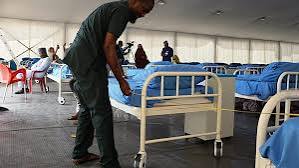
At least 64 students of Government Science Secondary School, Batagarawa, in Katsina State, have been hospitalised after reportedly developing adverse reactions during a drug administration exercise for the prevention and treatment of Bilharzia.
The students were taken to Ahmadi Rimi General Hospital and Turai Yar’Adua Maternal and Child Hospital in Katsina after experiencing symptoms including vomiting, abdominal discomfort and dizziness.
The incident triggered panic among parents and members of the school community, particularly following reports that some of the students arrived at the hospitals unconscious.
The circumstances surrounding the reactions remain unclear, with the Katsina State Government promising an investigation to establish what went wrong during the exercise.
The Medical Director of Ahmadi Rimi General Hospital, Dr Auwal Sani, confirmed that some of the affected students were brought to the facility unconscious.
He, however, said they were responding positively to treatment.
According to Sani, the students’ heights were measured before the drugs were administered to determine the appropriate dosage.
Two of the affected students, Abubakar Muhammad and Hassan Muhammad, said the number of tablets given to the students varied, with some receiving three tablets, others two, while some received one tablet.
The variation in the number of tablets administered has raised questions about the dosing procedure, although no evidence has yet established that the dosage was responsible for the reported reactions.
A parent, Ma’aruf Sani, who visited his children at the hospital, said they had fully recovered from the symptoms.
The Katsina State Commissioner for Basic and Secondary Education, Yusuf Sulaiman Jibia, confirmed the incident during a telephone conversation, saying all the affected students had recovered.
READ ALSO; Drug traffickers shift routes as Mexican cartels expand operations in Africa
“The affected students have fully recovered, and we are making arrangements for their return to school,” Jibia said.
He explained that the exercise was conducted by the Primary Health Care Authorities in collaboration with Batagarawa Local Government Area.
The commissioner assured parents and residents that there was no cause for alarm, adding that the state government would investigate the circumstances surrounding the incident to determine what went wrong.
He also disclosed that food was being provided to the students before their return to school.
However, the commissioner did not provide details of the proposed investigation, including whether it would examine the medication administered, dosage calculations, screening procedures or the students’ medical histories.
Bilharzia, also known as schistosomiasis, is a parasitic disease associated with contact with contaminated freshwater. Preventive chemotherapy programmes are routinely implemented in affected communities to reduce the burden of the disease.
Praziquantel is the principal medicine recommended by the World Health Organisation for treating schistosomiasis. Depending on the programme and medicine used, dosing procedures may involve weight-based calculations or approved height-based dosing methods.
Although some people may experience temporary adverse effects following treatment, the severity and pattern of the reactions reported in Batagarawa require proper medical assessment before their cause can be established.
The fact that students received different numbers of tablets does not, on its own, establish that they were incorrectly dosed. The appropriateness of each dose depends on the specific medication, its strength, the student’s weight or height as applicable, and the protocol used during the exercise.
Health authorities would need to establish the exact medicine administered, the batch involved, the dosage given to each student and the timing of the symptoms.
Investigators would also need to examine whether the students were screened before treatment, whether the drugs were administered according to approved guidelines, and whether any other factor could explain the reported reactions.
As of the time of filing this report, no official findings had been released to establish whether the incident resulted from an adverse drug reaction, a dosing error or another cause.
The outcome of the investigation is expected to be important in determining accountability and ensuring that future school-based preventive health programmes are conducted with appropriate safeguards.
For parents and school authorities, the immediate concern remains the students’ recovery, while the wider public health priority is to establish what happened and prevent a recurrence.


-

 Featured3 days ago
BREAKING NEWS: Shouts of joy rock the world as Pastor Chris opens final Healing Streams edition for 2026
-

 Football4 days ago
Man United shortlist Emery, Nagelsmann as potential replacements for Carrick
-

 Business4 days ago
Hoodlums raid JED Benue office, abduct 10 staff over power dispute
-

 Football4 days ago
Aston Villa ready to freeze out Garnacho to avoid £43m Chelsea transfer
-

 Business1 week ago
Naira faces exchange rate gap as Dollar hits N1,380 on parallel market
-

 Business4 days ago
EV adoption: Roxettes seeks cheaper financing, local manufacturing incentives
-

 Latest4 days ago
Akpabio tasks Tompolo-backed movement with spreading Tinubu’s renewed hope message
-
 Business3 days ago
How Ethiopian Airlines is challenging Africa’s aviation narrative through self-reliance