
News
2027: Wike urges Tinubu re-election, defends economic reforms

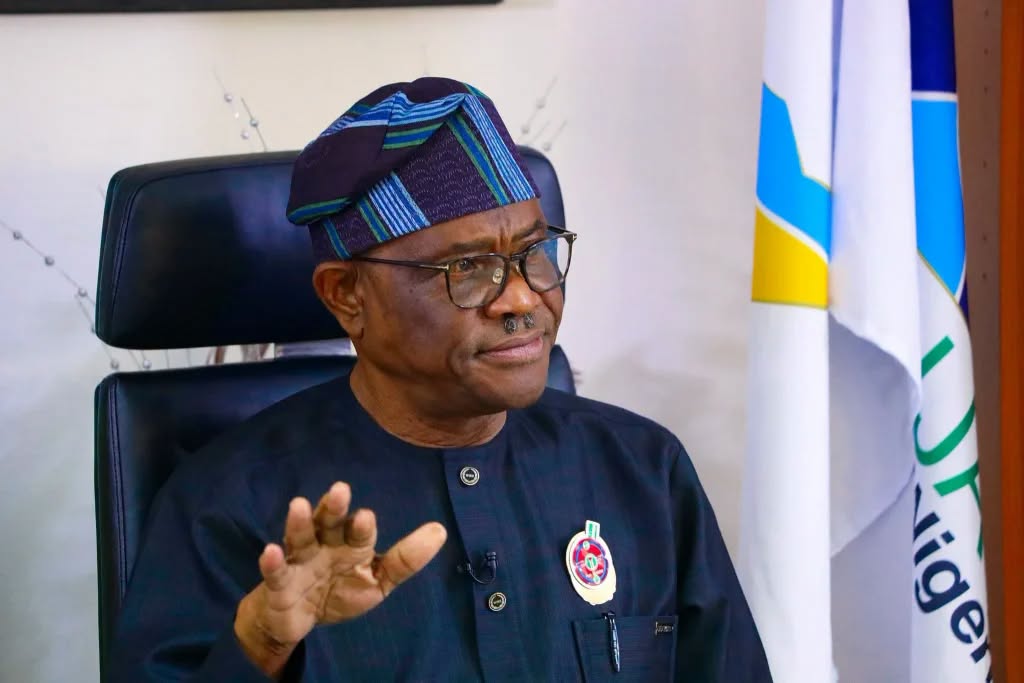
Minister of the Federal Capital Territory (FCT), Nyesom Wike, has urged Nigerians to support President Bola Tinubu’s re-election bid, arguing that the administration’s economic reforms need continuity to deliver their full benefits.
Wike’s appeal has renewed debate over the economic direction of the country and whether the reforms introduced since Tinubu assumed office in May 2023 are translating into meaningful improvements in the lives of ordinary Nigerians.
The administration has defended its policies, particularly the removal of petrol subsidies, the unification of foreign exchange markets and efforts to increase government revenue, describing them as necessary measures to address longstanding structural weaknesses in the economy.
However, while some economic indicators have shown signs of improvement, many households and businesses continue to struggle with high food prices, transportation costs, expensive electricity and declining purchasing power.
The central question facing voters ahead of the 2027 general election is whether the economic gains being highlighted by the government are sufficiently reflected in the everyday experiences of Nigerians.
Wike made the appeal on Sunday, November 22, during a thanksgiving service at St Peter’s Anglican Church in Rumueprikom, Obio/Akpor Local Government Area of Rivers State.
The minister argued that the removal of petrol subsidy and other difficult economic decisions were necessary to prevent the country from sliding into a deeper economic crisis.
According to him, although the reforms initially created hardship, the country was beginning to lay the foundation for economic recovery and prosperity.
He warned that electing another president in 2027 could make it difficult to stabilise the policies already introduced by the Tinubu administration.
“If we don’t re-elect him, then it will be difficult to stabilise what he has done,” Wike said.
He also cited improvements in the university system and the payment of pension entitlements as evidence of the administration’s performance.
However, his argument has raised questions about whether economic stability at the national level is translating into improved living conditions for ordinary Nigerians.
There are measurable indicators suggesting that Nigeria’s economy has improved since the early stages of Tinubu’s reforms.
According to the National Bureau of Statistics (NBS), the economy expanded by 4.43 per cent in real terms in the second quarter of 2026, compared with 4.23 per cent in the corresponding period of 2025.
The economy also recorded annual growth of 3.87 per cent in 2025, up from 3.38 per cent in 2024.
The growth has been supported by activities in the services, agriculture, information and communication, financial services and oil sectors.
The World Bank has also acknowledged improvements in Nigeria’s macroeconomic position, including stronger external and fiscal balances and a gradual return of economic stability.
Its October 2026 Nigeria Development Update, however, noted that the country’s priority must now shift towards achieving faster and more inclusive growth capable of creating jobs, reducing poverty and improving living standards.
This distinction is important because an expanding economy does not automatically mean that households are becoming wealthier or that more Nigerians can afford basic necessities.
One of the strongest indicators of the economic difficulties facing Nigerians has been the sustained increase in the cost of living.
The NBS reported that headline inflation declined to 14.06 per cent in October 2026 from 14.63 per cent in September, representing the fifth consecutive month of moderation.
However, food inflation remained significantly higher at 19.13 per cent, indicating that food prices continue to place considerable pressure on household budgets.
Although the declining inflation rate suggests that prices are increasing more slowly, it does not mean that the prices of food, transportation, rent and other essential commodities have returned to their previous levels.
For households whose incomes have not increased at the same pace as the cost of living, the cumulative impact of previous price increases remains substantial.
The October figures also showed that monthly headline inflation increased to 0.43 per cent from 0.06 per cent in September, suggesting that price pressures had not completely disappeared.
The Tinubu administration increased the national minimum wage from N30,000 to N70,000 in 2024 following negotiations with organised labour.
The increase represented a significant adjustment to the statutory minimum wage, but its impact on workers’ purchasing power has been complicated by rising food, transportation, housing and electricity costs.
Furthermore, the new minimum wage does not automatically translate into improved earnings for the large number of Nigerians working in the informal sector.
In October 2026, the Federal Government also agreed to provide federal workers with a monthly transport allowance of N70,000 for six months following negotiations with the Nigeria Labour Congress.
The agreement reflected continuing concerns about the cost of commuting and the financial pressure on public sector employees.
These interventions provide some relief, but they also illustrate the difficulty of ensuring that wage increases keep pace with living costs.
Employment creation remains another important measure of whether the economic reforms are benefiting ordinary Nigerians.
The latest available official unemployment figure identified in the National Bureau of Statistics’ labour force series is 4.3 per cent for the second quarter of 2024.
However, the figure requires careful interpretation because Nigeria adopted a revised International Labour Organisation methodology in 2023, under which anyone who worked for at least one hour for pay or profit during the reference week is classified as employed.
Consequently, the unemployment rate alone does not fully capture the challenges of underemployment, low wages, informal work and economic insecurity.
The International Monetary Fund’s 2026 assessment estimated that poverty had reached 63 per cent using Nigeria’s national poverty line and that approximately 27 million Nigerians experienced food insecurity in the autumn of 2025.
The figures underline the gap between improving macroeconomic indicators and the financial realities confronting many households.
The Tinubu administration’s economic reforms have received recognition from international financial institutions for addressing longstanding structural weaknesses, particularly in the foreign exchange market, public finances and fuel subsidy expenditure.
The World Bank has argued that sustaining macroeconomic stability is important, but has also stressed the need for targeted support for vulnerable households, improved public spending and stronger job creation.
The debate over Tinubu’s re-election therefore goes beyond whether the reforms should continue. It also concerns how quickly their benefits can reach households that have endured years of rising living costs.
For Nigerians preparing to vote in 2027, the relevant questions include whether food prices will become more affordable, whether wages will improve in real terms, whether employment opportunities will expand and whether poverty levels will decline.
Wike’s argument for continuity reflects the government’s position that the reforms require more time to deliver their full benefits.
But for millions of Nigerians struggling to meet their daily needs, the ultimate test of economic recovery will not simply be improved government revenue, stronger foreign reserves or higher GDP growth.
It will be whether they can afford food, pay rent, transport their children to school and maintain a reasonable standard of living from their earnings.


-

 Crime5 days ago
Kwara bandit deal under scrutiny as footage shows security operatives negotiating with terrorists [VIDEO]
-

 Business3 days ago
NGX loses N3trn in three days as Dangote Cement, Aradel, Banks lead sell-off
-

 Entertainment7 days ago
2027 Grammys: Asake, Wizkid, Tems, Ayra Starr lead Nigerian nominees in African music category
-

 Football5 days ago
Argentine teen footballer Abel Nunez dies after suffering head injury during match
-
 Latest3 days ago
2027: Dele Momodu predicts Peter Obi will defeat Soludo’s Tinubu mobilisation in Anambra
-

 Latest6 days ago
2027 Elections: 66% of Nigerians feel no connection to political parties, 89% fear vote-buying – Survey
-

 Latest3 days ago
Tinubu’s 2027 re-election bid: New promises, old questions and an unfinished record
-

 Football7 days ago
Portugal gives iconic No. 7 a new look to immortalise Cristiano Ronaldo’s legacy