
Featured
As 2027 election nears, Jonathan’s warning on bloodshed echoes in Tinubu’s rhetoric

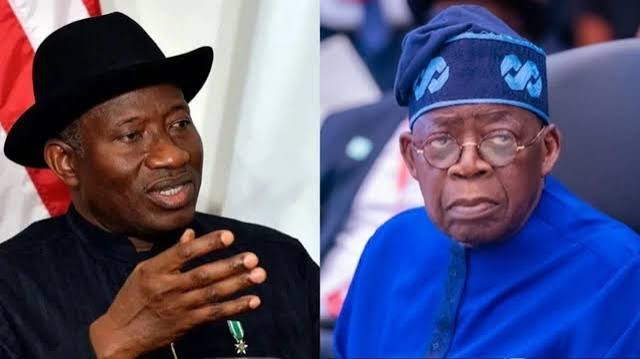
As Nigeria moves towards the 2027 general election, two statements by prominent political leaders have brought renewed attention to the relationship between political ambition, leadership responsibility and the value of human life.
In 2015, former President Goodluck Jonathan declared that his ambition was not worth the blood of any Nigerian, a position he demonstrated by conceding defeat in the presidential election to Muhammadu Buhari while results were still being collated.
More than a decade later, President Bola Tinubu has adopted a more combative tone in describing his determination to retain power, telling political opponents that they would have to wrestle with him to the finishing point.
Although the statements were made in different political circumstances, their contrast raises an important question about the language Nigerian leaders use during electoral contests and the responsibility they bear for preventing violence.
Jonathan’s decision to put national peace above power
Jonathan’s declaration became one of the defining moments of Nigeria’s democratic history when he accepted defeat in the 2015 presidential election.
After the Independent National Electoral Commission (INEC) announced that Buhari had secured victory, Jonathan congratulated his opponent before the final collation of results had been completed.
The decision helped avert a potentially tense transition at a time when the country was experiencing significant political and security pressures.
In December 2016, Jonathan explained that his decision was voluntary and rooted in his conviction that no political ambition justified the loss of Nigerian lives.
Speaking at Bingham University’s convocation ceremony in Nasarawa State, he said: “My ambition is not worth the blood of Nigerians. It was not just a political slogan.”
He also criticised politicians who allegedly mobilised young people as political thugs while keeping their own children away from the dangers of electoral violence.
Jonathan’s position was that political competition should never become a justification for sacrificing citizens, particularly young people, in the pursuit of power.
His statement subsequently became a reference point in discussions about peaceful elections, political restraint and democratic leadership.
Tinubu’s ‘fight to the finish’ declaration
President Tinubu’s remarks came in July 2026 during a meeting with members of the Catholic Bishops’ Conference of Nigeria at the Presidential Villa in Abuja.
Responding to the prospect of opposition parties challenging him in the 2027 election, Tinubu said he would not surrender power without a contest.
“Those who would take it from me will try. They will try. All is fair in politics, and there is equal opportunity,” he said.
He added: “I won’t offer them a red carpet. I won’t offer them the leash to tie me at home. No, we will wrestle each other to the finishing point. That’s the truth. That is fair in politics.”
The President also defended INEC against allegations of bias and maintained that political opponents had equal opportunities to participate in the democratic process.
His comments were made in the context of electoral competition and did not amount to an explicit call for violence. However, the language attracted criticism from opposition figures who argued that the President should direct such determination towards tackling insecurity rather than confronting political rivals.
The African Democratic Congress, through its National Publicity Secretary, Bolaji Abdullahi, described the remarks as misplaced, arguing that the country’s security challenges required stronger presidential attention.
The party urged Tinubu to focus on defeating terrorists, bandits and kidnappers rather than presenting the 2027 election as a political battle against opponents.
A country already struggling with political violence
The debate over political language is taking place against a background of concerns about political intolerance, intimidation and attacks involving party supporters.
At the 2026 Goodluck Jonathan Foundation Peace Conference in Abuja on November 17, the former President warned that Nigeria could face a serious crisis after the 2027 elections if political intolerance, thuggery, ethnic rivalry and declining confidence in democratic institutions were not addressed.
Jonathan expressed concern that political parties and campaign organisations were increasingly operating like rival groups, with opponents treated as enemies rather than participants in a democratic process.
He also warned that the exploitation of ethnic divisions for electoral advantage could have dangerous consequences for national unity.
His concerns were echoed by INEC Chairman, Prof. Joash Amupitan, who condemned attacks on campaign convoys and supporters of political parties.
Amupitan warned political actors, sponsors and their supporters that those responsible for promoting or carrying out violent campaigns would face the law.
The concerns are significant because electoral violence does not begin only when weapons are used or polling stations are attacked. It can also be encouraged by political intolerance, threats, dehumanising language and the portrayal of opponents as enemies who must be defeated at all costs.
The responsibility that comes with presidential power
There is an important distinction between a candidate expressing determination to win an election and a leader creating an atmosphere in which political confrontation becomes normalised.
Tinubu, as the incumbent President and Commander-in-Chief, occupies a position that carries responsibilities beyond those of an ordinary presidential candidate.
His administration is constitutionally responsible for protecting lives and property, maintaining public order and ensuring that Nigerians can participate in the electoral process without fear.
This does not mean that the President should avoid defending his political record or challenging opposition parties. Competitive elections require strong arguments, competing policies and the freedom to defend political interests.
However, the language used by those in power matters, particularly in a country where political disagreements have repeatedly resulted in intimidation, destruction of property and loss of lives.
The same standard should apply to opposition leaders, party officials, campaign organisations and supporters. No political group should encourage violence or treat the rights of its opponents as obstacles to be eliminated.
Jonathan’s 2015 decision demonstrated that conceding an election does not necessarily represent political weakness. It can also be an expression of confidence in democratic institutions and a recognition that the stability of the country is more important than retaining office.
Tinubu’s determination to contest the 2027 election is equally a legitimate political position. The question is whether the contest can be conducted through policies, persuasion and lawful mobilisation rather than language or actions that heighten political tensions.
Has Nigeria lost the value of human life in politics?
The contrast between the two statements is not, by itself, proof that one administration or political generation values human life more than another. Political statements must be understood within their contexts, and rhetoric alone cannot establish a leader’s intentions.
Nevertheless, the comparison offers an opportunity to examine the standards expected of Nigerian political leaders.
A country facing insecurity, economic hardship and deep political divisions cannot afford an electoral culture in which winning becomes more important than protecting citizens.
The 2027 election should be an opportunity for political parties to demonstrate that democratic competition can take place without intimidation, violence or the mobilisation of vulnerable young people as instruments of political warfare.
Ultimately, the test of leadership is not simply how fiercely a politician fights to win power, but how responsibly that power is pursued and exercised.
Jonathan’s declaration remains a reminder that no election is worth the life of a Nigerian. As the next electoral contest approaches, that principle should not be treated as a slogan belonging to one political party or administration. It should be a standard expected of every leader seeking the mandate of the Nigerian people.


-
 Crime6 days ago
Kwara bandit deal under scrutiny as footage shows security operatives negotiating with terrorists [VIDEO]
-
 Business4 days ago
NGX loses N3trn in three days as Dangote Cement, Aradel, Banks lead sell-off
-
 Latest4 days ago
Tinubu’s 2027 re-election bid: New promises, old questions and an unfinished record
-

 Entertainment1 week ago
2027 Grammys: Asake, Wizkid, Tems, Ayra Starr lead Nigerian nominees in African music category
-
 Latest4 days ago
2027: Dele Momodu predicts Peter Obi will defeat Soludo’s Tinubu mobilisation in Anambra
-

 Football6 days ago
Argentine teen footballer Abel Nunez dies after suffering head injury during match
-

 Latest7 days ago
2027 Elections: 66% of Nigerians feel no connection to political parties, 89% fear vote-buying – Survey
-

 Football1 week ago
Portugal gives iconic No. 7 a new look to immortalise Cristiano Ronaldo’s legacy