
Business
Banks must maintain minimum liquidity ratio of 30%, CBN insists

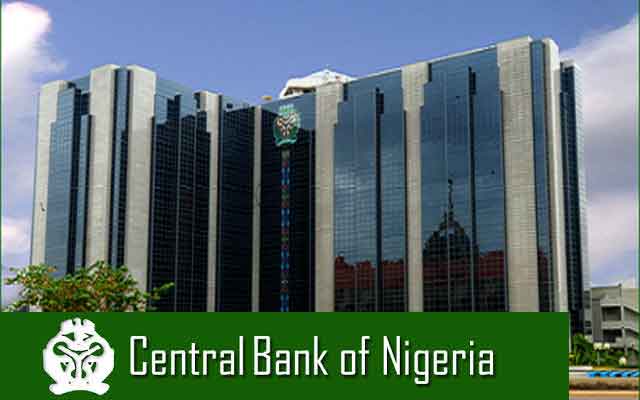
While maintaining that merchant and non-interest banks is expected to maintain a minimum Liquidity Ratio of 20 and 10 per cent, the Central Bank of Nigeria has insisted that commercial banks in the country must maintain minimum liquidity ratio of 30 per cent in line with regulatory requirement.
This directive is contained in the Monetary, Credit, Foreign Trade and Exchange Policy for the fiscal years of 2016/2017 recently released by the apex bank. According to the guidelines, discount houses shall continue to invest at least 60 per cent of their total liabilities in government securities in the 2016/2017 fiscal period, while the ratio of individual bank loans to deposits, is retained at 80 per cent.
It said the major tool for liquidity management will continue to be Open Market Operation (OMO) Auctions will be conducted through the sale and purchase of Treasury Bills and CBN Bills at the two-way quote trading platform.
The Bills’ tenor and volume, it said, would be influenced by the liquidity conditions in the banking system. “All authorized Money Market Dealers (MMDs) which include commercial and merchant banks, non-interest financial institutions and discount houses shall continue to be the participants at the OMO. In addition, OMO auctions will be complemented by repurchase agreements (repo/reverse repo) at appropriate rates based on existing Monetary Policy Rate,” it said.
ALSO SEE: Heritage of banking success
It said cash reserve and liquidity ratios shall continue to serve as prudential and liquidity management tools.
“The Net Open Position (NOP) limit (long or short) of 20 per cent of shareholders’ funds unimpaired by losses, effective from January 2014, shall continue to apply during the programme period. Accordingly, all banks are to ensure that the difference between the overall foreign currency assets and liabilities (on and off balance sheet) shall be within the prescribed limit,” it said.
“Furthermore, the requirement that aggregate foreign currency borrowing of a bank excluding inter group and interbank (Nigerian banks) borrowing should not exceed 75 per cent of its shareholders’ funds unimpaired by losses shall be retained”.
Liquidity ratios are a class of financial metrics used to determine a bank’s ability to pay off its short-term debts obligations. It is the total specified liquid assets of a bank divided by total current liabilities. The higher the value of the ratio, the larger the margin of safety a bank possesses to cover short-term debts.














-
 Latest6 days ago
Israel marks 3 years since October 7 Hamas attack amid Gaza strikes, election debate
-

 Energy5 days ago
Fuel Battle: Dangote, marketers and government clash over petrol imports
-

 Energy7 days ago
Petrol, diesel prices rise 86% in 2026 as costs hit fresh highs
-

 Energy1 week ago
Has Iran lost control of the Strait of Hormuz? Oil flows rebound as war disruptions persist
-

 Football6 days ago
Nigeria’s World Cup exit under spotlight as FIFA’s DR Congo files emerge
-

 Latest6 days ago
US Court set to rule on release of FBI, DEA records on Tinubu
-

 Business6 days ago
Nigerian investors at a crossroads as fixed-income yields slide
-

 Business1 week ago
LoveWorld Trade and Investment Forum to Convene Business Leaders in Accra