
Business
CBN needs to strengthen weekly supply of forex, says analyst

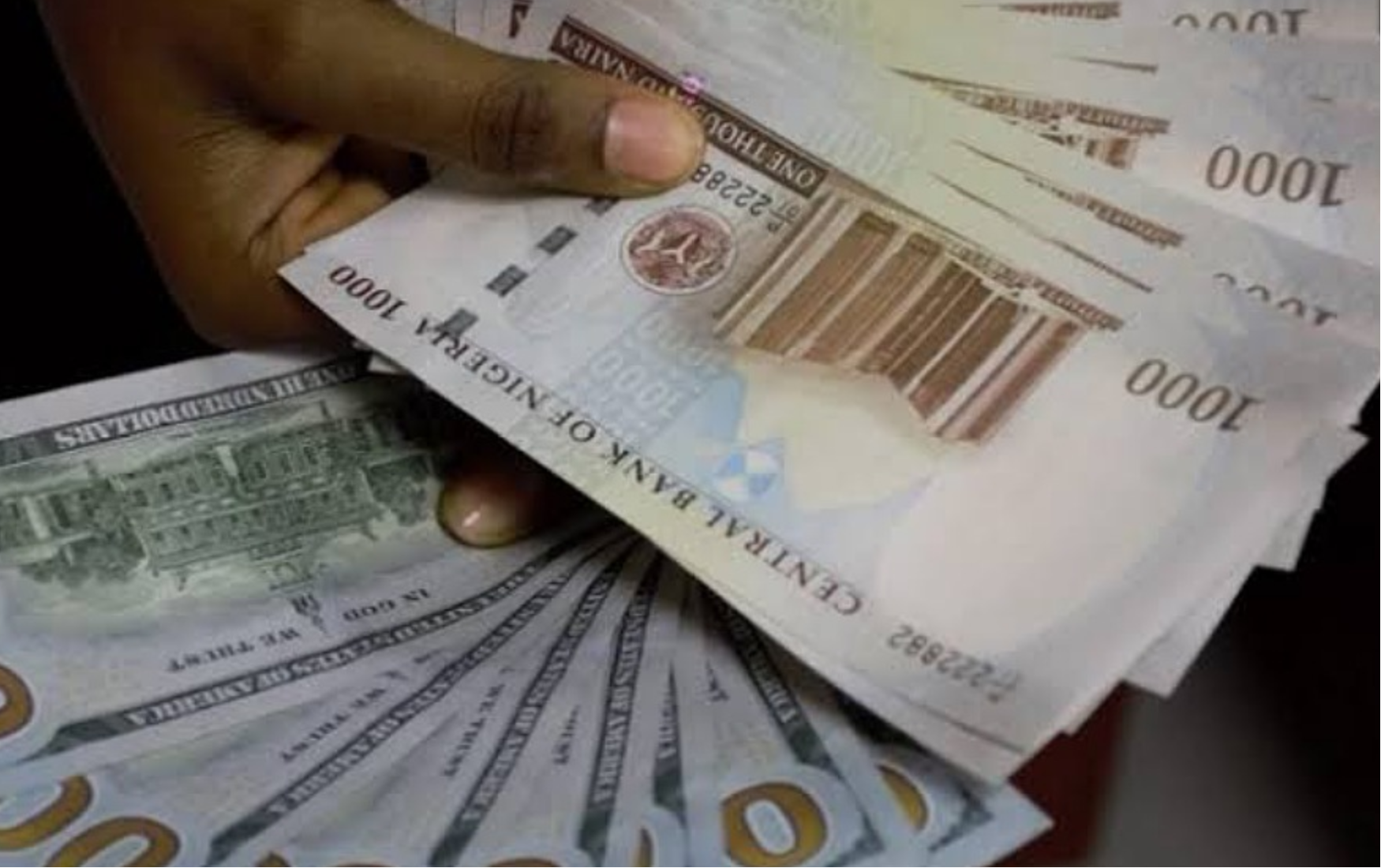
A political economist, Adefolarin Olamilekan has advised the federal government to maintain a monetary framework appropriate to stop the Naira weakness by improving the country’s export to boost the nation’s foreign reserves.
Closing the gap between the official market and parallel market rate has varied from about 10 -20 per cent since December 2023 to the current N1,400/$1 official and N1,550/$1 at the parallel market in February 2024.
According to him, since November 2023, Naira has been in the news for its worse depreciation and value shrinking.
“Today, the Naira has lost over 80 per cent of its value, exchanging at N,465 / $1 at the official I & E Window and N1,500 and above at the parallel market.
READ ALSO: Nigeria’s Forex Crunch: Diaspora Remittances to the Rescue?
“To address this gap, the CBN would have to strengthen its weekly supply of dollars, through the evidence-monitoring channel to cut off the excess on the part of banks and others engaging in small or large-scale round-tripping and speculation in the forex market.
“Nigerians may need to ask questions concerning the different rates of exchange that have distorted the system, and the continued malpractices of Nigeria’s state intervention and market mechanism which sustained poverty of the CBN monetary policy over the years.
“Nigerians could recall how Tinubu’s government in quick succession introduced the forex market unification reform otherwise known as floating or liberalization of the foreign exchange market sector to achieve naira stability and boost investors’ confidence.
“By listing the Naira amongst the worst-weakened currencies in sub-Saharan Africa. Nigeria’s Naira and Angolan Kwanza top the list with 40 percent depreciation, respectively.
“Others are South Sudan 33 per cent, Burundi 27 per cent, the Democratic Republic of Congo 18 per cent, Kenya 16 per cent, Ghana 12 per cent and Rwanda 11 per cent.
READ ALSO: BDCs must be involved in solving forex crisis- Gwadebe
“Activities of parallel market exchanges are said to be one of the problems causing currency depreciation amongst these African countries as it fuels inflationary distortion.
“Paradoxically, the scourge of multiple exchange rates as portended by the parallel forex market in the case of Nigeria is the failure and inability of the Nigerian state to protect the naira against unscrupulous individuals and groups within the forex trading sector of our economy.
“While President Tinubu and Cardoso CBN forex market or liberalization, as well as floating of the FX equalization strategy is to close the gap between the official window and that of the parallel market rate, failure to achieve this goal rests on the authority not fine-tuning the right sanctions on players who are benefiting from the existence of multiplicity of exchange rates against the naira.
“Sadly, except it changes, the present system encourages insolent rent seekers and disturbs the work and reward ethics as huge sums can be made without any direct contribution.













-

 Business1 week ago
Dangote Refinery IPO: 70% Subscription claim meets fourfold demand assertion as investors seek clarity
-
 Featured4 days ago
Inside INEC’s race to prepare for Nigeria’s 2027 elections
-

 Latest6 days ago
UCTH faces morgue crisis as 50 unclaimed corpses await mass burial
-
 Featured4 days ago
2027: APC unveils nationwide campaign timetable, Tinubu to rally in 12 states
-

 Business6 days ago
BREAKING: Nigeria’s Inflation Rate Drops to 14.63% in September
-

 Aviation1 week ago
Germany opens online application route for student, EU Blue Card and other long-stay visas
-
 Business4 days ago
Court dismisses ₦170m Trade Fair contract claim, says Zenith Bank was not a party
-

 Business5 days ago
President Tinubu and the Low Transport Fares Fiasco