
Business
CBN’s $15.3bn intervention fails to tame Naira exchange rate

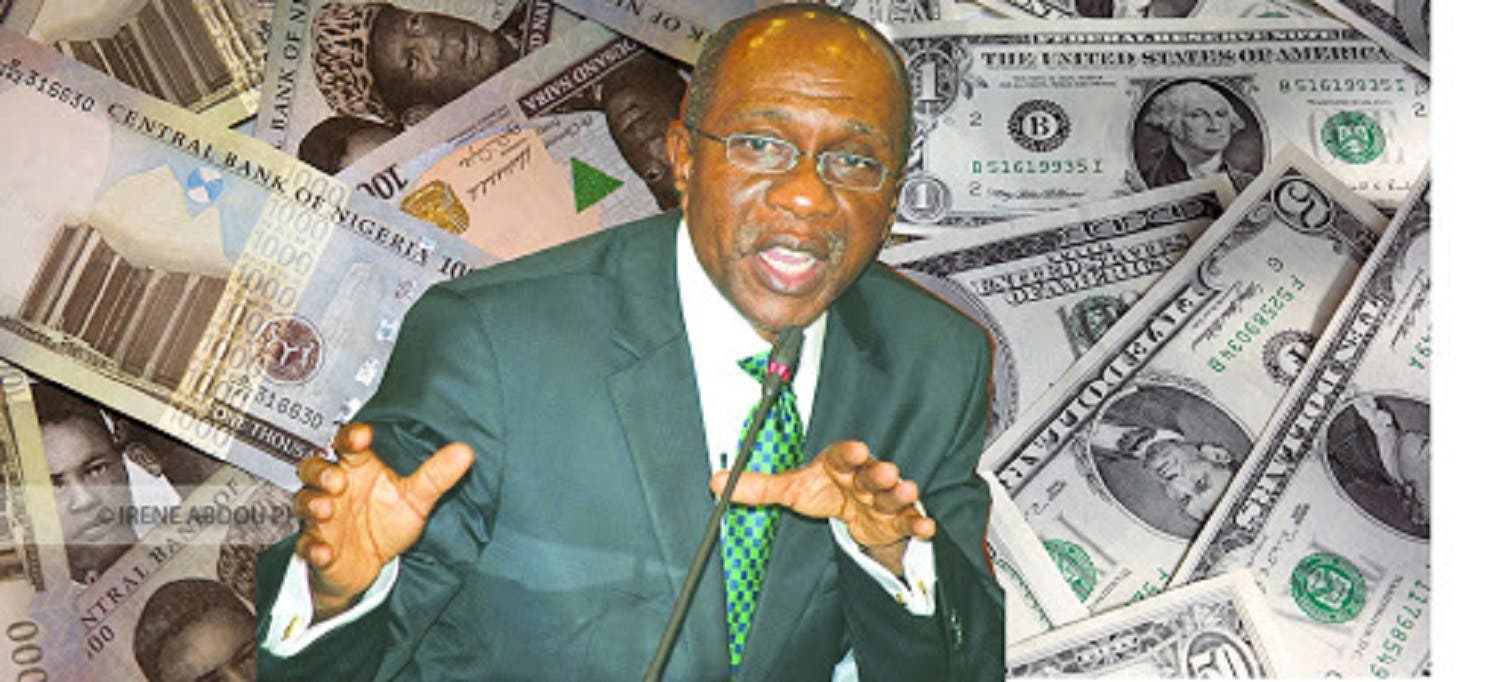
Despite disbursing a whopping $15.3bn into the economy to stabilize the Naira exchange rate in the official market in 2022 by the Central Bank of Nigeria, the local currency depreciated against the dollar in 2022, as demand overwhelms both the official and black markets.
In the official market, the naira depreciated by -9.18 per cent in value, having opened last year with N422/$1, closed 2022 at N461.50/$1 as at Friday, December 30, 2022.
Also, in the black market, the dollar appreciated by 30.9 per cent, pushing the exchange rate to N740/$1 at the end of last year, significantly above the N565/$1 it began the year with.
Meanwhile, the exchange rate between the naira and the US dollar at the black market depreciated on Wednesday, trading at an average of N747/$1. This represents a 1.63 per cent fall compared to N735/$1 maintained in the last three trading sessions.
According to the monthly and quarterly economic reports by the central bank, $15.3 billion was injected between the first quarter and first month of the fourth quarter of last year.
READ ALSO: CBN steps up fight against terrorism, hidden bank accounts
Between January to March, the central bank disbursed $4.86 billion, “Total foreign exchange sales to authorised dealers by the bank, at $4.86bn, decreased by 5.8 per cent, compared with the previous quarter’s level,” the CBN report reads.
But this amount fell between April and June, as the apex bank could only supply $4.81 billion, “Total foreign exchange sales to authorised dealers by the bank at $4.81bn, decreased by 0.9 per cent, compared with the level in the preceding quarter.”
Also, in the third quarter covering July to September, the disbursement dropped to $4.18 billion.
“Total foreign exchange sales to authorised dealers by the Bank decreased in the review period. Foreign exchange sales at $4.18bn, decreased by 13.1 per cent, below the level in the preceding quarter,” the financial regulator said.
READ ALSO: Naira drops to N747/$1 at parallel market
In October, $1.46 billion was injected into the economy, as CBN continues to intervene in the exchange rate movement despite calls against it from the International Monetary Fund (IMF).
In its 2022 Article IV Consultation concluding statement, IMF had suggested that, “the CBN should step back from its role as main FX intermediator, limiting interventions to smoothing market volatility and allowing banks to freely determine FX buy-sell rates.”
The CBN ignored the advice from the IMF, disbursing $15.3 billion in 10 months to authorised dealers in order to increase availability of forex in the official market.


-

 Featured6 days ago
Nigeria’s youth unemployment paradox: Graduates struggle as millions survive in informal jobs
-

 Business7 days ago
Nigerian Banks earn N521.8bn from E-banking, card fees in nine months
-

 Energy6 days ago
Nigeria’s power crisis deepens as ₦639bn unpaid gas debt threatens electricity supply
-

 Latest7 days ago
Dalung claims ‘message from Buhari’s grave’ urges Nigerians to vote Atiku in 2027
-
 Featured5 days ago
Tinubu’s Renewed Hope: Reforms, hardship and the unanswered question of a second term
-

 Featured5 days ago
The cost of Renewed Hope: How Nigeria’s economic reforms are reshaping everyday family life
-

 Latest6 days ago
Ondo shuts ponmo processing centre after discovery of human waste
-
 Featured1 week ago
Breaking: Manchester United sack Michael Carrick after poor start to Premier League season