
Crime
Court backs Buhari to seize properties traced to Ekweremadu, Saraki, others abroad

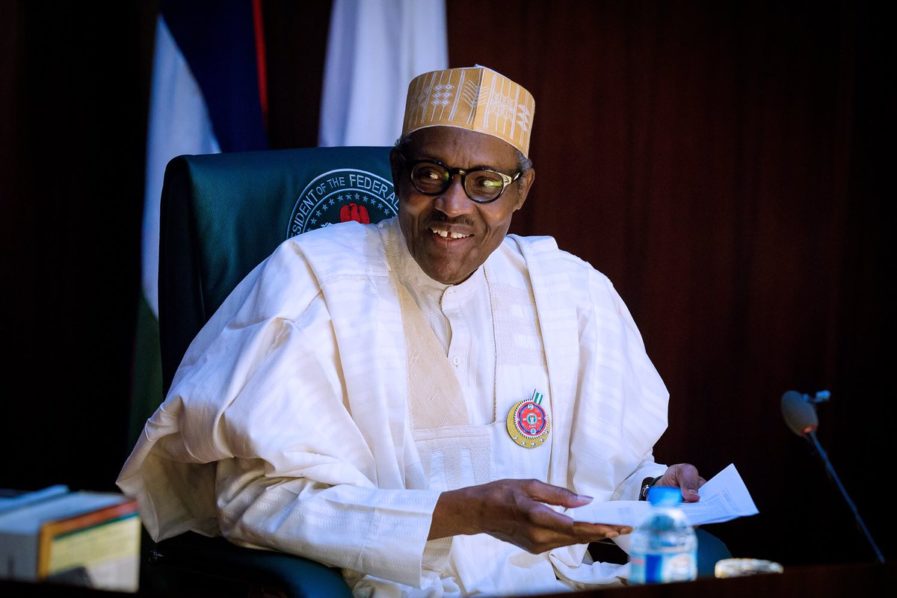
A federal high ciurt has ruled that President Muhammadu Buhari’s Executive Order 6 is in line with the 1999 Constitution.
The judge, Ijeoma Ojukwu, made the pronouncement while delivering judgment in a suit filed by two lawyers Ikenga Ugochinyere and Kenneth Udeze, challenging the legitimacy of the order.
The order was given following the uncovering of undisclosed properties of public office holders when they took the oath of office.
Senate President Bukola Sraki and his deputy Ike Ekweremadu were among those whose undisclosed wealth stashed overseas are being investigated by the EFCC.
In the court decision, Mrs Ojukwu held that it was within the powers of the president, as granted by the constitution, to issue Executive Orders for the execution of policies by the executive arm of government provided such orders respected the principles of separation of powers.
She also said that the Executive Order 6 did not violate the right of citizens to own property.
According to her, it is rather informed by Mr Buhari’s willingness to save suspected property from being dissipated.
While insisting that the order was constitutional, Mrs Ojukwu, however, cautioned that the powers given to the Attorney General of the Federation (AGF) under the order must be exercised in accordance with the provisions of the constitution.
She held that although the order seemed to give the AGF discretion as to when to seek permission of the court to seize any suspected property, he must at all times, obtain a court order before seizing any asset.
Executive order 6 which was recently signed by the president empowers the AGF to liaise with relevant investigative agencies to temporarily seize properties linked with corruption.
The properties are to be seized pending investigation and conclusion of trial, to prevent the dissipation of such assets.
The two lawyers went to court challenging the order on the grounds that it violated peoples’ rights to own property and denied fair hearing to owners of any property against which the order was executed.
They contended that by issuing the executive order, the president allegedly encroached on the constitutionally guaranteed right of citizens to own properties.
The plaintiffs had urged the court to restrain both defendants; the president and the AGF from enforcing it.


-
 Latest1 week ago
Global excitement builds as Healing Streams Live Services returns October 23
-

 Featured6 days ago
Inside INEC’s race to prepare for Nigeria’s 2027 elections
-
 Featured6 days ago
2027: APC unveils nationwide campaign timetable, Tinubu to rally in 12 states
-

 Business1 week ago
President Tinubu and the Low Transport Fares Fiasco
-

 Business4 days ago
Naira faces exchange rate gap as Dollar hits N1,380 on parallel market
-

 Business6 days ago
Court dismisses ₦170m Trade Fair contract claim, says Zenith Bank was not a party
-

 Latest6 days ago
Breaking: NNPCL raises petrol price to ₦1,405 per litre amid discount controversy
-

 Business1 week ago
Rite Foods targets beverage market growth with LIDA Malt