
Wheels
Expert advocates implementation models for local auto assembling

A senior lecturer with the Covenant University, Otta, Ogun state, Dr. Oscar Odiboh, has advocated optional implementation models for Nigeria’s ailing auto industry.
Odiboh who spoke in Lagos recently at the Nigeria Auto Journalists Association (NAJA) monthly industry forum, held in Surulere, made his submission against the background of the four years old Nigeria’s automotive industry development plan (NAIDP) by the federal government, which has been roundly criticised by industry stakeholders.
According to Odiboh, there is an urgent need to re-jig the implementation style of the policy, hence, he suggested three implementation models as follows: Joint implementation, Sole implementation and NEED implementation.
Under Joint implementation, (which he outlined into partnership/co-investor model, provider model and cap investment model) the lecturer advocated the involvement of the Nigeria Auto Manufacturers Association (NAMA), Original Equipment Manufacturers and government as joint deciders, sharing the risks and benefits and shared responsibilities.
On Sole Implementation model, he canvased deregulated private sector and regulated public models; while the NEED implementation models covers the Single need model and multi stage need models.
ALSO SEE: NAJA names Ade-Ojo icon of auto industry
Nonetheless, Odiboh, who spoke on the topic- ‘Implementation of Nigeria’s Auto Policy: The way Forward’; insisted that industry is divided and may not thrive until the stakeholders collaborate.
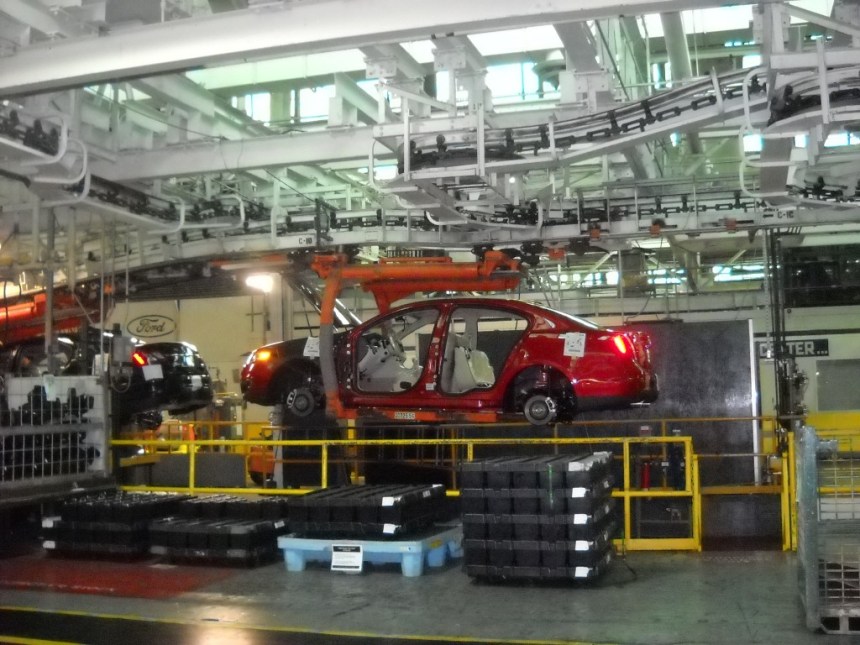
He observed that almost mid-term into the 10- year plan, most of the assembly plants set up in the country lack the standard to compete globally, and can hardly be called assembly plants,
He said: “What we have at the moment are not real assembly plants, they are glorified joineries. Average 65 per cent of our assembly operations are manual, while 70 per cent of employees are casual.”
It would be recalled that the National Automotive Design and Development Council (NADDC), the federal government agency saddled with the responsibility of implementing the auto policy, has repeatedly claimed that there are over 50 auto assembly firms in the country, hence alluding to the success of the policy.
Odiboh, who noted that Players in the sector were frustrated through importation rules, added that more than 60 per cent of tools in the sector are manual.
Calling for budget cars, Odiboh stressed that the sector’s inability to offer affordable vehicles for mass market would keep used market growing to the detriment of the sector.











-

 Latest1 week ago
Full List: Meet the 2026 Nobel Prize winners across six categories
-

 Football7 days ago
Premier League Matchweek 7: Five Fixtures That Could Shape the Weekend
-

 Business5 days ago
Dangote Refinery IPO: 70% Subscription claim meets fourfold demand assertion as investors seek clarity
-

 Latest6 days ago
Umahi defends Lagos-Calabar highway route changes amid public outcry
-
Business6 days ago
Dangote Refinery IPO Extension: Was the 70% subscription report overhyped?
-

 Latest4 days ago
UCTH faces morgue crisis as 50 unclaimed corpses await mass burial
-

 Business4 days ago
BREAKING: Nigeria’s Inflation Rate Drops to 14.63% in September
-

 Featured6 days ago
El-Rufai, ADC governorship candidate’s court appearance puts Kaduna opposition politics in focus