
Business
FG proposes NIMASA, NPA fees to be collected in Naira to ease forex pressure

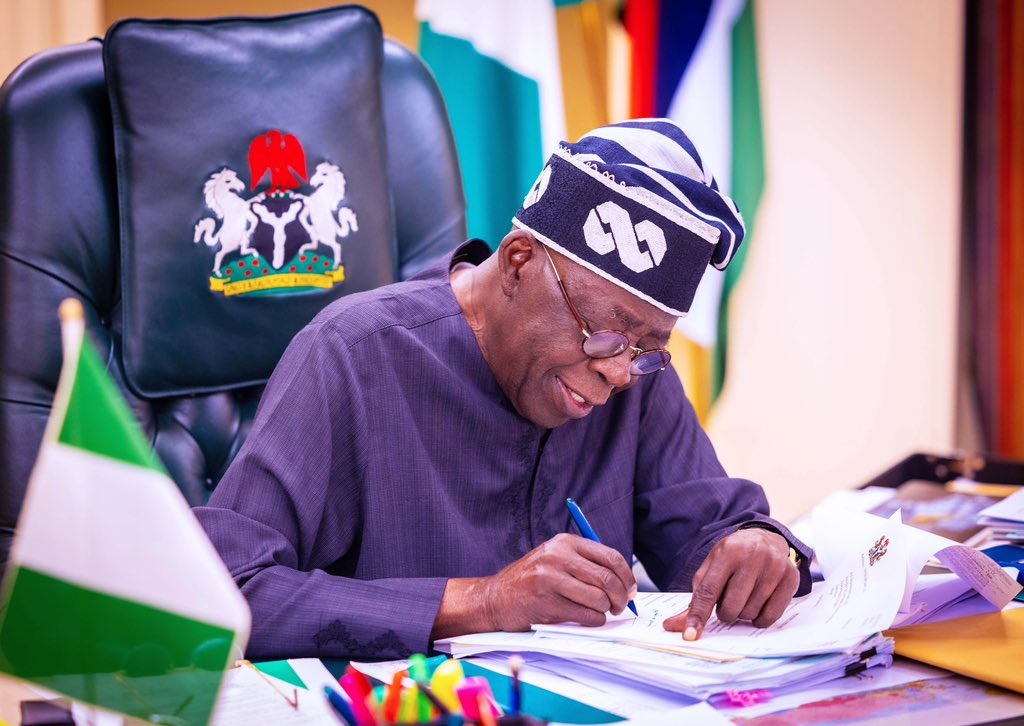
The federal government of Nigeria has announced a proposal for the Nigerian Maritime Administration and Safety Agency (NIMASA) and the Nigerian Port Authority (NPA) to begin collecting charges, fees, and fines in Naira rather than in foreign currencies.
This move is part of a broader economic stabilization bill aimed at easing pressure on the foreign exchange market.
Bayo Onanuga, the Special Adviser to the President on Information and Strategy, disclosed the proposal during a briefing at the State House in Abuja.
According to Onanuga, this policy is designed to prioritize the use of local currency in transactions within key sectors of the economy, such as maritime and port operations.
“This government wants to put a lot of emphasis on our national currency instead of everything being dollarised in our economy,” he said.
The proposed amendment to the laws guiding NIMASA and the NPA would require that all payments, including fees, levies, and fines, be made in Naira at the prevailing exchange rate. Previously, these agencies charged fees in U.S. dollars, which contributed to increased demand for foreign currency in the market.
READ ALSO: Tinubu appoints Executive Directors in NPA, NIMASA
This initiative forms part of a larger strategy by the federal government to reduce the demand for foreign exchange, which has been a major contributor to the naira’s ongoing depreciation.
By ensuring that payments to NIMASA and NPA are made in Naira, the government hopes to decouple certain sectors of the economy from the fluctuations of the foreign exchange market.
Onanuga highlighted the importance of this policy in stabilizing Nigeria’s economy, noting that it aligns with other recent initiatives.
For instance, the Federal Executive Council (FEC) recently approved the sale of crude oil by the Nigerian National Petroleum Company (NNPC) Ltd. to local refineries, including the Dangote Refinery, in Naira rather than U.S. dollars. This move, like the NIMASA and NPA proposal, is intended to strengthen the use of local currency in large-scale transactions.
The Naira has experienced significant volatility in the past 14 months, particularly following the unification of the foreign exchange market in June 2023. After stabilizing at around N750/$, it closed 2023 at N907/$.
While the currency briefly surged in early 2024, becoming the best-performing currency in April, it has since resumed its depreciation, hovering around N1,600/$ in recent weeks.
By focusing on policies that reduce the demand for foreign exchange, the government aims to stabilize the naira and curb inflationary pressures.
As the economic stabilization bill is presented to the National Assembly, additional measures may be introduced to further protect the currency and reduce Nigeria’s reliance on foreign exchange markets.


-
 Latest6 days ago
Israel marks 3 years since October 7 Hamas attack amid Gaza strikes, election debate
-

 Energy6 days ago
Fuel Battle: Dangote, marketers and government clash over petrol imports
-
 Energy1 week ago
Petrol, diesel prices rise 86% in 2026 as costs hit fresh highs
-

 Football7 days ago
Nigeria’s World Cup exit under spotlight as FIFA’s DR Congo files emerge
-
 Energy1 week ago
Has Iran lost control of the Strait of Hormuz? Oil flows rebound as war disruptions persist
-

 Latest20 hours ago
Full List: Meet the 2026 Nobel Prize winners across six categories
-

 Latest7 days ago
US Court set to rule on release of FBI, DEA records on Tinubu
-
 Business7 days ago
Nigerian investors at a crossroads as fixed-income yields slide