
Business
Forex reserves drop by 2.68% in April

By CHIOMA OBINAGWAM
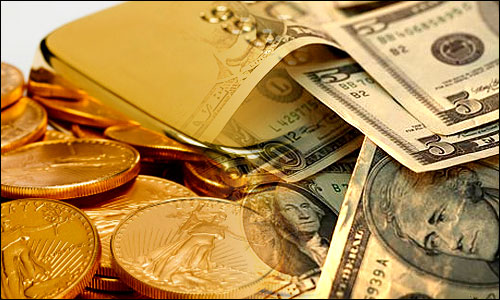
NIGERIA’S foreign exchange reserves fell by 2.68 percent to $27.14 billion as of April 27 from a month ago, when they were 27.87 billion, central bank data showed on Friday.
The reserves declined by 5.55 percent from $29.51 billion a year ago. A plunge in oil prices has eaten into the foreign reserves of Africa’s biggest economy, with the central bank adopting fixed exchange rate to protect further depletion of its reserves.
Foreign exchange reserves in Nigeria averaged $10.29 billion from 1960 until 2016, reaching an all-time high of $62.08 billion in September of 2008, and a record low of $63.22 million in June of 1968.
The $27.4 billion represents gross reserves, while only $27.1 billion is liquid and readily available for the monetary authority, in this case the CBN, for direct financing of payment imbalances through intervention in the exchange markets to affect the naira exchange rate and or for other purposes.
The nation’s foreign reserves have been dropping consistently since November 2015 from $29.9 billion to the current figure of $27.4 billion. Analysts attribute the decline to poor receipts from the sale of oil on account falling oil prices. It is also being aggravated by a decline in non-oil exports.
Equally, the country’s huge appetite for foreign goods, which have fueled imports and demand for the dollar, has placed a huge task before the CBN to maintain the naira value, forcing it to use the reserves to manage the exchange rate.
ALSO SEE: Access Bank announces 38% increase in profit
“The fact that the CBN had always implemented a fixed exchange rate policy and has had to use reserves to maintain its fixed exchange rate, where supply and demand of foreign currency tend to push the value of the naira higher or lower, has contributed to the depletion of reserves,” said a foreign exchange dealer in Lagos at the weekend.
National Daily gathered that under perfect capital mobility, the change in reserves is a temporary measure, since the fixed exchange rate attaches the domestic monetary policy to that of the country of the base currency, which is the US dollar.
Often, in the long term, the monetary policy has to be adjusted in order to be compatible with that of the country of the base currency. Without that, the country will experience outflows or inflows of capital. Fixed pegs were usually used as a form of monetary policy, since attaching the domestic currency to a currency of a country with lower levels of inflation should usually assure convergence of prices.
However, with no end in sight for the dropping of oil prices, the nation’s foreign reserves will continue to deplete unless the CBN abandons its fixed exchange regime.
A plunge in oil prices has eaten into its foreign reserves as it battles to defend its ailing naira currency. Earlier this year, the CBN said the apex bank is halting dollar sales to non-bank foreign exchange operators and letting commercial banks accept dollar deposits with immediate effect.












-

 Business7 days ago
Dangote Refinery IPO: 70% Subscription claim meets fourfold demand assertion as investors seek clarity
-

 Latest1 week ago
Umahi defends Lagos-Calabar highway route changes amid public outcry
-
Business1 week ago
Dangote Refinery IPO Extension: Was the 70% subscription report overhyped?
-
 Featured3 days ago
Inside INEC’s race to prepare for Nigeria’s 2027 elections
-

 Latest6 days ago
UCTH faces morgue crisis as 50 unclaimed corpses await mass burial
-

 Featured3 days ago
2027: APC unveils nationwide campaign timetable, Tinubu to rally in 12 states
-

 Business6 days ago
BREAKING: Nigeria’s Inflation Rate Drops to 14.63% in September
-

 Featured1 week ago
El-Rufai, ADC governorship candidate’s court appearance puts Kaduna opposition politics in focus