
Latest
Italy deports Pakistani Imam over controversial remarks on child marriage

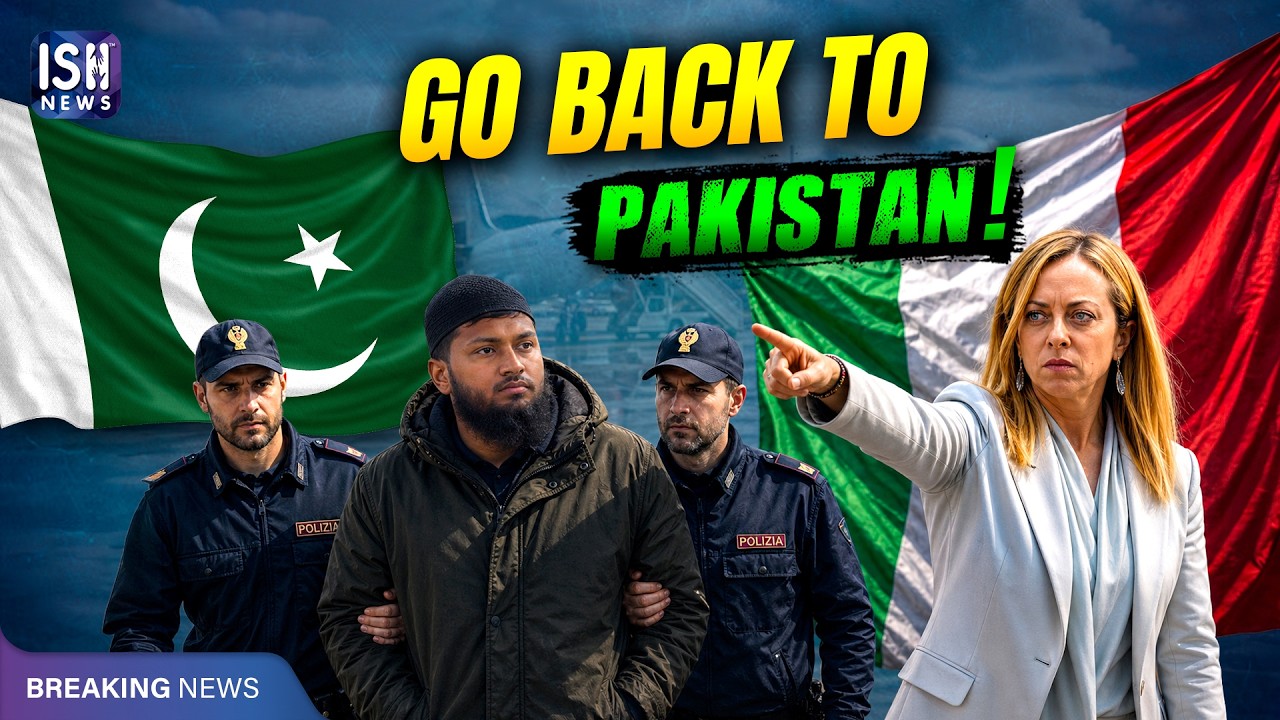
Italian authorities have deported a Pakistani imam, Ali Kashif, following public outrage over undercover television footage in which he reportedly defended the marriage of girls as young as nine to adult men.
The deportation followed an investigation by Italian television programme Fuori dal Coro, which broadcast footage of Kashif discussing when girls could be considered adults under his interpretation of Islamic teachings.
During the undercover interview, Kashif reportedly argued that a girl becomes eligible for marriage after her first menstruation, suggesting that girls as young as nine could marry adult men.
The remarks triggered widespread condemnation and prompted Italian authorities to investigate his activities.
According to Italian media reports published on April 3, 2026, the Brescia Police Headquarters executed the deportation order on the instructions of Police Commissioner Paolo Sartori.
Authorities reportedly considered Kashif a potential threat to public safety and social order. His immigration status also came under scrutiny, with investigations allegedly establishing that he did not possess a valid residence permit.
Following the decision, the Pakistani national was escorted to Milan’s Malpensa Airport and placed on a flight to Islamabad, Pakistan.
Kashif reportedly served occasionally as an imam at two Islamic centres in Brescia, where his controversial remarks have since generated debate over religious teachings and their implications for child protection.
The incident has reignited discussions in Italy over the protection of minors, religious freedom, immigration enforcement and the responsibility of religious leaders to respect the laws of their host countries.
READ ALSO; Italy rejects 2,220 Nigerian asylum applications as 4,120 cases remain pending
Italy’s legal framework prohibits child marriage, while authorities reportedly relied on public-order and immigration provisions in carrying out the deportation.
However, available reports indicate that Kashif’s removal was an administrative immigration measure rather than a publicly reported criminal conviction.
The development has drawn renewed attention to the tension between religious interpretations, cultural practices and national laws, particularly where the rights and welfare of children are concerned.
Italian authorities have reiterated their commitment to protecting minors and enforcing immigration regulations, irrespective of religious or cultural arguments used to justify practices prohibited under the country’s laws.


-

 Business2 days ago
OPay explains how Nigerians can access FG’s N50,000 monthly cash relief
-

 Sports6 days ago
Senegal opens Dakar 2026 Youth Olympic Games, Africa’s first Olympic event
-

 Football1 week ago
U-17 Women’s World Cup: Flamingos Beat Mexico to Reach Quarter-Finals
-

 Latest6 days ago
FG Announces N50,000 cash support for vulnerable Nigerians under new relief programme
-

 Business6 days ago
NNPC’s N66-per-litre petrol discount set to end October 31
-

 Latest5 days ago
INEC recognises Pantami for Gombe, keeps Kano NDC candidate off final list
-

 Latest6 days ago
Netanyahu, Eisenkot face coalition deadlock as Israel struggles to form new government
-

 Latest6 days ago
NDC Chieftain tells Atiku to drop presidential ambition over son’s support for Tinubu