
Latest
Labour unity under threat as Ajaero, Osifo trade accusations

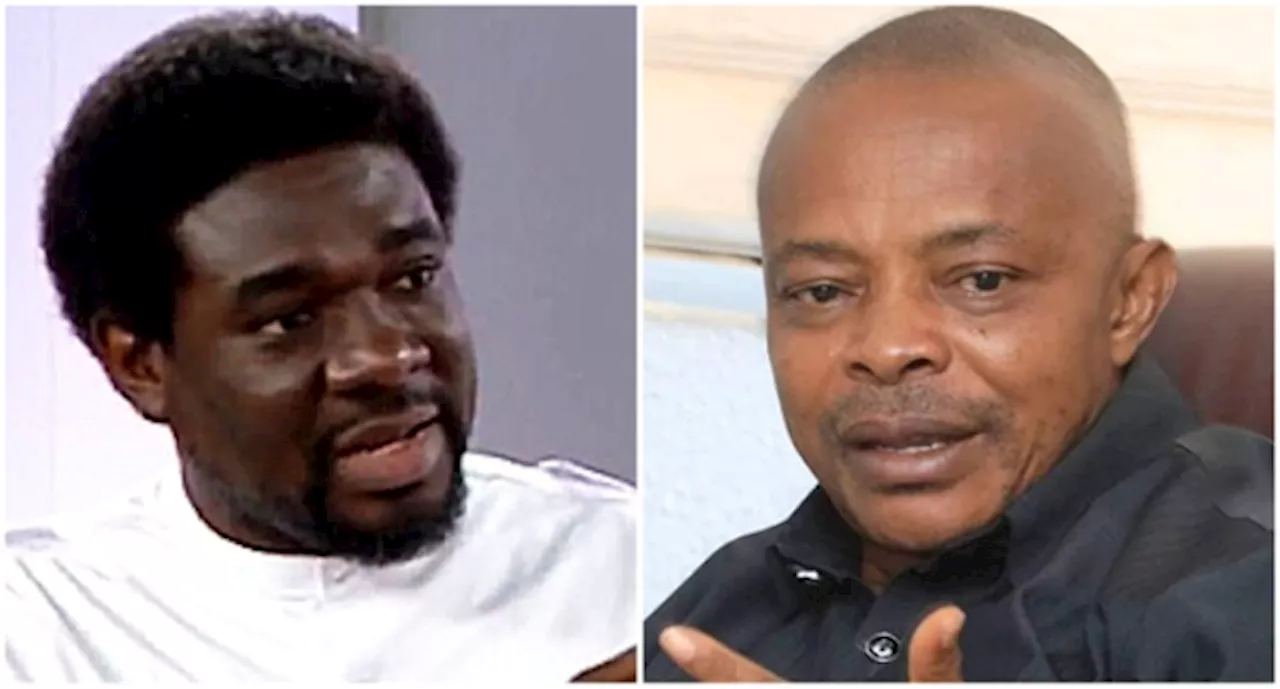
Nigeria’s organised labour movement is facing fresh divisions as the presidents of the Nigeria Labour Congress (NLC) and the Trade Union Congress (TUC), Joe Ajaero and Festus Osifo, clashed over the authority to negotiate workers’ salaries, allowances and welfare with the Federal Government.
The disagreement, which played out during separate appearances on Channels Television’s The Morning Brief on Monday, has deepened tensions between the two labour centres, particularly over the Federal Government’s approval of a N70,000 transport allowance for workers.
At the heart of the dispute is whether the NLC can independently negotiate on behalf of the wider labour movement without the participation of the TUC.
Ajaero maintained that the NLC, as the labour centre with the highest number of affiliated unions, has the authority to negotiate independently under the principle of the most representative workers’ organisation recognised by the International Labour Organisation (ILO).
“TUC can negotiate along with NLC, but NLC can negotiate alone based on the principle of most workers representatives of the ILO,” he said.
He argued that the TUC was required to channel its proposals through the NLC in certain engagements with the ILO, insisting that the arrangement placed the NLC in a coordinating position.
Ajaero also maintained that labour authorities and the Ministry of Labour would not recognise the TUC negotiating independently on behalf of the wider workforce.
However, Osifo rejected the interpretation, challenging Ajaero to produce the specific ILO regulations supporting his position.
“There is nowhere in ILO regulations that says a trade centre cannot negotiate for its members. It is not there!” he declared.
The TUC president acknowledged that the NLC had more affiliated unions, estimated at 60 against the TUC’s 40, but insisted that numerical strength did not confer the right to negotiate for another labour organisation without consultation.
READ ALSO; NLC, Falana demand petrol price cut, say ₦70,000 minimum wage no longer sufficient
“We are not contesting the fact that NLC has more affiliates. But what we are saying is that you cannot negotiate for a body that is represented, for a body that has a trade union. You cannot negotiate for them on their behalf!” Osifo said.
He further questioned the quality of leadership within the NLC, citing former labour leaders Adams Oshiomhole, Hassan Sunmonu and Ayuba Wabba, while stressing the need for continuous learning in industrial relations.
In response, Ajaero invoked the Trade Union Amendment Act of 2005 and Section 40 of the 1999 Constitution, as amended, which guarantees freedom of association.
He argued that workers were free to choose their unions and questioned the relevance of the TUC’s membership claims in federal civil service negotiations.
The disagreement has also centred on the N70,000 transport intervention approved by the Federal Government for workers across all levels for six months.
Ajaero said the NLC secured the intervention after issuing an ultimatum and threatening industrial action.
According to him, the government requested four days to engage the congress, after which negotiations resumed and the allowance was agreed upon.
“We gave the government an ultimatum; we were supposed to start an action. The government asked for four days and to meet with us, and we met, and they resumed sitting after four days. After the meeting, the 70k allowance came up,” he said.
Osifo, however, described the arrangement as an aberration, insisting that the TUC was not involved in the negotiations and should not be bound by an agreement it did not participate in.
He also questioned the legitimacy of the meeting that produced the allowance, arguing that it was not a properly constituted session of the Joint Public Sector Negotiating Council (JPSNC).
According to him, the council operates under its own constitution and quorum requirements, adding that neither the Minister of Labour nor Ajaero was a member.
The growing confrontation has raised concerns about unity within Nigeria’s labour movement and its capacity to present a common front in negotiations with the Federal Government over workers’ welfare, wages and conditions of service.


-
 Sports3 days ago
Senegal opens Dakar 2026 Youth Olympic Games, Africa’s first Olympic event
-
 Latest6 days ago
Tinubu endorses Nigeria’s participation in 2026 World Travel Market London
-
 Football5 days ago
U-17 Women’s World Cup: Flamingos Beat Mexico to Reach Quarter-Finals
-

 News1 week ago
Rugby: Borthwick Faces Key Selection Questions as World Cup Looms
-

 Latest4 days ago
Netanyahu, Eisenkot face coalition deadlock as Israel struggles to form new government
-
 Business3 days ago
NNPC’s N66-per-litre petrol discount set to end October 31
-
 Featured5 days ago
How court ruling reshapes APC’s Imo West Senatorial contest
-

 Crime1 week ago
Passengers feared abducted on Kebbi-Abuja journey as viral video shows armed men threatening captives (VIDEO)