
Business
MPC members propose FX, domiciliary account reforms

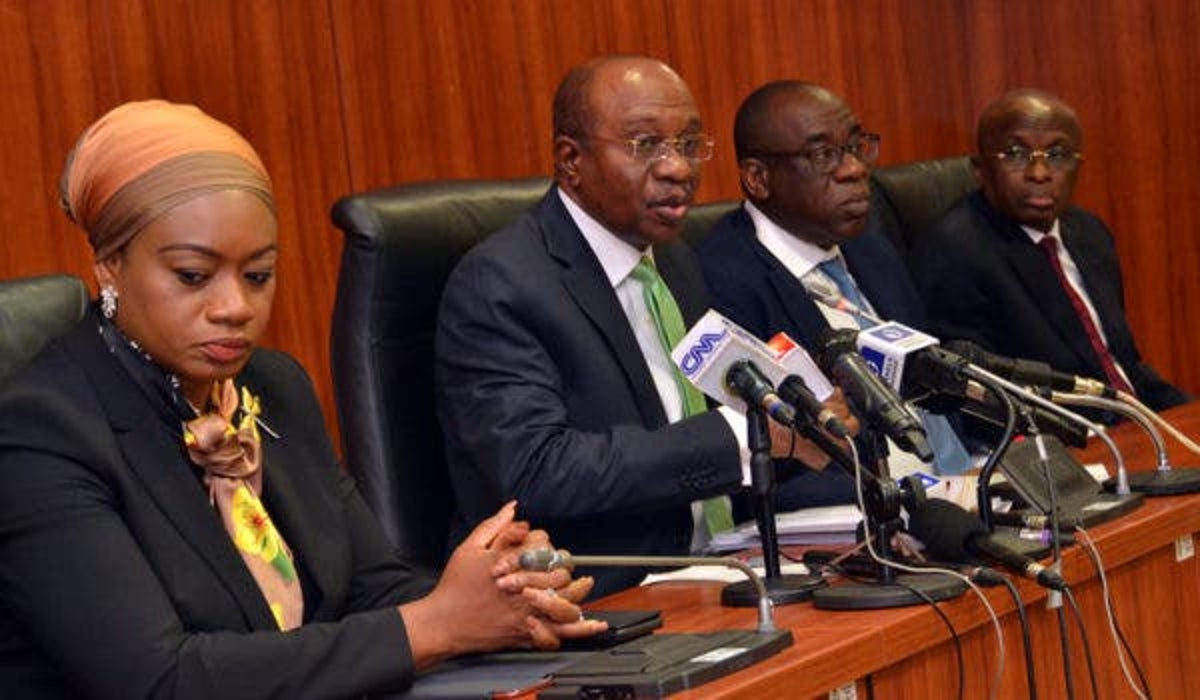
Members of the Monetary Policy Committee (MPC) have called on the Central Bank of Nigeria (CBN) to carry out a bold reform of the foreign exchange market, particularly, the operation of Foreign Currency Domiciliary Accounts (FCDA) by Individuals.
In their personal statements at the last monetary policy committee in November which was recently uploaded on the CBN website, they argued that the accounts tended to be grossly abused in recent years to the detriment of exchange rate stability.
Obadan Mike Idiahi, a member of the MPC said in addition to the monetary measures and development finance interventions being implemented, the CBN would need to seriously consider bold reforms of the foreign exchange market, in particular, the operation of Foreign Currency Domiciliary Accounts (FCDA) by individuals.
In his personal statement, Festus Adenikinju, member of the MPC said, there is a need to address the pressures on the naira exchange rate by boosting supply of foreign exchange in the economy.
“I am also of the opinion that the FX sold by the bank at the Investors and Exporters (I&E) windows should be for productive activities alone. The bank should review its policy of those who qualify to benefit from FX sold in the official market,” he said.
READ ALSO: CBN identifies major challenges to financial inclusion in Nigeria
According to him, in the external sector, the naira depreciated against the dollars from N440.85 to a dollar in October 2022, to N445.26 to a dollar on November 11, 2022. The trade balance recorded a surplus in October 2022.
He noted that Foreign Direct Investment (FDI) inflow and remittances rose, while net Foreign Portfolio Investment (FPI) declined.
Shonubi Folashodun, CBN’s deputy governor, operation, the external sector has not fared better either, as low oil production, dwindling foreign exchange revenue, high import prices (bills), drying capital and muted remittance flows have become major drags on external reserve accumulation, precipitating exchange rate pressure.
Godwin Emefiele, governor of the CBN, said in his personal statement that “in order to insulate our economy from adverse external developments, it remains imperative to fortify our economic base by de-risking the productive sector and diversifying completely.
This, he said, was especially as frozen oil receipt impedes the FX market, shrinking external reserves from $37.39 billion in September to $36.87 billion in October, and abetting exchange rate pressures.
In her personal statement, Aisha Ahmad, deputy governor in charge of financial system stability, said the ongoing exchange rate demand management policies of the bank and other initiatives to improve foreign exchange supply such as the RT 200 policy, are useful in moderating pressure in the FX market, in view of the pass through to domestic prices.


-

 Featured6 days ago
Nigeria’s youth unemployment paradox: Graduates struggle as millions survive in informal jobs
-

 Business7 days ago
Nigerian Banks earn N521.8bn from E-banking, card fees in nine months
-

 Energy6 days ago
Nigeria’s power crisis deepens as ₦639bn unpaid gas debt threatens electricity supply
-

 Latest7 days ago
Dalung claims ‘message from Buhari’s grave’ urges Nigerians to vote Atiku in 2027
-
 Featured5 days ago
Tinubu’s Renewed Hope: Reforms, hardship and the unanswered question of a second term
-

 Featured5 days ago
The cost of Renewed Hope: How Nigeria’s economic reforms are reshaping everyday family life
-

 Latest6 days ago
Ondo shuts ponmo processing centre after discovery of human waste
-
 Featured1 week ago
Breaking: Manchester United sack Michael Carrick after poor start to Premier League season